BUSINESS / PRESS RELEASE
Merck's Hong Chow: Capitalizing on the 'Spring' of Pharmaceutical Innovation in China, Aiming to be the Best Partner of Choice
As China's pharmaceutical innovation ecosystem matures rapidly, with local companies developing world-class drugs that are increasingly reaching the global market, a key industry focus is how multinational corporations can deeply integrate with China's innovative forces.
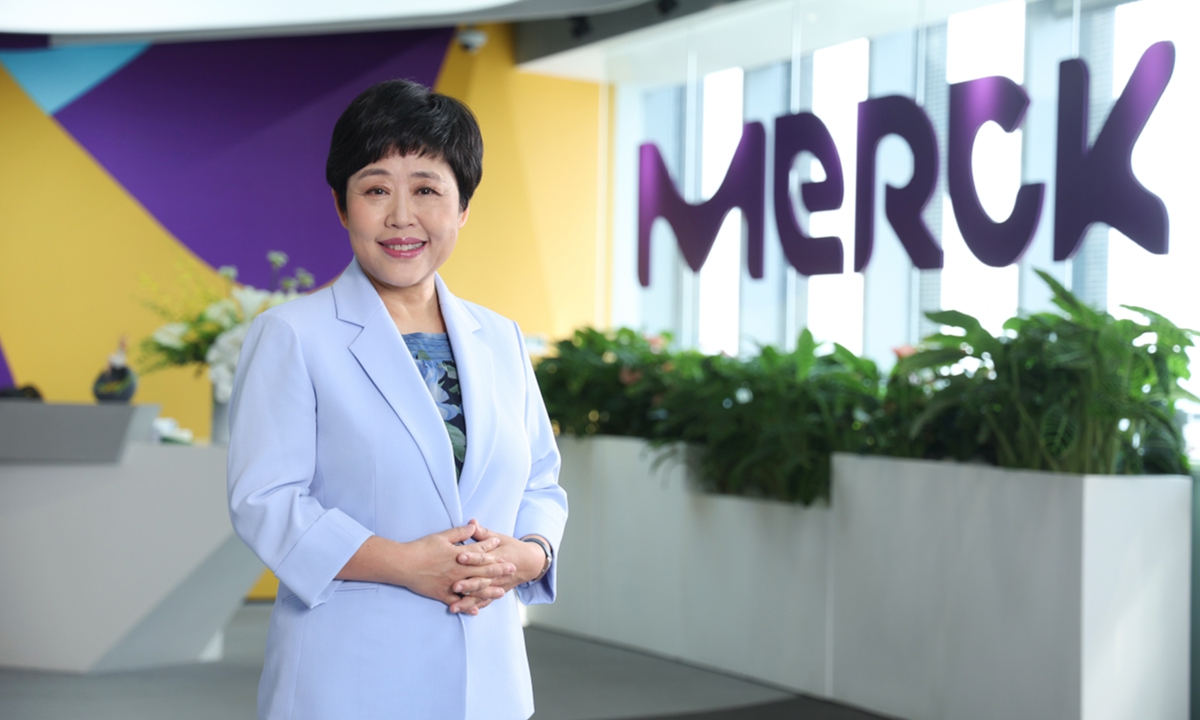
Hong Chow, Executive Vice President and Head of China & International at Merck Healthcare, shared her perspective on Chinese innovation, Merck's strategic moves and its role in supporting Chinese pharmaceutical companies to go global, following her intensive dialogues with local innovators.
A Dynamic & Diversified Pharmaceutical Innovation Ecosystem
Fueled by a national innovation-driven strategy, China's pharmaceutical sector is demonstrating remarkable momentum. In 2024, China accounted for 26.7% of the global drug development pipeline, second only to the United States. The overseas expansion of Chinese innovative drugs has also reached unprecedented levels, with companies completing over 90 licensing deals worth more than $50 billion.
Hong attributes this success to China's unique advantages in speed, efficiency, and cost-effectiveness. She notes that the ecosystem is becoming increasingly diverse, with startups emerging not just from overseas returnees, but also from local research institutions and hospitals. This diversification, coupled with a broader range of therapeutic targets, has alleviated intense internal competition. She also expressed her admiration for some local enterprises that have persisted in long-term, "first-in-class" or "best-in-class" research for over a decade, steadily enhancing the quality and global competitiveness of Chinese innovation.
China: A Core Market and Innovation Hub
"China is not only a core market for Merck globally but also an indispensable source of innovation," Hong stated. With its business in China accounting for over 15% of its total — one of the highest proportions among multinational pharmaceutical companies — Merck has taken deep roots in the country over the past 90 years, establishing a localized full value chain, from R&D and manufacturing, to commercialization.
Hong highlighted China's strengths in policy support, medical resources, and talent: "China is proactively optimizing its business environment, medical institutions have abundant resources, patient enrollment is fast, and local talent has a 'can-do mentality' with high efficiency." China has become an increasingly important part of Merck's global innovation strategy.
Merck drives innovation through a dual-engine approach — robust in-house R&D and strategic external collaborations. The company also actively connects with the local ecosystem through initiatives like the "Merck Open Innovation Day" and the "Biotech CEO Roundtable."
Acting as a Bridge for Chinese Innovation's Global Journey
In Hong's view, Merck's core advantage lies in its end-to-end global commercialization capabilities.
"We offer more than just funding; we provide full-chain services, including clinical development, regulatory filing, market access, and commercialization," she explained. With a presence in 65 countries and regions, Merck's familiarity with local regulations and healthcare systems can significantly shorten a product's time to market, both in China and the rest of the world.
Merck's collaborations with Chinese pharmaceutical innovators exemplify this synergy. The partnership with Hengrui on a next-generation selective PARP1 inhibitor was finalized in less than half a year from the release of clinical data at ASCO. "It's a story from ASCO to ESMO." Hong said with a smile, "The Merck team and the Hengrui team inspired each other, working efficiently to advance the collaboration." The collaboration with Abbisko on Pimicotinib for the treatment of the rare disease tenosynovial giant cell tumor, has seen Merck's application for marketing authorization accepted by China's Center for Drug Evaluation, with regulatory filings being advanced simultaneously in the US and additional filings planned in other markets. The partnership with Zelgen on rhTSH will leverage Merck's deep expertise in the thyroid field to accelerate local commercialization in China. These efforts are also a clear manifestation of Merck's resolve to support Chinese innovation in "going overseas" to benefit patients worldwide.
Hong reiterated that Merck pursues long-term, fair, and win-win partnerships. "Globally, we strive to become the 'best partner of choice' in the field of healthcare," she stated. "With our exceptional global commercialization capabilities, profound understanding of complex healthcare systems across different regions, and experience with regulators, we hope to help more Chinese innovations go global, benefiting patients worldwide."
Looking ahead, Merck, as well as Hong, will continue to act as a "bridge," helping Chinese companies navigate the policy, cultural, and management challenges of internationalization, and advancing the strategic shift from simply exporting "products" to exporting a full "ecosystem" of innovation.
Hong Chow, Executive Vice President and Head of China & International at Merck Healthcare, shared her perspective on Chinese innovation, Merck's strategic moves and its role in supporting Chinese pharmaceutical companies to go global, following her intensive dialogues with local innovators.
A Dynamic & Diversified Pharmaceutical Innovation Ecosystem
Fueled by a national innovation-driven strategy, China's pharmaceutical sector is demonstrating remarkable momentum. In 2024, China accounted for 26.7% of the global drug development pipeline, second only to the United States. The overseas expansion of Chinese innovative drugs has also reached unprecedented levels, with companies completing over 90 licensing deals worth more than $50 billion.
Hong attributes this success to China's unique advantages in speed, efficiency, and cost-effectiveness. She notes that the ecosystem is becoming increasingly diverse, with startups emerging not just from overseas returnees, but also from local research institutions and hospitals. This diversification, coupled with a broader range of therapeutic targets, has alleviated intense internal competition. She also expressed her admiration for some local enterprises that have persisted in long-term, "first-in-class" or "best-in-class" research for over a decade, steadily enhancing the quality and global competitiveness of Chinese innovation.
China: A Core Market and Innovation Hub
"China is not only a core market for Merck globally but also an indispensable source of innovation," Hong stated. With its business in China accounting for over 15% of its total — one of the highest proportions among multinational pharmaceutical companies — Merck has taken deep roots in the country over the past 90 years, establishing a localized full value chain, from R&D and manufacturing, to commercialization.
Hong highlighted China's strengths in policy support, medical resources, and talent: "China is proactively optimizing its business environment, medical institutions have abundant resources, patient enrollment is fast, and local talent has a 'can-do mentality' with high efficiency." China has become an increasingly important part of Merck's global innovation strategy.
Merck drives innovation through a dual-engine approach — robust in-house R&D and strategic external collaborations. The company also actively connects with the local ecosystem through initiatives like the "Merck Open Innovation Day" and the "Biotech CEO Roundtable."
Acting as a Bridge for Chinese Innovation's Global Journey
In Hong's view, Merck's core advantage lies in its end-to-end global commercialization capabilities.
"We offer more than just funding; we provide full-chain services, including clinical development, regulatory filing, market access, and commercialization," she explained. With a presence in 65 countries and regions, Merck's familiarity with local regulations and healthcare systems can significantly shorten a product's time to market, both in China and the rest of the world.
Merck's collaborations with Chinese pharmaceutical innovators exemplify this synergy. The partnership with Hengrui on a next-generation selective PARP1 inhibitor was finalized in less than half a year from the release of clinical data at ASCO. "It's a story from ASCO to ESMO." Hong said with a smile, "The Merck team and the Hengrui team inspired each other, working efficiently to advance the collaboration." The collaboration with Abbisko on Pimicotinib for the treatment of the rare disease tenosynovial giant cell tumor, has seen Merck's application for marketing authorization accepted by China's Center for Drug Evaluation, with regulatory filings being advanced simultaneously in the US and additional filings planned in other markets. The partnership with Zelgen on rhTSH will leverage Merck's deep expertise in the thyroid field to accelerate local commercialization in China. These efforts are also a clear manifestation of Merck's resolve to support Chinese innovation in "going overseas" to benefit patients worldwide.
Hong reiterated that Merck pursues long-term, fair, and win-win partnerships. "Globally, we strive to become the 'best partner of choice' in the field of healthcare," she stated. "With our exceptional global commercialization capabilities, profound understanding of complex healthcare systems across different regions, and experience with regulators, we hope to help more Chinese innovations go global, benefiting patients worldwide."
Looking ahead, Merck, as well as Hong, will continue to act as a "bridge," helping Chinese companies navigate the policy, cultural, and management challenges of internationalization, and advancing the strategic shift from simply exporting "products" to exporting a full "ecosystem" of innovation.
