ARTS / CULTURE & LEISURE
Xinjiang launches landmark intangible heritage museum
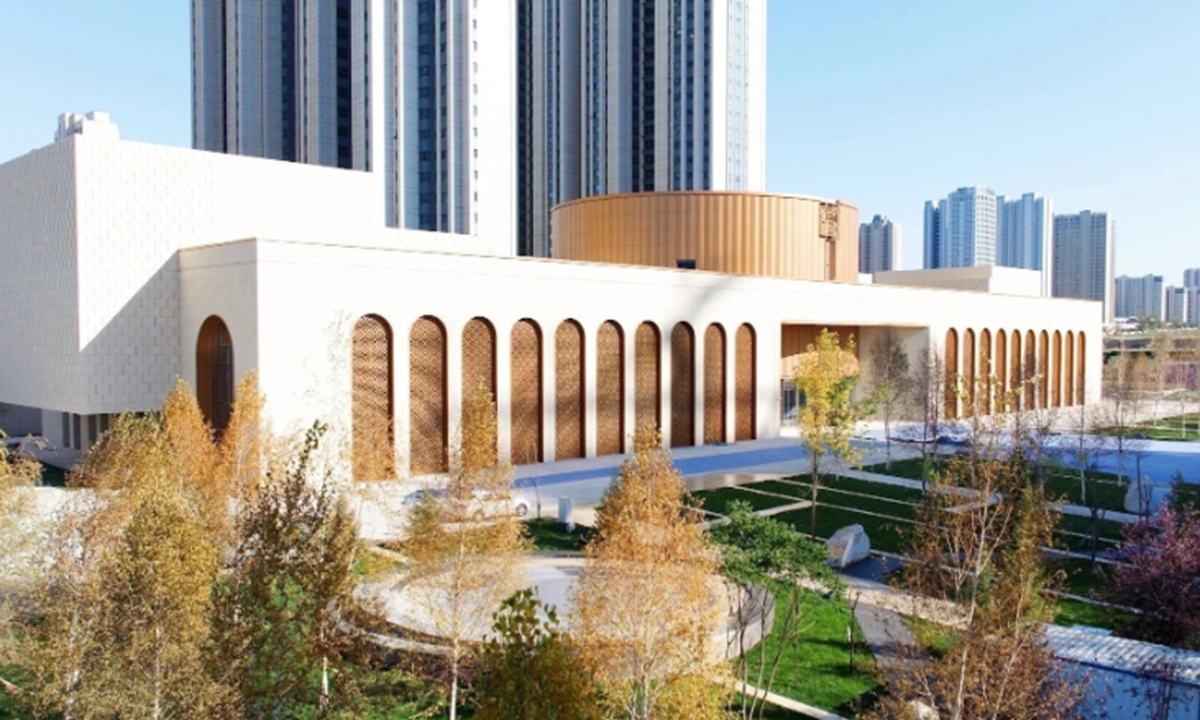
Xinjiang Intangible Cultural Heritage Museum
The Xinjiang Intangible Cultural Heritage Museum, with its beige stone and bronze-toned design blending history and modernity, opened for trial operations on Monday in Urumqi, Northwest China's Xinjiang Uygur Autonomous Region.Inside the 4,800-square-meter space, nearly 3,000 artifacts from 34 provincial-level regions in China as well as countries along the Silk Road are on display.
Multimedia installations and 3D projection technology break temporal and geographic boundaries, immersing visitors in the epic chants of Manas, the fragrance of Hotan herbal teas through scent devices and the melodies of the Twelve Muqam, a suite of songs of the Uygur people. The polished artistry of Hotan jade carving techniques further enriches the experience, making the museum not only a repository but also a living theater of heritage.
"The museum was envisioned from the start as more than an exhibition hall but an integration of displays, live performances, transmission of craftsmanship, and research," Wang Kaiyu, deputy head of the museum, told the Global Times. At the core of the museum are four main thematic displays, highlighting intangible heritage linked to Xinjiang's festivals, daily life, customs, and diverse prefectures.
Five special exhibitions further showcase the region's craftsmanship and artistic achievements, including jade-carving traditions, Xinjiang's weaving skills, pottery masterpieces of local ceramics and oral traditions of epics and folk songs, revealing cross-cultural exchanges that once flourished across the Silk Road.
For Yang Meng, one of the museum's first visitors, the immersive atmosphere of a bazaar-themed display was especially striking.
"I saw towering vertical looms, demonstrations of carpet-weaving techniques, and interactive installations," she told the Global Times.
"Even in the cultural-creative zone, items like kebab-shaped souvenirs carried a distinct Xinjiang flavor. You could see how some displays may resemble Middle Eastern carpets, yet up close they are entirely unique."
Indeed, the region boasts an especially rich and diverse trove of heritage. Xinjiang has recognized 5,956 projects across all levels, including 567 at the regional level, while 141 projects have been listed nationally.
"Intangible cultural heritage is an essential part of the region, and even China's traditional culture," Wang said. "Xinjiang's abundance and diversity give it a particularly important role."
The opening day also featured treasures on loan from the Traditional Chinese Culture Museum, including a cloisonne enamel vessel with intricate gilt-silver bird inscriptions, and a horn carving entitled Celebration Across China.
One standout, a stone carving, employed the "chain carving" technique to create 13 interlinked stone chains as fine as strands of hair, a feat often described as "a dance upon the blade's edge."
Beyond its exhibits, the museum is rich in symbolism. Its 56 columns in the main hall represent national unity, while the crown-shaped roof incorporates traditional Chinese decorations, underscoring the shared cultural heritage of the nation.
"We aim for the museum to serve as a comprehensive hub for national unity and cultural exchange," Wang explained.
For local craftspeople, the museum's opening marks a milestone. Huai Yuancheng, an inheritor of Urumqi's dough sculpture tradition, said he eagerly anticipates welcoming visitors from across China and abroad.
"This museum embodies the cultural DNA of the Chinese nation," he said.
"It offers a spiritual home where guests from all corners can embark on a journey through millennia of civilization."
RELATED ARTICLES