PHOTO / CHINA
In pics: Chishan Lake Irrigation System in Jiangsu
Published: Sep 16, 2025 10:01 AM
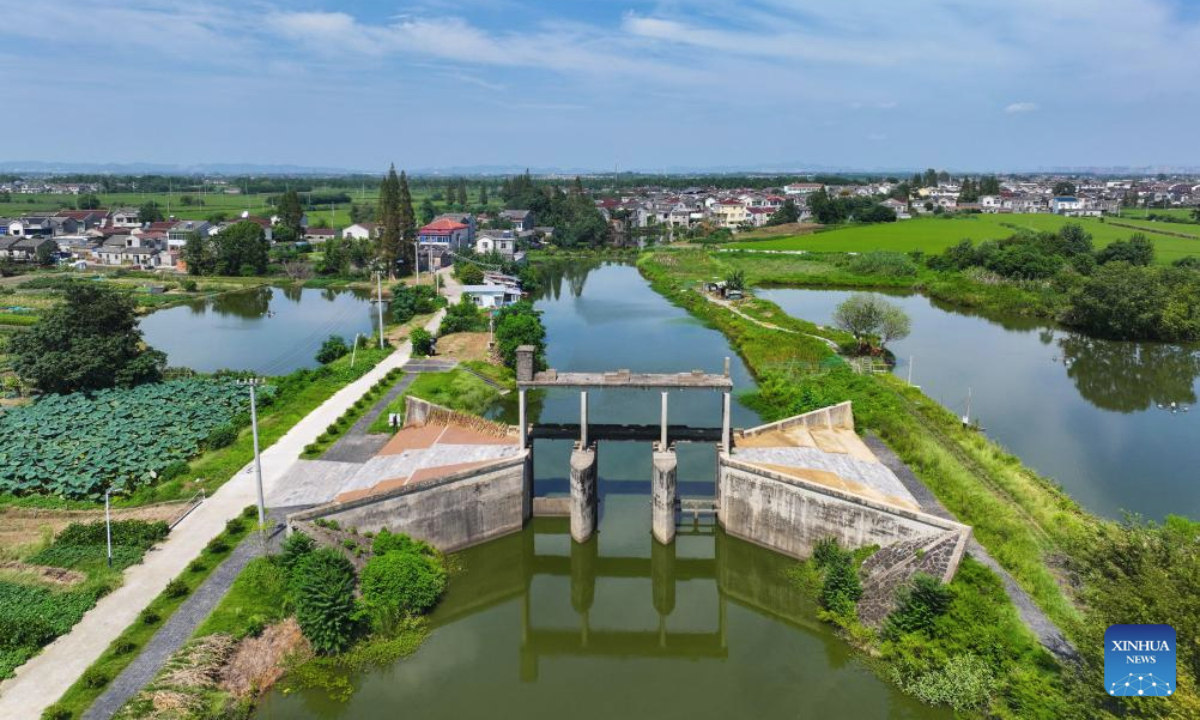
An aerial drone photo taken on Sept. 15, 2025 shows a view of a sluice gate built before 1950 in Jurong City, east China's Jiangsu Province. The 17-century-old Chishan Lake Irrigation System has recently been added to the World Heritage Irrigation Structures (WHIS) list during the 76th International Executive Council Meeting of the International Commission on Irrigation & Drainage (ICID). The system is still nourishing more than 5,100 hectares of arable lands. (Xinhua/Ji Chunpeng)

An aerial drone photo taken on Sept. 15, 2025 shows a view of a sluice gate built before 1950 in Jurong City, east China's Jiangsu Province. The 17-century-old Chishan Lake Irrigation System has recently been added to the World Heritage Irrigation Structures (WHIS) list during the 76th International Executive Council Meeting of the International Commission on Irrigation & Drainage (ICID). The system is still nourishing more than 5,100 hectares of arable lands. (Xinhua/Ji Chunpeng)
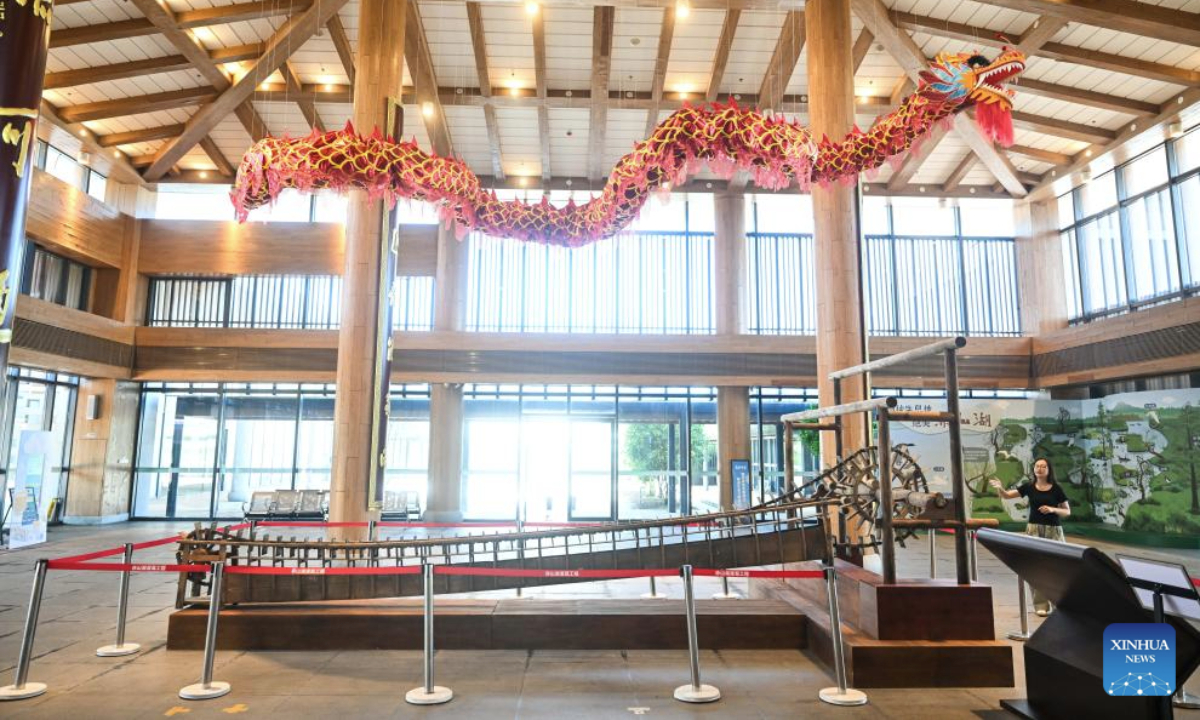

 
A staff member introduces a traditional water lift at an exhibition hall of the Chishan Lake Irrigation System in Jurong City, east China's Jiangsu Province, on Sept. 15, 2025. The 17-century-old Chishan Lake Irrigation System has recently been added to the World Heritage Irrigation Structures (WHIS) list during the 76th International Executive Council Meeting of the International Commission on Irrigation & Drainage (ICID). The system is still nourishing more than 5,100 hectares of arable lands. (Xinhua/Ji Chunpeng)
A staff member introduces a traditional water lift at an exhibition hall of the Chishan Lake Irrigation System in Jurong City, east China's Jiangsu Province, on Sept. 15, 2025. The 17-century-old Chishan Lake Irrigation System has recently been added to the World Heritage Irrigation Structures (WHIS) list during the 76th International Executive Council Meeting of the International Commission on Irrigation & Drainage (ICID). The system is still nourishing more than 5,100 hectares of arable lands. (Xinhua/Ji Chunpeng)


A staff member introduces a traditional water lift at an exhibition hall of the Chishan Lake Irrigation System in Jurong City, east China's Jiangsu Province, on Sept. 15, 2025. The 17-century-old Chishan Lake Irrigation System has recently been added to the World Heritage Irrigation Structures (WHIS) list during the 76th International Executive Council Meeting of the International Commission on Irrigation & Drainage (ICID). The system is still nourishing more than 5,100 hectares of arable lands. (Xinhua/Ji Chunpeng)

A staff member introduces a traditional water lift at an exhibition hall of the Chishan Lake Irrigation System in Jurong City, east China's Jiangsu Province, on Sept. 15, 2025. The 17-century-old Chishan Lake Irrigation System has recently been added to the World Heritage Irrigation Structures (WHIS) list during the 76th International Executive Council Meeting of the International Commission on Irrigation & Drainage (ICID). The system is still nourishing more than 5,100 hectares of arable lands. (Xinhua/Ji Chunpeng)


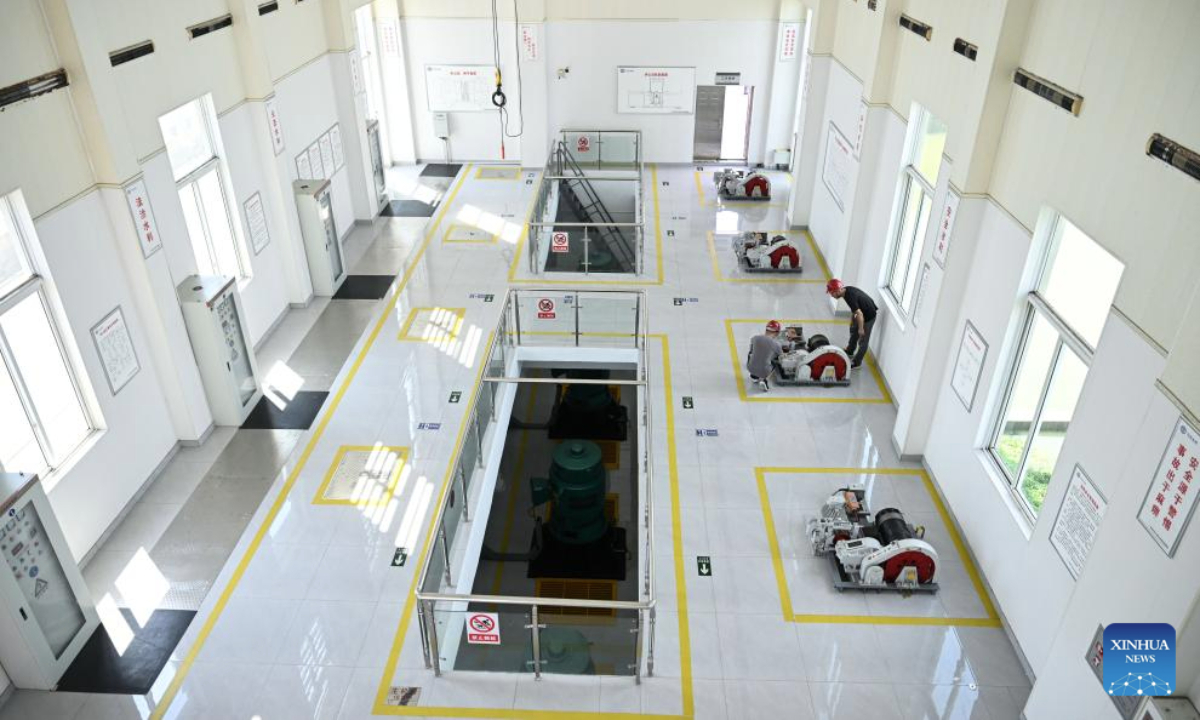
Staff members perform routine check up and maintenance at a pump house of Chishan sluice gate in Jurong City, east China's Jiangsu Province, on Sept. 15, 2025. The 17-century-old Chishan Lake Irrigation System has recently been added to the World Heritage Irrigation Structures (WHIS) list during the 76th International Executive Council Meeting of the International Commission on Irrigation & Drainage (ICID). The system is still nourishing more than 5,100 hectares of arable lands. (Xinhua/Ji Chunpeng)

Staff members perform routine check up and maintenance at a pump house of Chishan sluice gate in Jurong City, east China's Jiangsu Province, on Sept. 15, 2025. The 17-century-old Chishan Lake Irrigation System has recently been added to the World Heritage Irrigation Structures (WHIS) list during the 76th International Executive Council Meeting of the International Commission on Irrigation & Drainage (ICID). The system is still nourishing more than 5,100 hectares of arable lands. (Xinhua/Ji Chunpeng)