ARTS / CULTURE & LEISURE
Witness a biodiversity haven in Xishuangbanna’s botanical garden
Walk in natural wonders
By in Xishuangbanna Published: Sep 18, 2025 10:13 PM

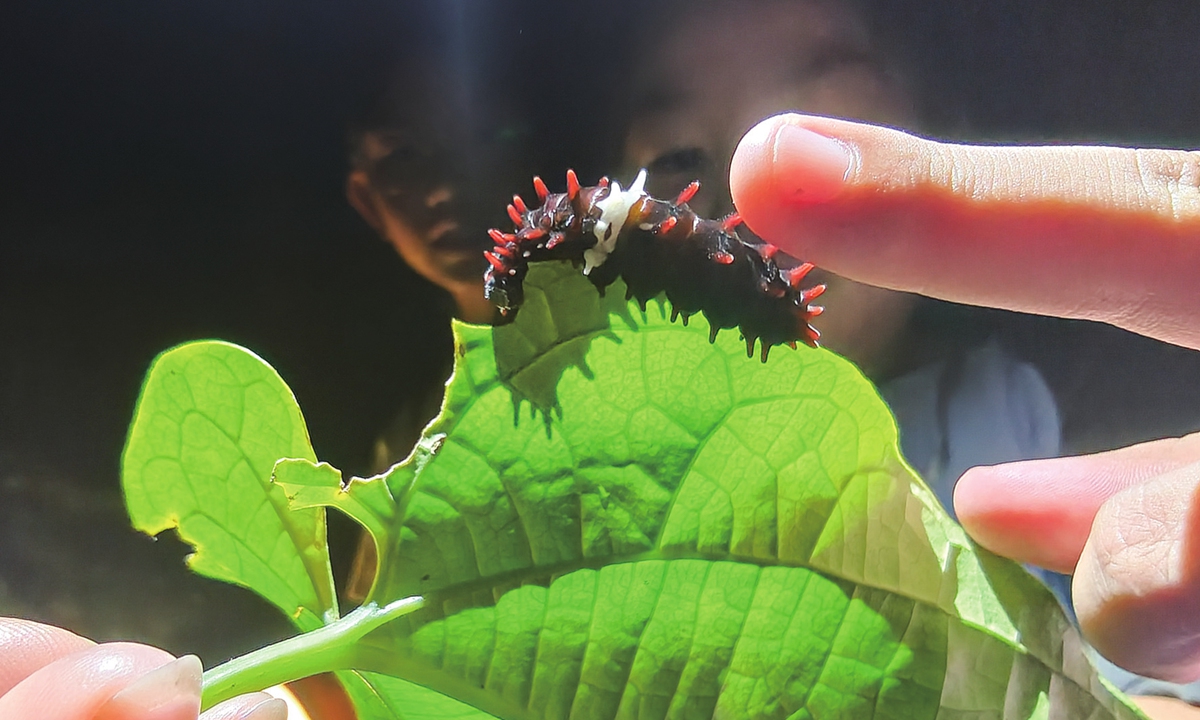
Tourists observe insects at the XTBG on August 12, 2025. Photo: VCG
The first time I touched a leaf and watched it shyly curl into itself, I felt like I had stepped into a fairy tale. Before that, I had even seen a plant dancing along with some music. Its slender leaflets spinning as if choreographed by the wind.This is not a scene from a fantasy novel, but a typical morning at the Xishuangbanna Tropical Botanical Garden (XTBG), managed by the Chinese Academy of Sciences. This green haven is a 5A-rated sanctuary in Southwest China's Yunnan Province where biodiversity isn't just a textbook concept but a living, breathing, and sometimes blushing, reality.
Home to over 14,000 species spread across 39 specialized zones, this garden is not only China's largest, but also the world's most diverse open-air collection of plants. And it reveals, at every turn, nature's most playful and profound secrets.
Giants with dramatic lives
A short electric shuttle ride from the west gate brought me deep into the garden's green heart. It wasn't long before I stood near a Talipot Palm. The guide told me how its leaves, tough, durable, capable of surviving even millennia, were once used to transcribe Buddhist sutras. I remembered seeing similar palm-leaf manuscripts being restored at the Potala Palace in Southwest China's Xizang Autonomous Region, and suddenly, the tree before me felt like a living library. But the Talipot Palm is also tragic. Our guide explains it's a "once-in-a-lifetime bloomer," it flowers just once, produces millions of seeds, then dies.
A "suicidal reproduction" strategy, she calls it. In Xishuangbanna, these palms typically bloom at around 50 years of age, shooting up a single inflorescence from their crowns that's packed with 24 million tiny beige flowers, which earned it the title of "plant with the most blooms in the world."
There was something deeply solemn about that, a life spent growing toward one magnificent exit. Standing beneath it, I feel a quiet reverence: here is a plant that pours its entire life into one final, spectacular act of renewal.
Minutes later, in the Banyan Garden, the mood shifts to one of quiet drama. A massive strangler fig wraps itself around a dying palm, its thick roots coiling like boa constrictors around the host's trunk.
"It's fighting for light, nutrients, everything," the guide explained, adding that their seeds land on other trees via bird droppings or wind, then send down aerial roots that eventually cut off the host's life supply.
They start out as epiphytes, clinging to a palm tree and absorbing its nutrients. Once the nutrients are exhausted and the palm inside dies, while they grow into a gigantic banyan tree, leaving behind only a hollow shell.
I have never thought of plants as competitive, let alone aggressive. Yet here was nature, raw and unfiltered.
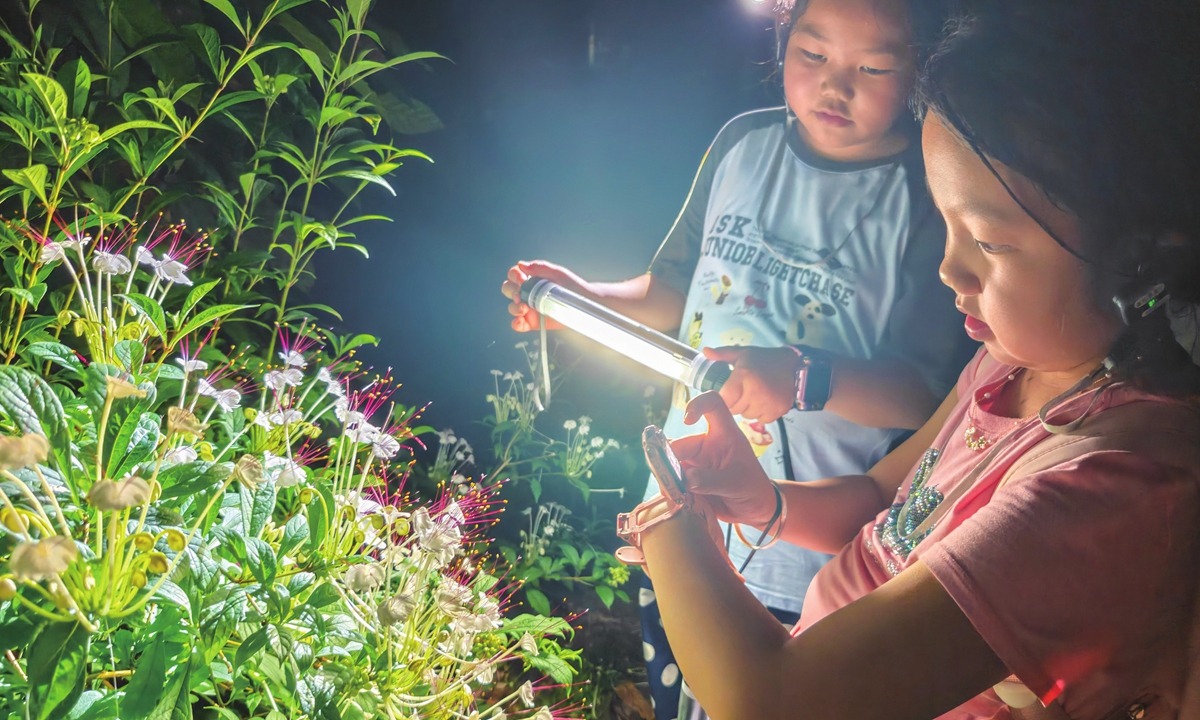
Children observe a "musical note plant" (Rotheca microphylla) at the XTBG on August 12, 2025. Photo: VCG
Near the aquatic gardens, children laughed around a pond dotted with giant green platters, which is the legendary Victoria amazonica, or giant water lily.
Its leaves are so buoyant they can support a small child. Sure enough, a toddler was carefully seated on one, grinning as cameras flashed. It felt like a scene from a Jules Verne novel, whimsical, otherworldly, yet perfectly real.
Then came the yellow Allamanda cathartica, cheekily dubbed the "Good Man Flower" because its hidden stamens make it a symbol of faithfulness, according to a popular Chinese saying.
Our guide smiled: "Just like people, appearances can deceive. It's beautiful, but also toxic, especially for pregnant women." She joked that in ancient times, concubines in the imperial palace would use this kind of flower to poison the fetuses in the wombs of the emperor's other concubines, all in their quest for his favor.
Yet, when processed correctly, this flower can be used to treat heart conditions and snakebites. It reminds me that nature often hides grace behind danger. But the true showstopper was the "dancing plant" - the Codariocalyx motorius.
As our guide sang a soft folk song from the Dai ethnic group, its slender leaves began swirling elegantly, tracing circles in the air as if keeping rhythm. "It needs two things to dance: temperatures above 22 C and plenty of sunlight," the guide explained, adding that the leaf stalks have spongy tissue that reacts to light and sound, when it gets warm or it hears music, the tissue expands and contracts, making the leaves move.
Later, visitors crouched over the shameplant - Mimosa pudica, giggling as they tickled the leaves into closing. Each touch made the plant fold inward, humble, responsive, alive.
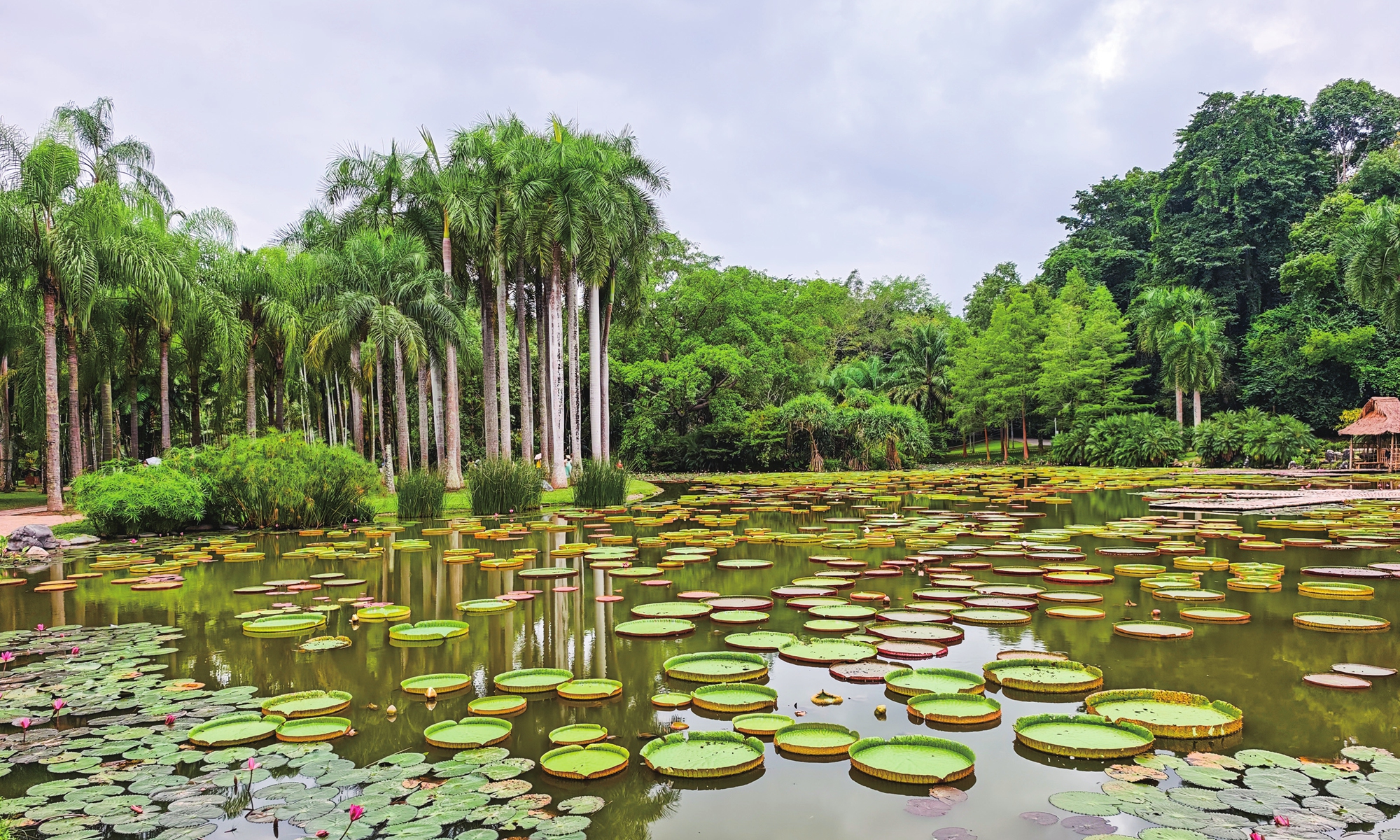
A pond of the legendary Victoria amazonica, or giant water lily at the XTBG in Mengla county, Southwest China's Yunnan Province, on September 12, 2025 Photo: Chen Xi/GT
Rhythm of coexistenceWhile strolling through the botanical garden, I soon found myself entering the International Garden of National Trees and Flowers. This area features trees and flowers introduced from various countries, and it was truly an eye-opening experience.
Near the end of the tour, our guide shared one last secret: "By day, we come for the plants. But at night… this place belongs to the animals." She told us about May evenings when the garden sways with fireflies, a galaxy of silent, blinking lights floating between trees that dance and leaves that shy away from human touch.
Walking back, I realized this wasn't just a garden, but a celebration of coexistence. The talipot palm's selfless bloom, the strangler fig's quiet but aggressive survival, the dancing grass's playful response to music, the mimosa's shy retreat, each is a lively showcase of the Xishuangbanna's rich biodiversity.
Here, tourists become nature explorers. One can marvel at the giant water lily's strength, laugh at the Good Man Flower's trick, and sing to the dancing grass. In return, nature teaches us patience, respect, and wonder.
Xishuangbanna doesn't just showcase rare species; it reminds us that we're part of something older, wiser, and wonderfully complex. Here, plants don't just grow. They respond. They adapt. They perform. And if you listen closely, they invite you to join in the dance.
RELATED ARTICLES