CAFTA 3.0 a key booster for regional economic resilience amid external uncertainties: Thai trade official
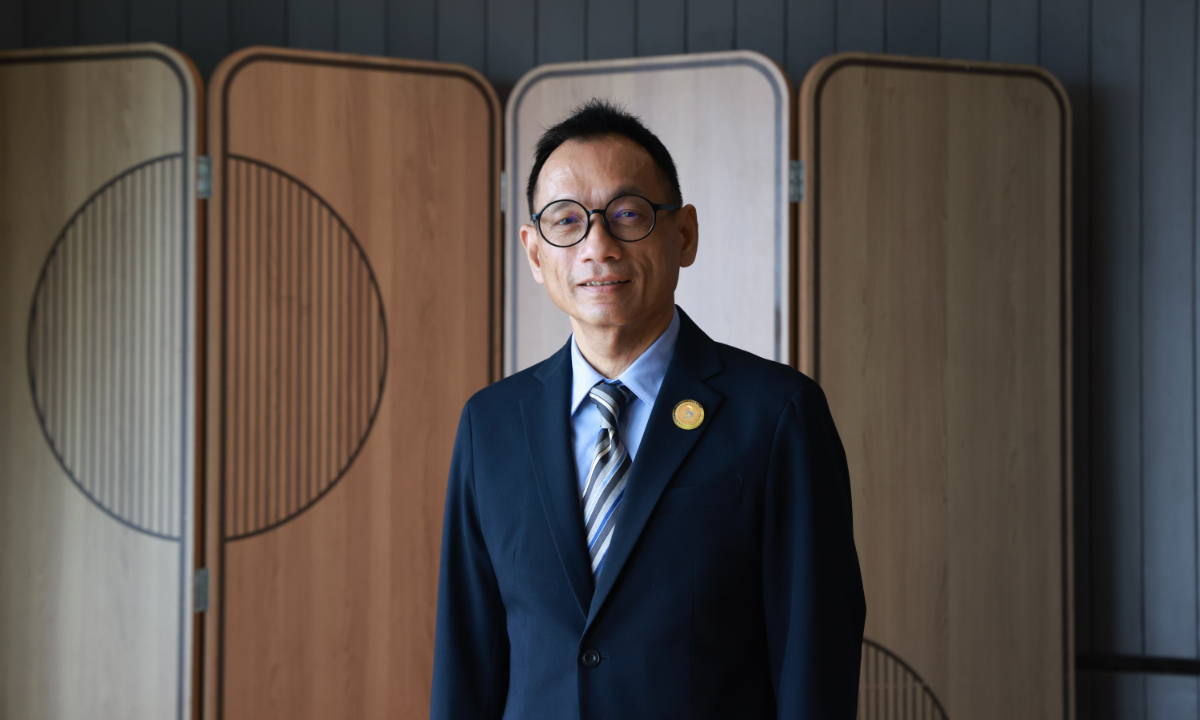
Ekachat Seetavorarat, deputy permanent secretary of Thailand's Ministry of Commerce
"The upgrade of the China-ASEAN Free Trade Area 3.0 (CAFTA 3.0) has become a critical buffer against external headwinds and a powerful driver for regional resilience," Ekachat Seetavorarat, deputy permanent secretary of Thailand's Ministry of Commerce told reporters during a press interview on Thursday attended by the Global Times.
The CAFTA 3.0 will deepen economic and trade cooperation between China and ASEAN and advance regional economic integration, Seetavorarat said. He added that the agreement is expected to boost competitiveness, particularly in the realms of digital economy and low-carbon economy, and maintain the strength and promote in-depth integration of production and supply chains, enabling ASEAN and China to adapt to emerging global challenges.
Jointly organized by China and ASEAN members, the 22nd China-ASEAN Expo (CAEXPO) opened on Wednesday in Nanning, South China's Guangxi Zhuang Autonomous Region. The event is expected to effectively support the implementation of CAFTA 3.0, the Global Times learned on the expo floor.
This year's expo arrives amid the upcoming upgrade of the CAFTA to version 3.0, the world's largest free trade zone among developing countries. Negotiations concluded in May, and a formal signing is expected by the end of the year, Xinhua News Agency reported.
Version 3.0 features nine new aspects, covering digital economy, green economy and supply chain connectivity, and addressing core issues in global industrial restructuring and sustainable development. Building on the existing CAFTA and the Regional Comprehensive Economic Partnership, it enhances regulatory alignment and trade facilitation, paving the way for deeper regional integration and industrial synergy, per Xinhua.
With global supply chains strained by geopolitical tensions and protectionism, the Thai trade official stressed at the expo that regional cooperation is essential to manage these risks.
"Both ASEAN members and China should deepen trade connectivity and uphold the principles of openness in markets and investment," he said, adding that such joint efforts are vital to strengthen the security and resilience of regional and global supply chains and safeguard stable international trade.
"Since joining the event in 2005, Thailand has consistently participated in CAEXPO annually. Thailand views CAEXPO as an important platform for strengthening and deepening economic, trade, investment, and cultural ties between China and ASEAN, as well as a platform for promoting trade cooperation among entrepreneurs from all countries," Seetavorarat said.
Seetavorarat noted that the bilateral relationship between Thailand and China is a comprehensive, multifaceted strategic partnership, bringing tangible benefits to both countries and their peoples, as the 50th anniversary of the establishment of diplomatic relations serves as a milestone for both countries to maintain positive trade momentum.
The progress of bilateral relations is reflected in the exchange of visits at various levels, including meetings of China-Thailand Joint Committee on Trade, Investment and Economy, market-opening measures, expansion of e-commerce cooperation, pilot projects for joint protection of geographical indications, crackdowns on IP infringement, as well as the development of high-speed rail and other areas, such as science, technology, and artificial intelligence (AI), tourism, education, and culture exchanges, he said.
China remains Thailand's largest trading partner and the most important export market for Thai products, particularly agricultural goods, rubber, fresh fruit, and electronics. I believe that in the future, Thailand and China will continue to deepen bilateral cooperation to enhance economic and trade development, based on the principles and vision of shared prosperity, maintaining fair and balanced trade competition, and aiming to build a stable, prosperous, and sustainable community with a shared future, Seetavorarat said.
AI as a strategic technology leading the scientific and technological revolution and modern industrial transformation, has become a new focus in China-ASEAN cooperation. During the expo, a Thai attendee surnamed Klahan told the Global Times that he was impressed by the innovative applications of AI showcased at the event. He noted that the integration of AI in various sectors, such as agriculture, healthcare, and manufacturing, could significantly boost productivity and efficiency in the region.
On AI cooperation, Seetavorarat said that both Thailand and China can contribute to building a comprehensive AI ecosystem that covers from research and development to practical applications, particularly in the digital economy, green economy, healthcare, agriculture, manufacturing, autonomous transportation and education.
"We also encourage more Chinese AI firms to expand into the Thai market, extend their supply chains, and establish joint R&D platforms and knowledge-exchange programs," said the Thai official.
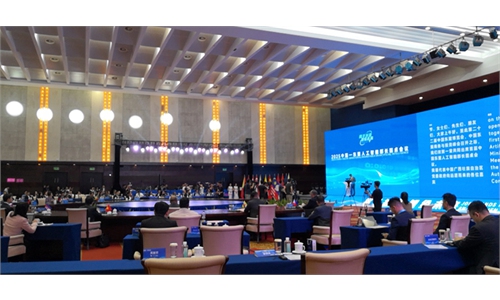
At the 2025 China-ASEAN Ministerial Roundtable on Artificial Intelligence (AI), held on Thursday in Nanning, Tiranee Achalakul, president of the Big Data Institute under the Ministry of Digital Economy and Society of Thailand said in her speech that "we are pleased to participate in cooperation between ASEAN and China in the field of AI. Thailand hopes to strengthen the construction of AI infrastructure and contribute to the development of AI."
In the context of the global trade environment, which has been overshadowed by US tariff pressures, investments by Chinese new electric vehicle (NEV) companies in Thailand have exemplified the potential for collaboration and growth. For instance, Chinese NEV maker Changan inaugurated its first overseas NEV plant in Thailand in May. The company expects its total overseas production capacity to reach 460,000 units by the end of 2025, the Securities Times reported.
RELATED ARTICLES