ARTS / CULTURE & LEISURE
Remembering Paul A. Cohen: US historian who broke ‘West-centric’ views of China
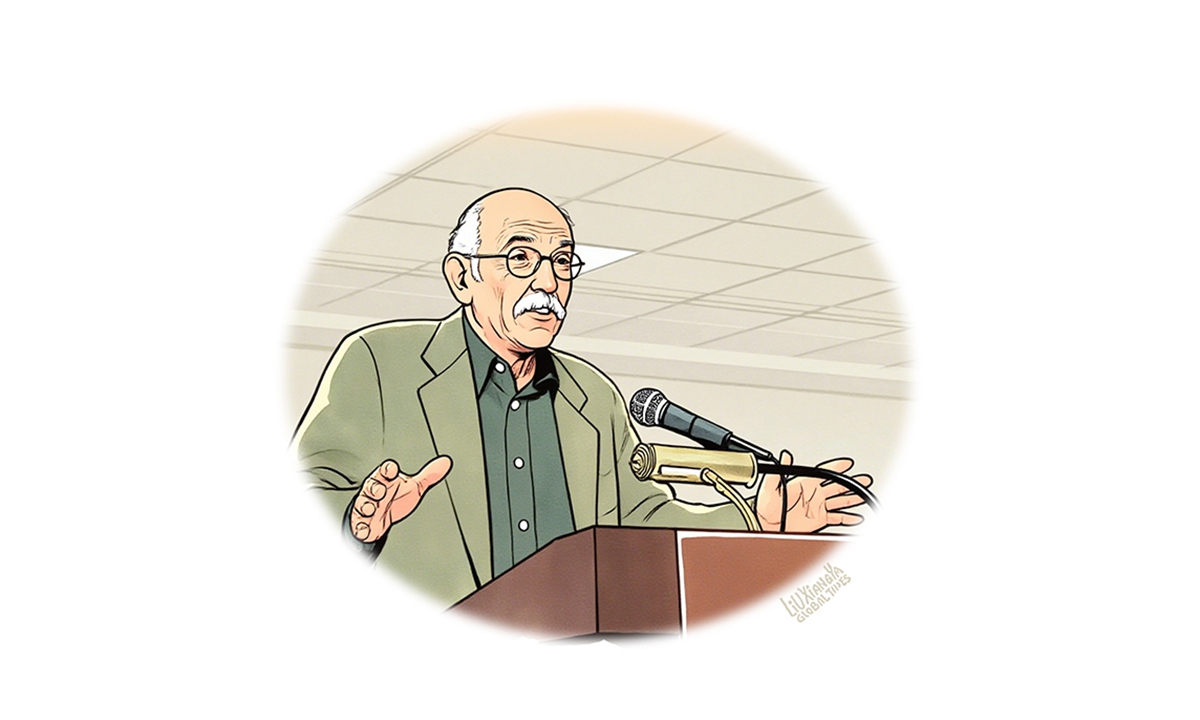
Illustration: Liu Xiangya/GT
On September 15, esteemed historian Paul A. Cohen passed away at the age of 91 in Boston, the US. Upon hearing the news, many Chinese readers of his academic works commemorated the career of this US scholar who dedicated his life to delving deep into Chinese history and contributed to the shift in the Western academic approach to China research.
He is remembered as a renowned US historian who refused to view China's history from a Western perspective, and, through his many works, made the "China-centered" perspective increasingly accepted in US Chinese history research, instead of a Western-centric one. He ingeniously pointed out the deficiency of the concept that "Western impact" caused "China's response" paradigm in historical research, but rather saw that Chinese reformers since the Qing Dynasty (1644-1911) were creative endeavors rooted in their own cultural heritage.
In his book Discovering History in China, he argued that China's modernization must grow from its own soil. This respect imbued his writing with warmth - he was not "explaining China," but rather "listening to China."
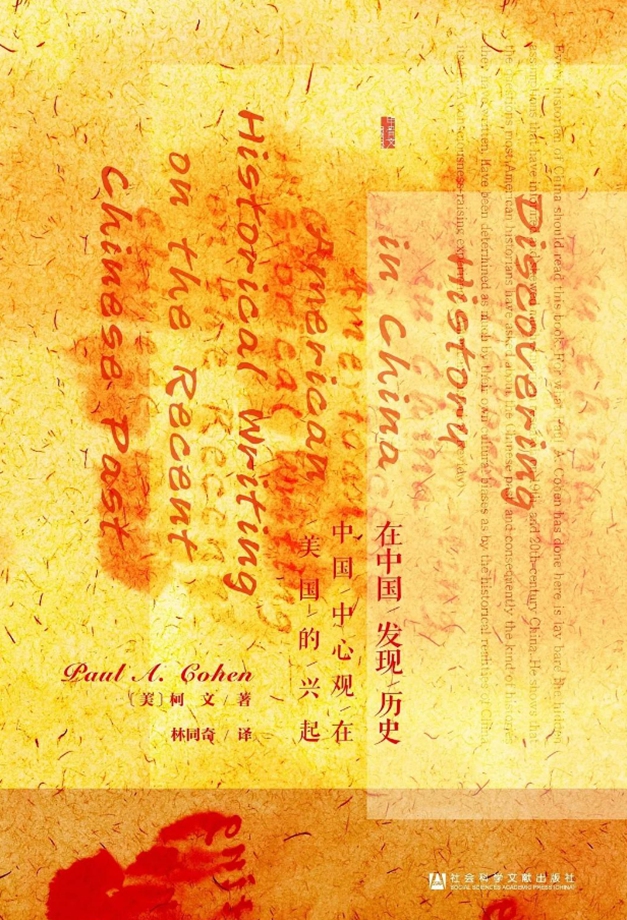
The cover of the Chinese version of Paul A. Cohen's Discovering History in China
Cohen's major works have been translated into Chinese and published in the country, inspiring Chinese history academia for decades.Following Cohen's passing, a small wave of tributes emerged from the Chinese academic community. As an "outsider," Cohen helped Chinese researchers to take advantage of being both insiders and maintaining an "outsider's academic perspective."
Despite the influence of his books, Cohen had attributed his achievements to the era he lived in.
He said it was the people of the 1970s who began to question Western centrism, and that he only followed suit. In his works, Cohen argued that the Vietnam War was the start of people's reflection on US imperialism, as people worldwide would not blindly assume the power of the US is a benign force. This sensitivity and courage to reflect on the West's role for Asian countries eventually helped Cohen hone his thinking and achieve his academic approach to the refreshing "China-centered perspective."
In the meantime, this "China-centered" approach does not seek to isolate China from the world but rather attempts to return Chinese history to its own soil and context - the Chinese people in his writings are no longer passive actors within Western theoretical frameworks but subjects with their own motivations, strategies, and struggles.
This shift in perspective not only revolutionized overseas Chinese studies but also deeply inspired scholars within China: We need not understand ourselves through the mirror of others, yet we need not refuse the existence of that mirror either.
In History in Three Keys, Cohen accomplished something remarkable. He simultaneously recognized three truths of history: official records, the blood and tears of those who lived through it, and the narratives that were later mythologized. This empathetic perspective allowed him to transcend cultural barriers and touch the heartbeat of ordinary people.
The passing of Cohen serves as a reminder that mutual respect and understanding, which is now conspicuously lacking from his home country toward the country he researched, are key to friendly exchanges and mutual benefit between different countries.
Cohen never shied away from identifying himself as a "cultural outsider," but he transformed this distance into an advantage for understanding. He stated that historians are like translators and so they must live in the past while speaking to the present. In his later studies of figures like Goujian and Joan of Arc, he argued that all nations seek strength through historical narratives. This belief in human empathy imbued his scholarship with a poetic glow.
Today, Cohen's thoughts have become woven into the fabric of Chinese academia. His analytical method from History in Three Keys is recommended in many history departments, and Discovering History in China is also a must read. More importantly, he demonstrated the possibility that foreign scholars can not only deeply understand China but also provide the Chinese with a fresh perspective to view their own history.
As Zhou Xueguang, professor of Sociology, Stanford University, put it, scholars who possess the capacity for self-reflection and dedication are truly admirable, and Cohen was one of them.
The author is a reporter with the Global Times. life@globaltimes.com.cn
RELATED ARTICLES