ARTS / CULTURE & LEISURE
Twofold care through diet and lifestyle for autumn wellness
Seasonal harmony
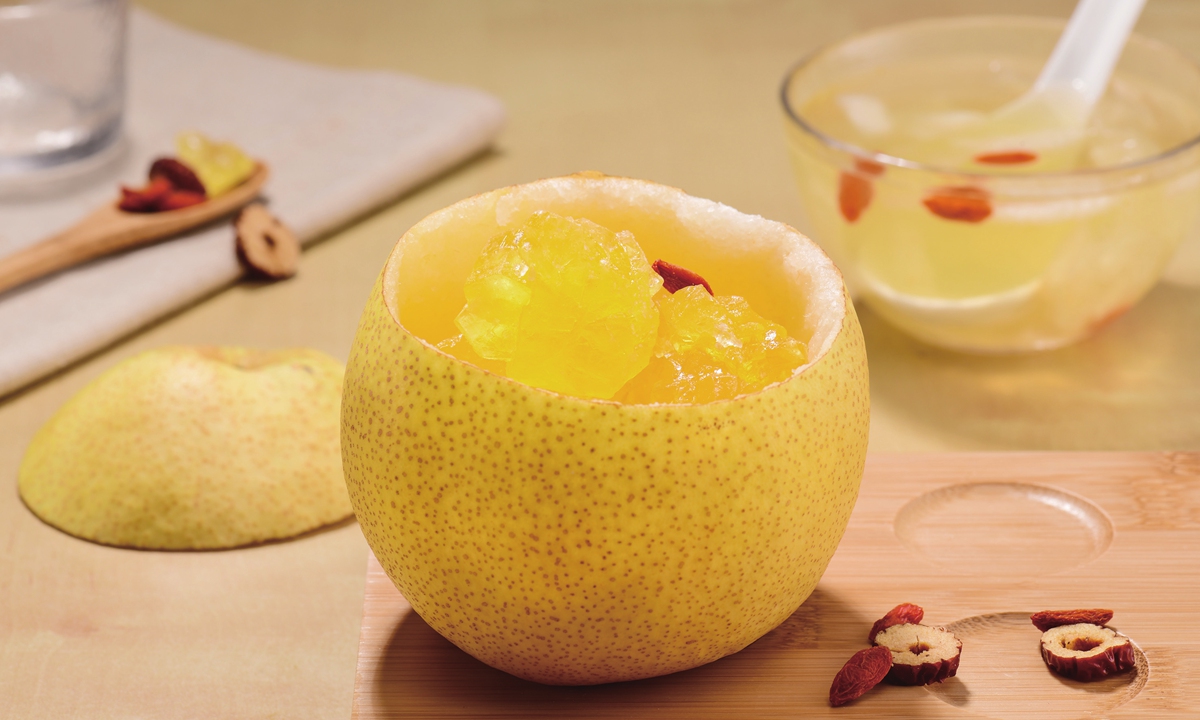
Rock sugar stewed pears Photos: VCG
In recent weeks, China's lifestyle-sharing social media platforms like RedNote have been flooded with trending topics like "autumn wellness drinks" and "hydrating soups." No longer seen as the preserve of the elderly, health preservation has become a popular lifestyle choice for the younger generation, who are now sharing recipes for rock sugar stewed pears, white fungus desserts, and lotus root soup online.The Autumn Equinox, one of the 24 solar terms of China's traditional calendar, marks the point when day and night are of equal length. Falling on September 22 in 2025, it signals the seasonal shift from warm to cooler weather.
Cold and dryness are the two defining features of autumn. Lower temperatures cause blood vessels to constrict, increasing the risk of high blood pressure, while the drier air due to reduced rainfall makes blood thicker and more viscous. Combined, these factors explain why autumn is considered a peak season for cardiovascular diseases, according to CCTV News.
In northern regions, where rainfall is scarce and winds are stronger, "cool dryness" is especially evident. To counter these challenges, many people have turned to their kitchens and daily routines for the simplest yet most effective solutions.
Prescription for the dining table
Autumn is the season when dryness prevails, and the lungs, being delicate, are particularly susceptible. Many chronic respiratory diseases tend to flare up or worsen during this season; it is advisable to avoid overly dry or fried foods in the autumn diet, according to the Chinese Academy of Agricultural Sciences.
"The human body tends to store fat in preparation for winter, which means calorie intake in autumn is often greater than calorie expenditure. This is why people who are overweight should opt for low-calorie foods in this season," Luo Chaofan, a rehabilitation therapist with China's National Health Commission, told the Global Times.
Luo further noted that autumn diets should include more sour foods to strengthen liver function. "Apples, grapes, hawthorn berries, and pomelos are all rich in water content and have a mildly sour taste, making them excellent seasonal choices," he said.
"Food therapy is the key to autumn health," Luo noted. "There's no need to overcomplicate it - sometimes a bowl of pear soup or white fungus dessert is the most natural nourishment one can have in this season."
Luo recalled that when he was a child and often suffered from coughing, his mother would always prepare rock sugar stewed pears for him. "At the time, I only thought it was sweet and tasty," he said. "Later, I realized it was part of the older generation's wisdom in living in harmony with the seasons."
Besides pears, other autumn nourishing ingredients like lily bulbs can nourish yin, moisten the lungs, and calm the mind. It can be used in soup, such as lily bulb with lotus seeds and lean pork soup, or cooked into porridge like lily bulb millet porridge, and it can also be lightly stir-fried. Lotus root can be eaten raw to clear heat and generate fluids or cooked to strengthen the spleen and stimulate the appetite.
It can be served cold to promote fluid production or stewed in soups for spleen nourishment; for example, when making lotus root and pork rib soup, choose lean ribs and skim off excess fat, according to the Beijing Youth Daily.
These everyday ingredients embody the wisdom of seasonal adaptation. Compared with complex medicinal recipes, they are simple, accessible, and easy to prepare, making them practical remedies for modern households.
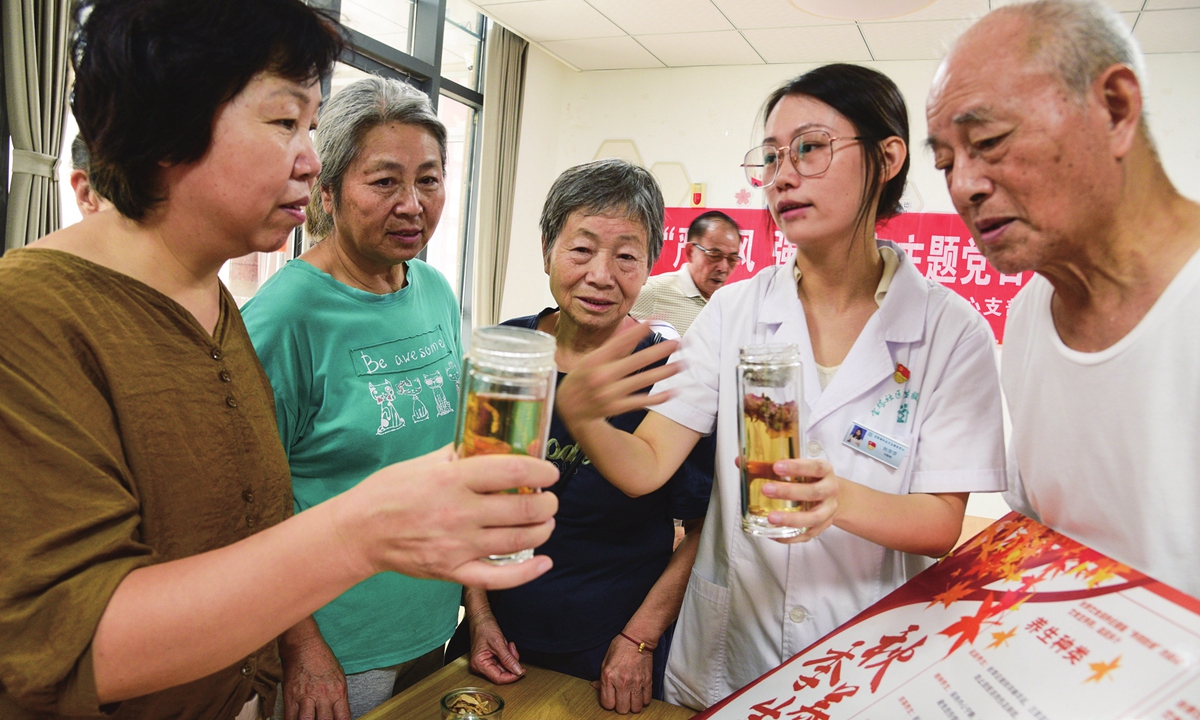
A medical staff member explains to elderly visitors how to brew autumn health tea in a community health service center in Zhenjiang, East China's Jiangsu Province, on September 12, 2025.
Habits for seasonal fitnessBeyond diet, autumn wellness also depends on lifestyle adjustments.
"There's some truth to the saying 'Keep warm in spring and stay cool in autumn,' but it doesn't mean the colder the better. Once the temperature drops below 18 C, you should add appropriate layers, especially protecting the ankles, knees, and lower back," Zhang Boli, an academician from the Chinese Academy of Engineering, was cited by media.
On top of proper protection, moderate exercise is another important way to fend off autumn dryness. Traditional Chinese medicine emphasizes that "movement generates yang." In autumn, appropriate activity not only strengthens the body but also helps regulate one's mood and prevents irritability caused by seasonal dryness.
"Many people feel drowsy in autumn, lacking energy. This is actually related to how dryness affects the respiratory system. Moderate aerobic exercise can train lung capacity and improve the body's ability to use oxygen, thereby easing this so-called 'autumn fatigue,'" Li Weihan, a sports researcher and professional basketball player based in Shanghai, told the Global Times.
Li noted that exercise is less about intensity and more about regularity and moderation.
"For example, autumn jogging should be kept within about 30 minutes, with the body slightly sweating. There is no need to push for drenched workouts.
"Elderly people can choose walking or tai chi, while younger people might practice baduanjin or yoga. The key is smooth breathing and gentle movements," he said.
According to Li, autumn's big temperature swings require extra care: warm up properly before exercise to avoid joint stiffness or cold-induced injuries, and afterward, wipe off sweat promptly, drink warm water, and stay warm.
"Health preservation is not a luxury, but rather it is about life's small details. By following the seasons and giving the body a little nourishment, we can better adapt to autumn," Luo noted.
RELATED ARTICLES