ARTS / CULTURE & LEISURE
Chinese writer Wang Meng's new book blends culture and philosophy for a healthy China
‘The blessing of good sleep’
By Zhang Ni and Published: Sep 28, 2025 11:36 PM

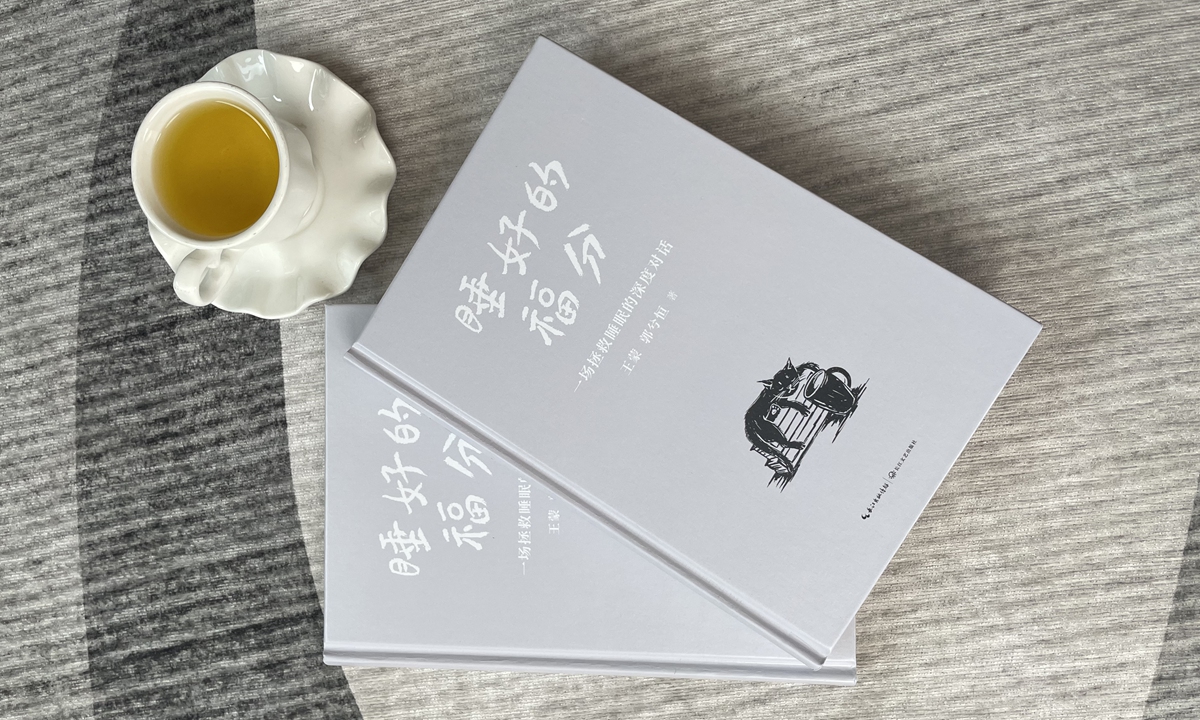
The book: The Blessing of Good Sleep Photo: Courtesy of Changjiang Literature and Art Publishing House
At the age 91, Chinese literary giant Wang Meng continues to weave profound insights into the fabric of modern life. His latest book, The Blessing of Good Sleep, co-authored with sleep expert Guo Xiheng, transcends the mere mechanics of rest, presenting sleep as the cultural and philosophical cornerstone of well-being. In an exclusive interview with the Global Times, Wang shared how sleep reflects not only personal health but also the pulse of society, offering a vibrant cultural lens on China's Healthy China initiative.
Mirroring the times
"At the age of 14, I lived in a dormitory, lying awake all night listening to the sounds of teeth grinding and snoring. Later, I adapted - and those years of being able to sleep well, of being good at sleeping, kept my mind clear and my life light." Speaking about his motivation for writing, Wang's memories drifted back to his teenage years.
From suffering to enjoyment, from personal experience to collective observations, he noticed that sleep problems have always mirrored social changes: In the course of modernization, fiercer competition, information overload, and an unbalanced pace of life have turned "a good night's sleep" into a luxury for many, he said.
The China Sleep Health Survey Report 2025 released by the Chinese Sleep Research Society in March 2025 shows that the rate of sleep disturbances among people aged 18 and above has reached 48.5 percent.
To Wang, these figures are not only a health warning but also a portrait of the spirit of the times. "Sleep quality is inseparable from one's overall mental state, which in turn is closely linked to personal cultivation and the social environment," Wang noted. Insomnia often stems from "bitterness, pettiness, and self-preoccupation," while envy and resentment can leave one "unable to eat or sleep in peace."
He introduced Chinese philosopher Zhuangzi's concept of xin zhai, or fasting of the heart, into the philosophy of sleep. "Fasting controls the appetites of the mouth and stomach; fasting of the heart controls the mind, ridding it of distractions, anxiety, and imbalance. To feel envy and resentment toward someone is essentially a disorder of the spiritual world," he explained. This disorder is both an individual's mental predicament and a reflection of the collective psychological tremors during a period of social transformation.
In his view, good sleep can also be achieved by following the way of nature. "Go against the laws of nature and overtax body and mind, and you won't be able to sleep; align yourself with the rhythms of life, treating sleep as a process of 'natural download,' and you'll find peace," he noted. This practice of "Dao follows nature" is precisely the contemporary continuation of the Chinese people's traditional wisdom about life.
From 'sleeping well' to 'living well'
"Embrace all healthy ways, reject all unhealthy ones." At 91, Wang has used his own life path to illustrate the positive cycle between "sleep power" and "vitality." His recipe for health is simple yet profound: a regular lifestyle, decades of swimming and walking, consuming dairy products, and maintaining both mental and physical labor.
Far from "lying flat," he has even ventured into writing love novels in his later years, joking that "one can still have love at 105." This state of "having something to do" is, in his view, a remedy against aging and insomnia.
In his eyes, "sleeping well" is not an isolated goal but a natural outcome of "living well."
When one maintains love for life and self-discipline, sleep returns to its most authentic state. This practice subtly reflects his understanding of the "isomorphism" of Chinese culture: "Life creates literature, and literature also creates life."
From his early works celebrating youth and ideals to his later studies of traditional culture, Wang has always sought vitality in the interaction between life and culture.
His philosophy of sleep is the epitome of how he elevates personal experience into cultural awareness: From the pain of "poor sleep" to the wisdom of "good sleep," it ultimately points to reverence for the essence of life and a steadfast commitment to cultural roots.
When sleep becomes a national agenda
What makes The Blessing of Good Sleep special is that it goes beyond being a medical guide to sleep, it places sleep within the strategic vision of the Healthy China initiative.
"Quality sleep and a positive attitude toward life are not only the foundation of personal health but also an essential part of the Healthy China vision," Wang emphasized.
In an era of advanced aging and high incidence of chronic diseases, enhancing "sleep power" is not merely an individual need but also a micro-level support for the country's health strategy.
His concept of "fasting the heart" offers a cultural way out for modern people: In an era of information overload and spreading anxiety, we can rebuild a sense of spiritual order by adjusting our mindsets, simplifying desires, and returning to nature.

Writer Wang Meng Photo: Courtesy of Changjiang Literature and Art Publishing House
RELATED ARTICLES