ARTS / CULTURE & LEISURE
Designer reveals features of stamp set marking centennial anniversary of Palace Museum
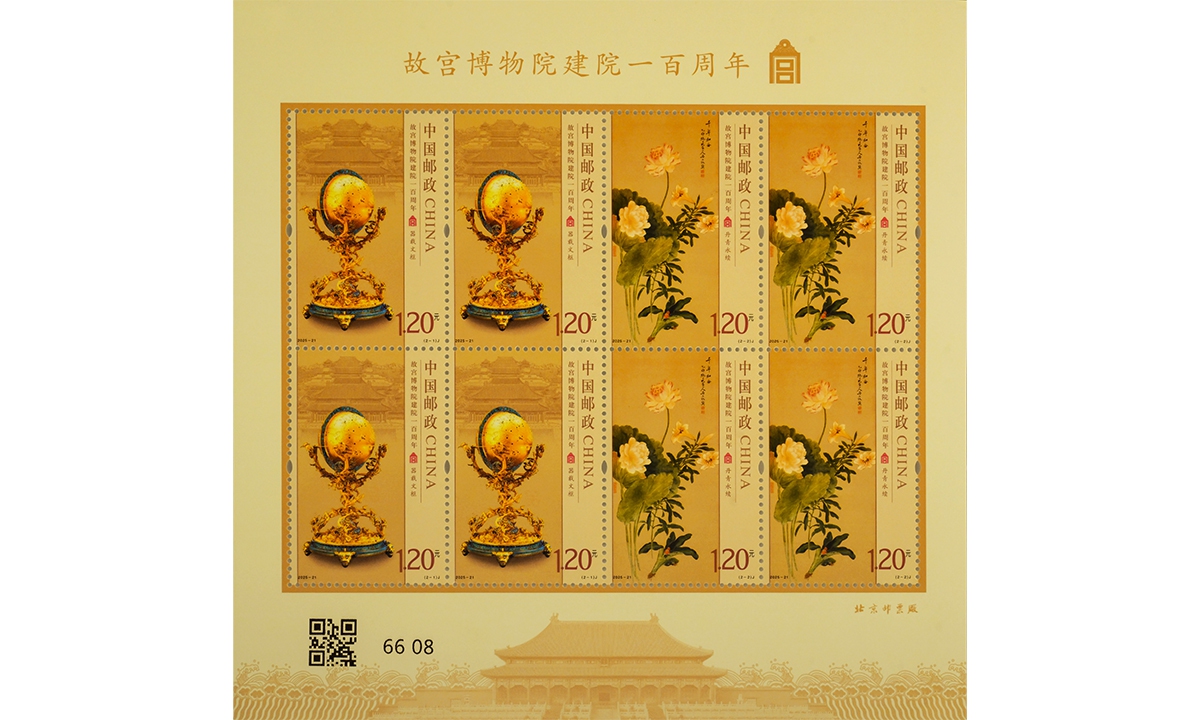
Commemorative stamps for the 100th Anniversary of the Founding of the Palace Museum Photos: Courtesy of Beijing Stamp Factory
China Post will issue a two-stamp set on Friday to commemorate the 100th Anniversary of the Founding of the Palace Museum. With each stamp priced at 1.2 yuan (17 cents) , the set features two cultural relics in the Palace Museum collection: a celestial globe crafted from gold and a classical Chinese painting by Ma Yuanyu.Yin Xiaofei, the designer of the stamps at the Beijing Stamp Factory, told the Global Times that the design has integrated the color gold into the theme.
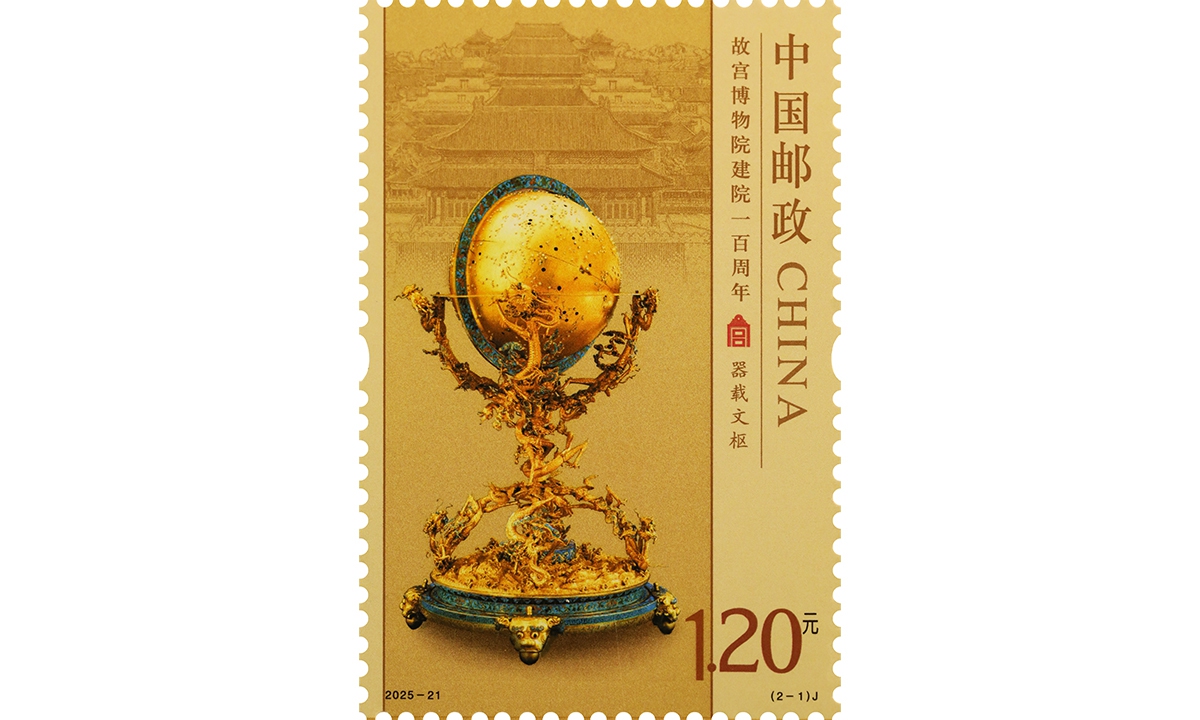
In the first stamp, the main design features the Golden Celestial Globe with Pearl Inlays.
This golden globe consists of three main parts: the base, frame, and globe. The globe is inlaid with pearls depicting the 28 traditional Chinese constellations (xingxiu), 300 other constellations, and more than 2,200 stars. It is also engraved with the representatives of the three main celestial groupings of traditional Chinese astronomy (Ziwei, Tianshi, and Taiwei). The middle of the base features a compass. Inestimably valuable, this work is the only celestial globe made of gold to have been preserved from dynastic times.
Dating from the Qing Dynasty (1644-1911), this rare national treasure was commissioned by the Qianlong Emperor, reflecting his keen interest in Western science and technology.
In the background of the stamp is the Palace Museum as seen from Jingshan Park, where, at the top of the hill in the park, visitors have a bird's eye view of the museum.
"To go along with the golden color of the cultural relics, I chose the color of earth," said Yin.
To make sure the aerial view of the museum would be vivid and accurate, he conducted on-site research many times. His painting has captured the unique shape and exquisite craftsmanship of the cultural site. The Shenwumen, or Gate of Divine Prowess, and palace complex of the Forbidden City are incorporated in the image, showcasing the majestic and magnificent grandeur of the palaces.
"For details, I studied and portrayed each small house and building, including ridge beasts such as phoenix-riding immortals, corner beasts and chiwen [a roof ornament on ancient Chinese buildings]," said Yin.
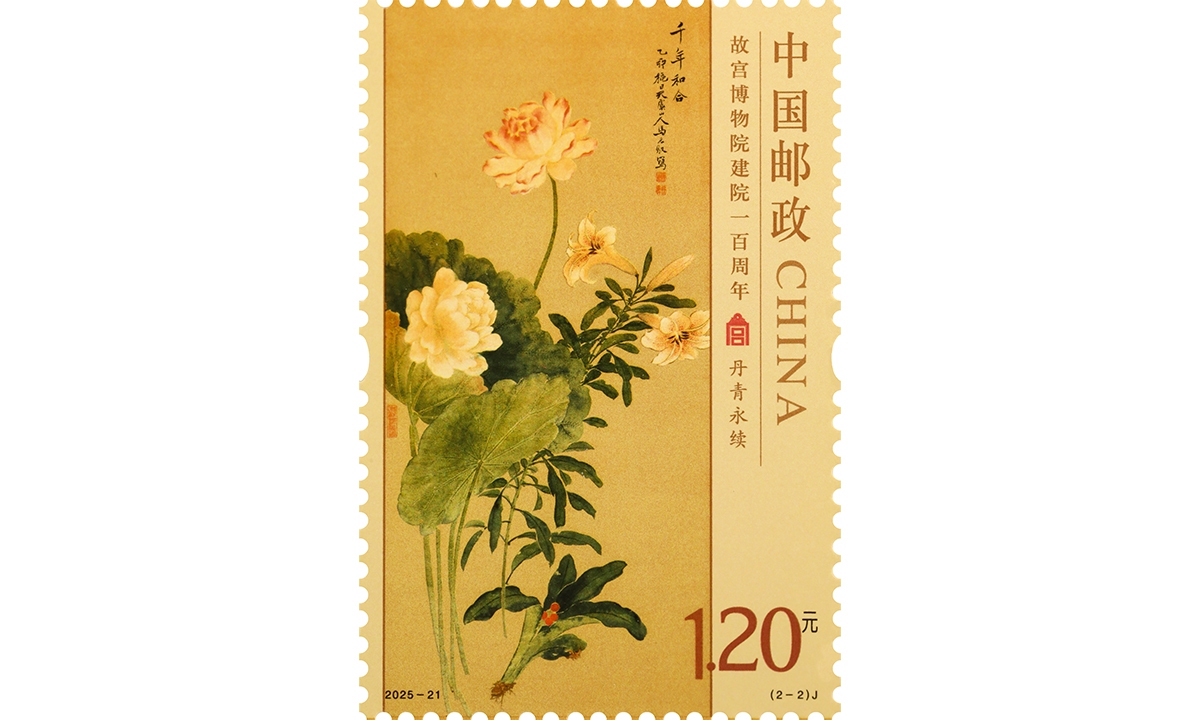
In the other stamp is the painting Qiannian Hehe Zhou or the Millennium Harmony Scroll, an ancient floral painting that embodies the Chinese nation's philosophy of harmony and inclusiveness and its cultural connotations. The work reflects people's yearning for and pursuit of a harmonious and beautiful life.
"I adjusted the colors to make them appear richer and more vibrant. The border is gold, with delicate brown lines added for decorative effect. The text is brown, and the face value is purple-red, smartly integrating the face value and border," Yin said.
He used a khaki color close to that of ancient paintings as the background of the stamp to maintain the ancient texture of the cultural relics.
"I added gold to the border to echo the splendor of the celestial globe. The color of the text is brown, and the face value is purple-red. The red logo of the Forbidden City was added to show the harmonious beauty and unique charm of Chinese cultural relics spanning thousands of years," he explained.
RELATED ARTICLES