ARTS / ART
Chilly weather hits Beijing: mutton hotpot sparks a buzzing sense of joy
Rainy days warmed by traditional cuisine
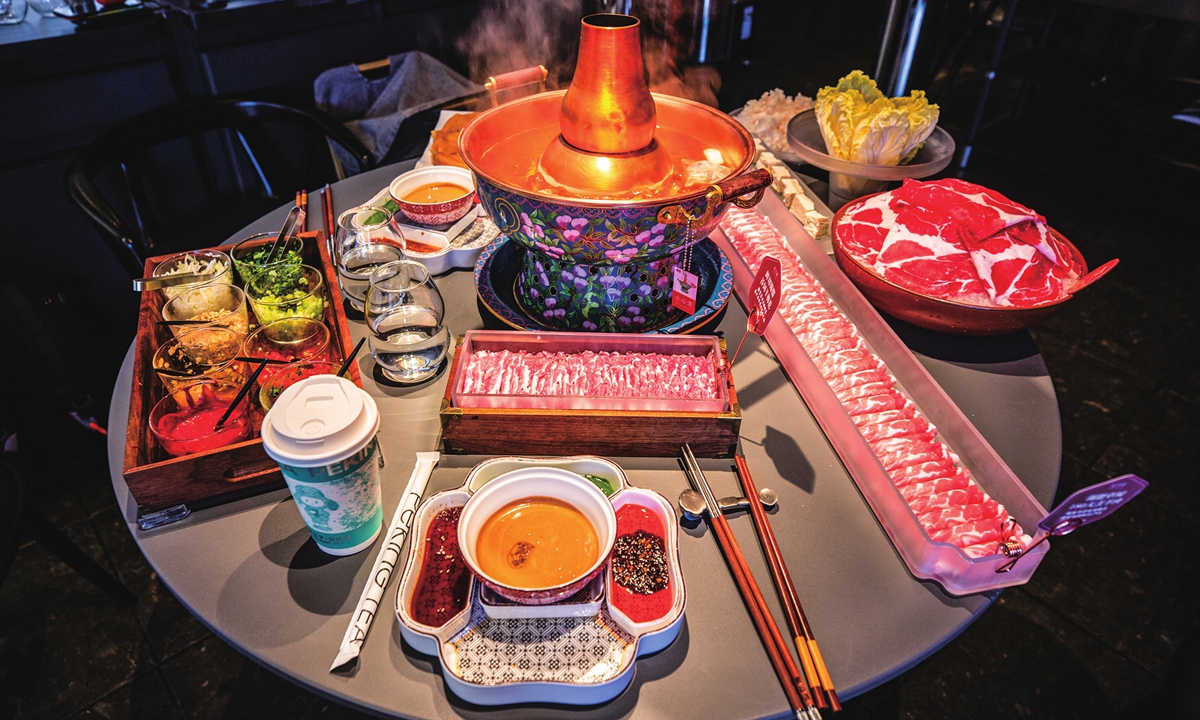
A traditional Beijing copper hotpot Photos: VCG
"Hotpot on a rainy, chilly day, that's pure happiness!" "Raindrops outside, bubbling broth inside -- happiness level: maxed out!" Such captions have recently gone viral across Chinese social media platforms.Following the unrelenting rainfall and a sharp temperature drop in Beijing, residents have put away their T-shirts, slipped into light jackets, and once again gathered around steaming hotpots and fragrant mutton slices. The copper hotpot, rolling broth, and thinly sliced mutton dipped in sesame sauce have turned into the city's most comforting form of social gathering on rainy autumn days.
For Wang Yuxiong, the surge in instant-boiled mutton hotpot's popularity comes as no surprise. As the head of a Beijing-based restaurant chain, he first noticed it from the numbers.
"When the temperature drops, orders from our suppliers for sliced mutton and sesame sauce soar," he told the Global Times.
"In the past, people focused on flavor; now it's more about atmosphere, sitting around one pot, chatting, having a small drink, listening to the rain tapping outside. That's what we call a pleasant time," he said.
For many people in Beijing, instant-boiled mutton hotpot is not just about taste; it's a lifestyle. Between the chill of autumn and the warmth of shared meals, the hotpot embodies the city's very own sense of comfort and connection.
Traditional dining
The distinctive atmosphere of Beijing-style hotpot is deeply rooted in the city's culinary tradition. Indeed, this style of hotpot represents a time-honored dining culture that values a shared, slow-paced dining experience.
The Beijing hotpot is characterized by a clear and light soup base, paper-thin mutton slices cooked in traditional pots made of copper, and a variety of dipping sauces made from sesame paste, chive flowers, and fermented bean curd, according to Visit Beijing.com.
"Even today, the ratio for blending sesame sauce remains a closely guarded secret among long-standing restaurants, while the copper hotpot itself has become a symbol of Beijing's cuisine," Zhao Siyao, a Beijing-based food critic, told the Global Times.
"Although traditional Beijing hotpot [instant-boiled mutton] includes a strong sense of ritual, its ingredients are in fact quite simple," she said.
Aside from fresh mutton, the menu also features tripe, Chinese cabbage, vermicelli, and pickled vegetables. Served with sweet-and-sour garlic, sesame seed buns, and mixed noodles, these are all humble, everyday foods, yet it is precisely such simplicity that gives rise to the most genuine, heartwarming flavors of everyday life, according to Visit Beijing.com.
Today, this long-standing tradition has undergone significant evolution. In Beijing's districts such as Haidian, many restaurants have introduced fresh innovations, from handmade beef meatballs to freshly sliced beef, while retaining the signature clear broth and mutton that define the old Beijing flavor, catering to younger diners' preferences.
Although hotpot is delicious and comforting, copper hotpots are usually heated with charcoal, and incomplete combustion can easily produce carbon monoxide.
Experts remind consumers to choose licensed hotpot restaurants with good ventilation and to avoid dining in enclosed spaces for long periods. After eating, diners should not immediately seal the ventilation opening, as doing so could be harmful. If symptoms such as dizziness or chest tightness occur during the meal, they should leave the area at once and ventilate, according to Lifetimes.
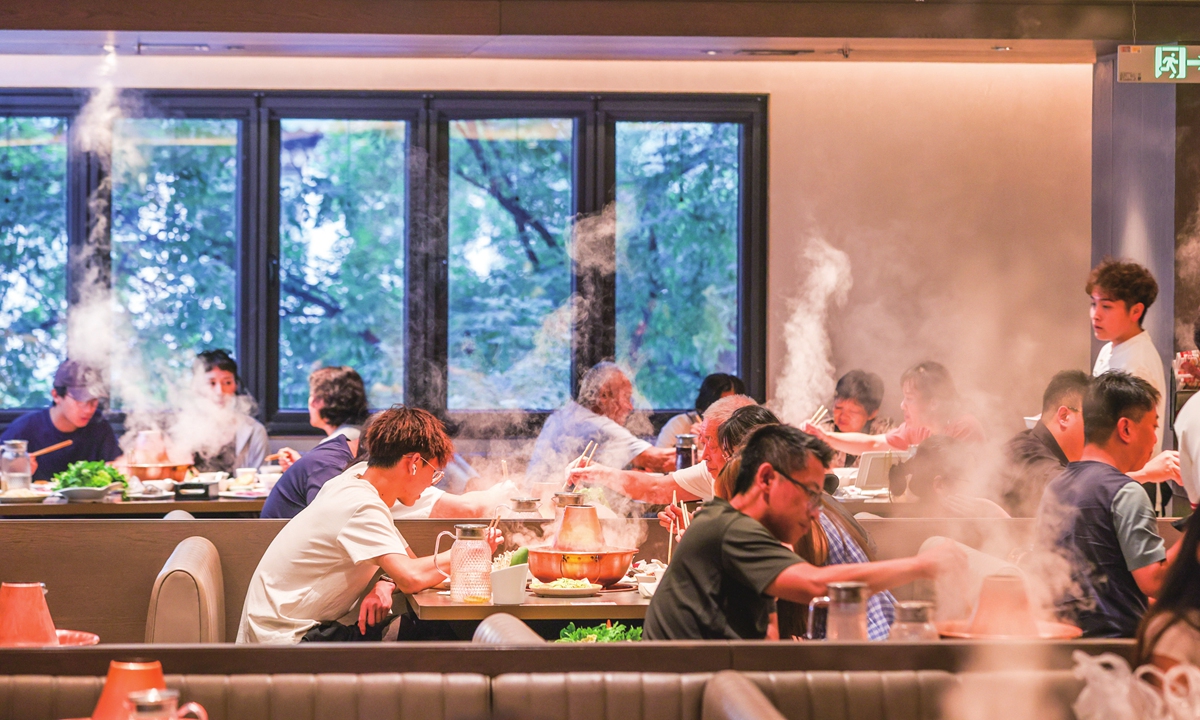
Diners enjoy hotpot in a restaurant in Beijing, on August 7, 2025.
An emperor's legacyWhy does Beijing, a city not known for producing mutton, have such a deep affection for instant-boiled mutton?
The view that this dish entered Beijing during the Qing Dynasty (1644-1911) is supported by extensive historical records, many of which mention Emperor Qianlong, as a well-known "hotpot enthusiast." It is said that he enjoyed more than 200 hotpot meals a year, according to Beijing Daily.
Qianlong's favorite variety was the so-called "wild-style hotpot," also known as the "Manchu hotpot." Originating in Northeast China, it featured a tin outer pot with a copper chimney at the center, heated by charcoal. Once the broth came to a boil, slices of meat, chicken, and fish were cooked together, filling the air with aroma.
In this royal version, mutton was just one ingredient among many - wild pheasants, roe deer, and venison tail all reflected the emperor's lavish tastes.
As for the origin of instant-boiled mutton, a popular legend traces it back to Kublai Khan, the first emperor of the Yuan Dynasty (1279-1368).
It is said that during a winter military campaign, his troops were ambushed while preparing a meal. With no time to roast a whole sheep, the cooks sliced the meat thinly, blanched it quickly in boiling water, sprinkled some salt, and served it immediately.
This quick and practical method suited the fast pace of the army and soon spread across the grasslands.
By the late Qing and early Republic of China (1912-1949) periods, people in Beijing had turned this practice of dipping thinly sliced meat into boiling broth into what they called "raw hotpot," as noted by the late Qing scholar Xu Ke in his writings.
"With its copper hotpots, charcoal flames, paper-thin lamb, and rich sesame sauce, it became a symbol of cold warmth in the capital," Liu Xin, a longtime Beijing hotpot enthusiast, told the Global Times.
"It's in the shared laughter over a dipping sauce, the rhythm of meat sliding into the broth, and the clatter of bowls that Beijing's everyday life reveals its warmth," he said.
Though ingredients have since diversified, mutton remains the soul of Beijing-style hotpot, embodying an enduring blend of tradition and nostalgia.
RELATED ARTICLES