ARTS / CULTURE & LEISURE
The value and cultural legacy of Chinese dramatic literature
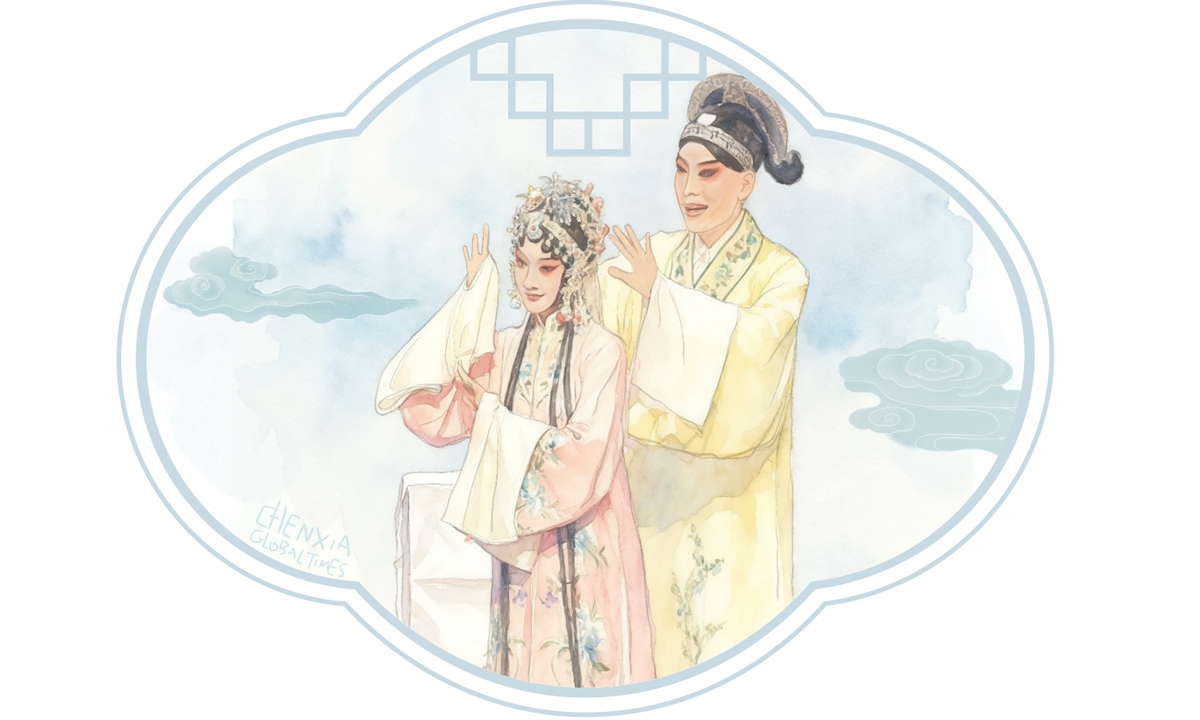
Illustration: Chen Xia/GT
Editor's Note:Stage dramas, first and foremost, are literature. Throughout history, truly moving works of drama have always ended up becoming literary classics. Compared to other literary forms, dramatic literature is more comprehensive, more complex, and more distinctive. Its characters are more vivid, three-dimensional, and fully-realized; its conflicts are sharper, more intense, and more concentrated; its plots are tighter, more intricate, and more dynamic; its structure is more rigorous, complete, and logical; its language is more concise, condensed, and powerful. The same applies to Chinese dramas, represented by Chinese opera. Thus, as Chen Yongquan, renowned playwright and vice chairman of the China Theatre Association, points out in this article, dramas are not only literature but also the most advanced and challenging form of literature.
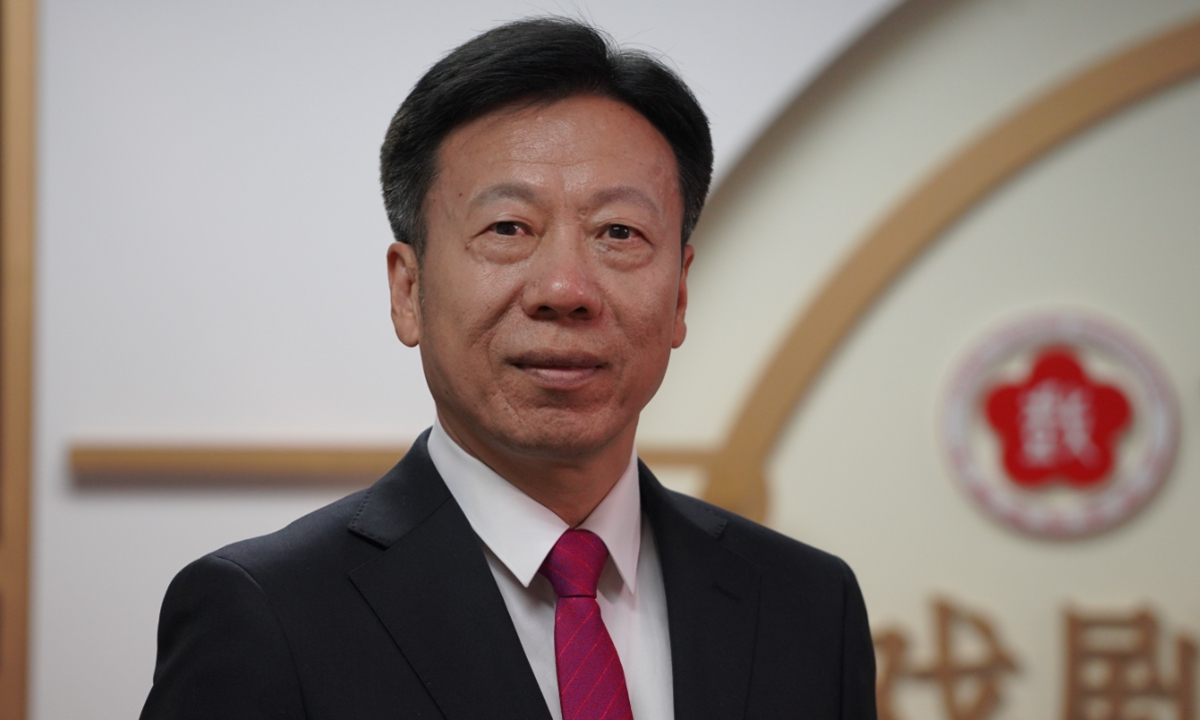
Chen Yongquan
Dramatic literature features a high degree of synthesis, depth, and uniqueness. It is drama, but also incorporates elements of fiction, poetry, prose, and more. A playwright must possess the narrative skill of a novelist, the poetic sensibility of a poet, the subtle emotions of a prose writer, and the philosophical depth of a thinker, while also understanding the rules of the stage and having strong spatial imagination and structural capacity. The complexity of drama comes not only from its literary integration but also from leaving creative space for music, dance, visual arts, and other specialized art forms. A playwright needs both literary excellence and a grasp of various artistic characteristics.Drama places more emphasis on conflict than any other literary form. Yet, the ways Chinese opera and Western drama works present, understand, and resolve conflict differ fundamentally in their philosophy and aesthetics; Chinese opera cannot be judged solely by Western conflict theory. Chinese opera, a form of national drama that originated from the rich soil of traditional Chinese culture, is defined by lyricism, moral edification, artistic suggestion, and the pursuit of harmony. Dramatic conflicts may be between people, or between people and fate, society, nature, or themselves, but be they external or internal, they must be portrayed with subtlety and realism to resonate with audiences.
Dream of the Red Chamber, the foremost of China's four great classical novels, was written by Cao Xueqin, who had a passion for Chinese opera. As I have said, without the nourishment of Chinese opera, there would be no Dream of the Red Chamber. The novel contains 103 references to opera: 57 formal performances and 46 allusions or lyrics.
A typical example appears in Chapter 23, where Jia Baoyu and Lin Daiyu praise classic Chinese love story Xi Xiang Ji, or Romance of the Western Chamber. Jia calls it "a great book - once you start reading, you'll even forget to eat." Lin, reading it, becomes increasingly captivated and finishes all 16 plays in one sitting, lingering in admiration for the work's language. Passing a courtyard, she hears lyrics from The Peony Pavilion: "In such fine weather, in whose garden does happiness dwell?" "So there is fine writing even in opera!"she says with a sigh.
The novel lavishes detail on its characters' love of opera. Their praise, in fact, reflects Cao's own feelings. He was a devoted fan of opera with deep musical knowledge. He had read every opera featured in Dream of the Red Chamber. The narrative style of the novel is permeated by opera's influence, its dramatic qualities pronounced. The deep impact of opera literature had on Cao is clear.
Opera influenced not only Dream of the Red Chamber but almost all the novels from the Ming and Qing dynasties (1368-1911). For example, The Plum in the Golden Vase incorporates song lyrics, ballads, and storytelling throughout.
Stage dramas' literary excellence is also reflected in playwrights' innovative spirit and their ability to reshape other literary forms. Both Chinese and Western theater history are filled with playwrights and masterpieces that demonstrate this. Romance of the Western Chamber's wish for all lovers to unite and The Peony Pavilion's deep exploration of emotion - "Love arises unbidden, deep and unyielding. The living may die, the dead may live" - broke through feudal moral constraints and gave voice to human liberation.
Adapting literature into a stage drama is a long-standing tradition in the East and West. Such adaptations may seem like literature is "supporting" dramas, but in fact dramas "elevate" literature. Chinese opera has nurtured generations of writers and poets, its influence subtle and far-reaching. Even those who have never seen a play may use dramatic expressions in everyday life. In this sense, dramas are the mother of literature, and adaptation is literature's reciprocal gift to dramas.
Dramatic adaptation gives literature a broader platform and deeper vitality. China's four great novels are renowned in part because they have been adapted into operas more than any others. As I said, classics are created through frequent adaptation. When adapting literary works, playwrights must stand tall and not belittle themselves. Adaptation brings renown to literature, elevates it, and makes it immortal. Stage dramas and literature have been intertwined throughout Chinese theater and literary history. As mentioned, Romance of the Western Chamber and The Peony Pavilion also inspired Dream of the Red Chamber. This interplay is present in classical and modern literature alike. For example, Shaanxi drama's adaptations of Mao Dun Literature Prize-winning novels have led to the creation of a unique modern theater style. When a literary work is staged, it gains wider reach and greater vitality.
Dramatic literature is superior because it creates infinite artistic possibility within limited time and space. Through condensed language, it conveys profound thought and powerful feeling, illuminating human brilliance. To neglect the literary quality of dramas is to lose their essence; no stage spectacle can fill a hollow soul. Only by valuing scriptwriting and upholding literary standards can we fortify the soul of dramas and keep the stage strong. The playwright is an architect, building the framework and soul of a story; only with a solid foundation can the theater stand tall. Rooted in literature, the tree of dramas will flourish and endure.
The author is a renowned contemporary Chinese playwright and vice chairman of the China Theatre Association
RELATED ARTICLES