ARTS / CULTURE & LEISURE
China Pavilion captivates millions of visitors, wins top award as Osaka Expo comes to close
Lasting Impression
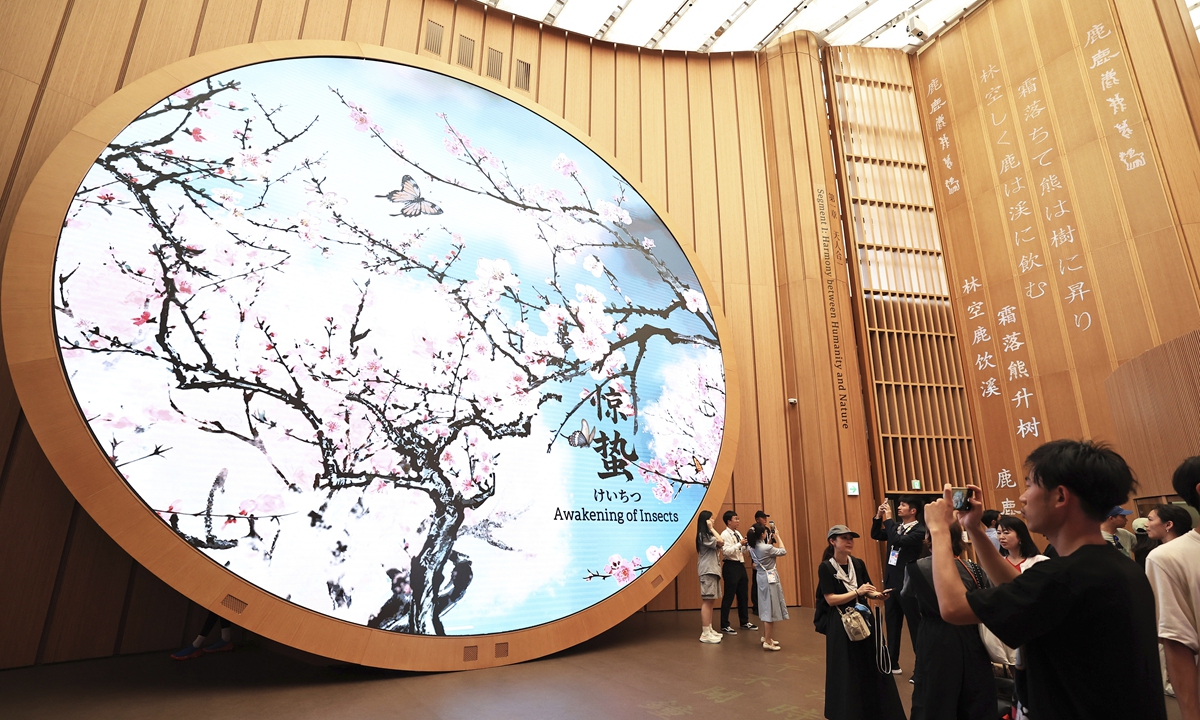
Visitors take photos inside the China Pavilion at the Expo 2025 in Osaka, Japan Photo: VCG
After nearly six months of exhibitions and events, the Osaka Expo came to a close on Monday.
Drawing over 1.9 million visitors from all around the world, the China Pavilion was one of the most popular attractions, according to the China Council for the Promotion of International Trade (CCPIT).
On the eve of the closing, long queues formed at the entrance of the Expo as visitors flocked to the venue for one last look at the pavilions.
Some even set up tents overnight to be among the first to experience the final day's atmosphere.
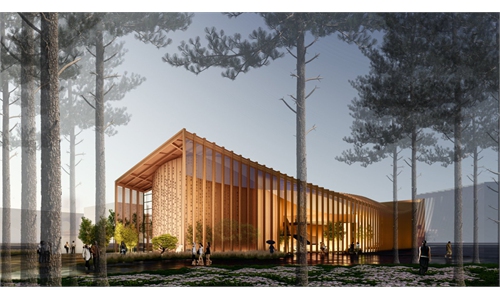
The China Pavilion covered approximately 3,500 square meters. Inspired by traditional Chinese calligraphy scrolls, the pavilion showcased traditional ecological wisdom rooted in 5,000 years of Chinese civilization, China's modern achievements in green development, and its vision of working with the world to build a shared future for humanity and nature.
Popular destination
"It has been a star pavilion, receiving overwhelming praise," said Li Qingshuang, vice president of the CCPIT.
"Over 1.9 million visitors from around the world visited the China Pavilion, including nearly 300 political figures and celebrities from 95 countries and regions."
Li added that many visitors returned multiple times, sharing their emotional connections with China and leaving behind touching stories and heartfelt moments.
Among them was Taishi Fujimoto, a university student from Kobe. He told the Global Times that visiting the China Pavilion deepened his understanding of China.
"Although we are neighboring countries, I realized there's still so much I don't know about China," he said.
Fujimoto was particularly drawn to the morin khuur, or horsehead fiddle, performance during Inner Mongolia Day on October 9, and expressed his great interest in the lunar soil exhibit.
Jia Qi, a 32-year-old registered counselor based in Hong Kong who visited the pavilion on September 9, echoed Fujimoto's thoughts.
"The lunar soil display attracted a huge crowd," she said. "I saw an elderly Japanese visitor being helped by Chinese volunteers as he viewed the exhibit. Around 80 percent of the visitors were Japanese."
Jia noted that cultural relics and 3D displays were among the most popular attractions.
"Many people lined up to touch the 3D images. The two massive screens showing cultural animations were stunning, and the short film depicting the 12 shichen of China [the 12 periods of time that traditionally divided up the day] beautifully captured everyday life and the spirit of a great nation," she said.
She also recalled the displays of intangible cultural heritage set up along the hallway.
"You could really feel the designers' dedication, as I could touch the fabrics and admire the delicate handicrafts," she said.
Gold honor
On Sunday, the China Pavilion was awarded the gold award for exhibition design of large self-built pavilions, the highest honor for this category.
This came after China's final event at the Expo, the Shanghai Day, which took place on October 11.
It featured performances of guzheng, a Chinese plucked zither, and tea ceremonies, two art forms also beloved in Japan.
Wei Yanling, a PhD student studying in Osaka, told the Global Times that the performances drew a large crowd of local visitors.
"The combination of music and tea culture resonated with many Japanese visitors," she observed.
In addition to two displays, other themed events such as Peking Opera, ink-inspired dance performances and Japanese pop performances all led to full houses.
"Many Japanese students I know came to the China Pavilion by chance, often because of special events like Shaanxi Week, Inner Mongolia Day, or Shanghai Day," Wei said.
"The humanoid robots and live performances outside the pavilion also caught their attention. The bamboo-slip-inspired exterior design felt both familiar and unique to them, a perfect blend of tradition and technology."
Dimitri Kerkentzes, secretary general of the Bureau International des Expositions (BIE), said one reason the China Pavilion impressed the international jury was that "it was not only about China, but also about China and the world."
"It tells the story of how China has coexisted and collaborated with countries near and far for centuries, showing how friendship has advanced both China's and the world's progress," Kerkentzes noted.
The 2025 Osaka Expo featured participation from 158 countries and regions as well as seven international organizations. The next World Expo is scheduled to take place in Riyadh, Saudi Arabia, in 2030.
RELATED ARTICLES