SPORT / SOCCER
Japan's rise lays bare Chinese national football team's stagnation
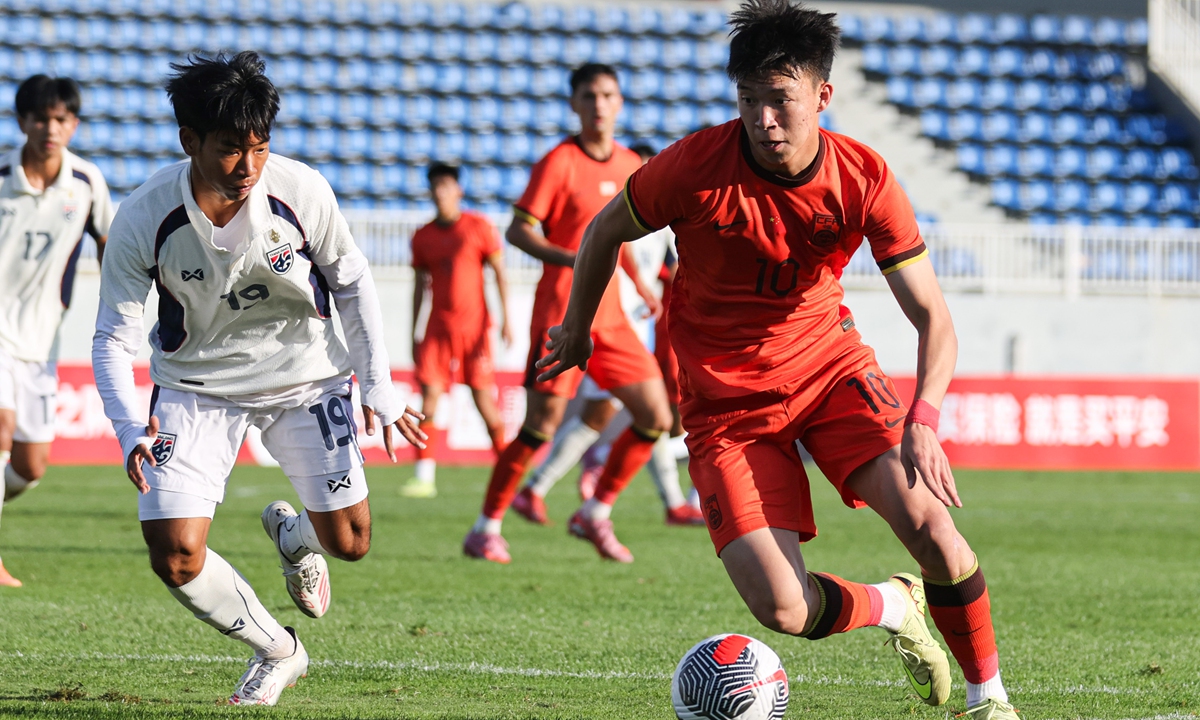
Chinese national under-22 football team player Wang Yudong (right) plays during the game against their Thailand counterparts on October 14, 2025 in Kunming, Southwest China's Yunnan Province. Photo: VCG
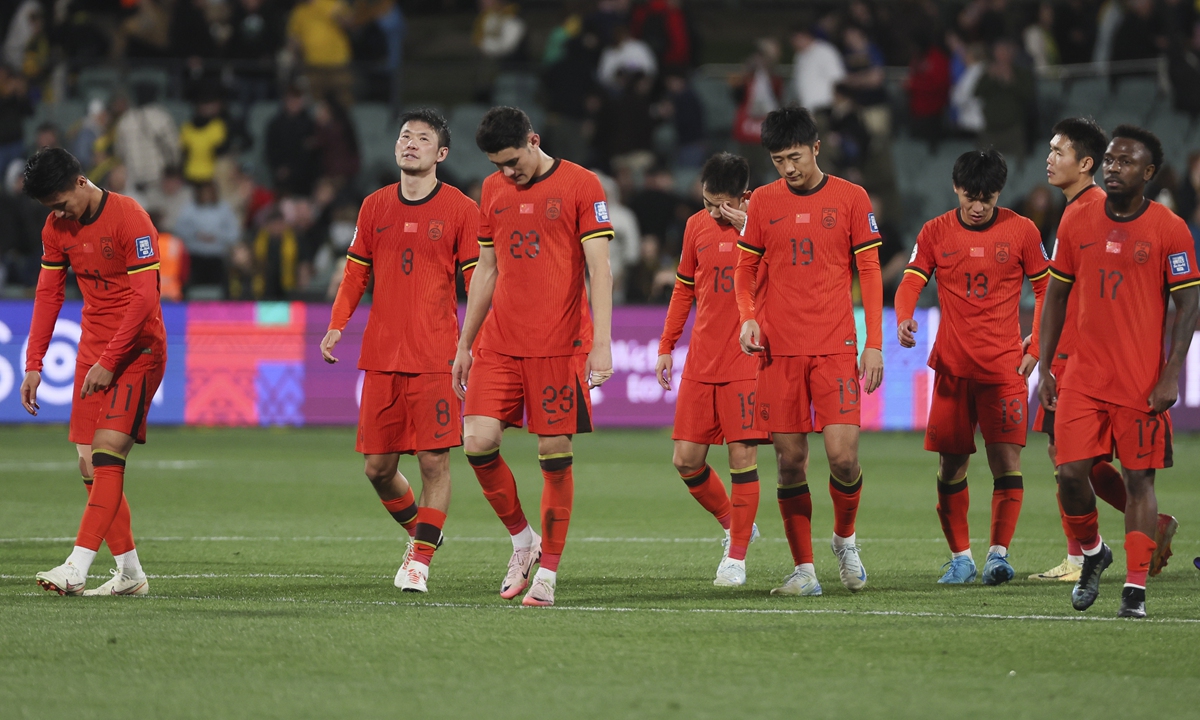
The Japanese national team's overturning a two-goal deficit to beat five-time world champions Brazil 3-2 on Tuesday has sent football fans around the world into shock. And for many Chinese fans, that result has become a painful mirror: While Japan is sharpening its edge on the international stage, China's national team remains mired in uncertainty.
After Croatian coach Branko Ivankovic was dismissed in June after the Chinese national team's elimination from World Cup Asian qualifiers, the decision, while expected, has left the national team without a permanent coach for months.
The Chinese Football Association (CFA) finally announced open recruitment in September for a new head coach, but that belated step cannot erase the damage from the preceding months of inaction at the top of the national teams.
For most footballing teams, the September and October international match days are critical times to test players and build cohesion. Though the junior teams have played their respective friendly matches, the senior national team, by contrast, has fielded no fixtures, offered no glimpses of its future, and deprived its players and fans of direction.
Contrast that with China's neighbor Japan. As a well‐oiled machine underpinned by long-term planning and investment, the Japanese national team is steadily elevating itself in global football perception. Many Chinese fans have even said the Japanese team "played like a European team rather than an Asian team." Their recent comeback win over Brazil was not a fluke but was the result of systemic progress, youth development and a culture of continuity. While China's team is idle, Japan is proving new strengths.
The implication is stark. The national system cannot seize even the basic procedural necessities. Scheduling friendly matches for the national team, allowing the team to gel, even with a caretaker coach, could help. Even the Brazilian team's head coach Carlo Ancelotti admitted the match exposed mental frailty and defensive lapses, before emphasizing that such friendlies are essential for testing the team's character.
Even domestic momentum, the local leagues with grassroots enthusiasm as well as the growing fanbase of the professional Chinese Super League, is at risk of being wasted. Young players break through in provincial or city leagues, staking claims with energy, ambition, and potential. But without a visible national nexus, without national squads to aspire to, that potential is left fragmented and only localized. Thriving regional football ecosystems alone cannot substitute for a coherent and disciplined national program.
The national team's FIFA ranking offers another caution. A recent ranking placed China at 94th in the world, between war-torn Syria and Benin, a small West African country. That is not a position for a team that plans to bounce back, but of a national side that has lost its way. Meanwhile, Japan and other Asian countries continue to consolidate their global standing through consistency, exposure and incremental gains.
The next international window in November looms. Even if a coach is appointed in the coming days, the window for him to implement his ideas, evaluate personnel, and forge chemistry is narrow. Each delay magnifies the handicap. Without urgency, the foibles of inertia of the CFA will compound, and the gap between China and its regional counterparts in Asia will widen further.
The national football team's revival is not impossible, but it cannot wait for "perfect" conditions. Incremental functionality, consistent matches, clear plans, accountability, must take precedence over grand announcements. Otherwise the greater embarrassment won't be neighbors' historic wins but China's continued absence from the field at moments when the others are progressing.
The author is a reporter with the Global Times. life@globaltimes.com.cn
RELATED ARTICLES