BRASIL 247 / MORE
Brazil and China sign landmark deal to expand treatments in public health system
Partnership includes research on cancer, obesity and diabetes, and ensures domestic production of insulin glargine
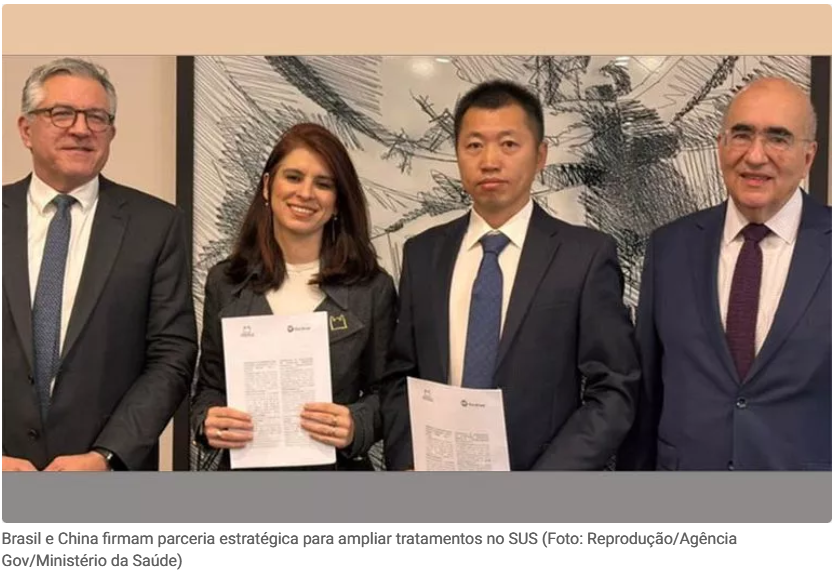
Photo: screengrab from the official website of Brasil 247
By Brasil 247 - The Brazilian government signed a Memorandum of Understanding (MoU) in Beijing on Tuesday with Chinese biopharmaceutical firm Gan & Lee Pharmaceuticals and the Oswaldo Cruz Foundation (Fiocruz), aiming to expand medical research and treatment options in Brazil's public health system, known as SUS. According to the Brazilian government's news agency, the agreement focuses on therapies for cancer, obesity, diabetes and autoimmune diseases.
Health Minister Alexandre Padilha signed the deal on behalf of Brazil, highlighting its strategic significance.
"There is a strong commitment from the governments of Brazil and China to make this partnership between Fiocruz, Biomm and Gan & Lee productive, capable of generating joint knowledge and ensuring more medicines for the Brazilian people," Padilha said during the ceremony.
Wei Chen, CEO of Gan & Lee, described the agreement as the beginning of a new cycle of international cooperation. "We believe this project will be a model of global collaboration, encouraging new partnerships between Chinese and Brazilian companies and, above all, helping more patients access safe and modern therapies," he said.
Among the initiatives included in the MoU is the development of GLP-1 hormone analogues, which regulate appetite, blood sugar levels and satiety. These drugs are widely used in the treatment of obesity and type 2 diabetes.
Domestic production of insulin
The deal also expands on a cooperation agreement signed in September between Brazil and Gan & Lee for the domestic production of insulin glargine, a long-acting insulin used to treat type 1 and type 2 diabetes.
Brazil expects to produce 20 million vials for SUS, a step that would reduce reliance on insulin imports and strengthen the country's Health Economic-Industrial Complex (CEIS).
Production will be phased. At first, packaging and labeling will be handled in Brazil using active pharmaceutical ingredients imported from China. Later, production of those ingredients will be transferred to Fiocruz's Strategic Inputs Technology Center (CTIE) in Eusébio, Ceará.
Economic and strategic impacts
Brazilian officials expect that bringing drug manufacturing in-house will generate savings for the SUS by lowering logistical costs and reducing exposure to currency fluctuations. The agreement also aims to strengthen the domestic supply chain for strategic pharmaceutical inputs, with spillover effects for suppliers, logistics and the biotechnology sector.
(Reported by Brasil 247 on October 16, 2025)
