ARTS / CULTURE & LEISURE
Learning goes viral thanks to Chinese vloggers’ humorous new take
A door to knowledge
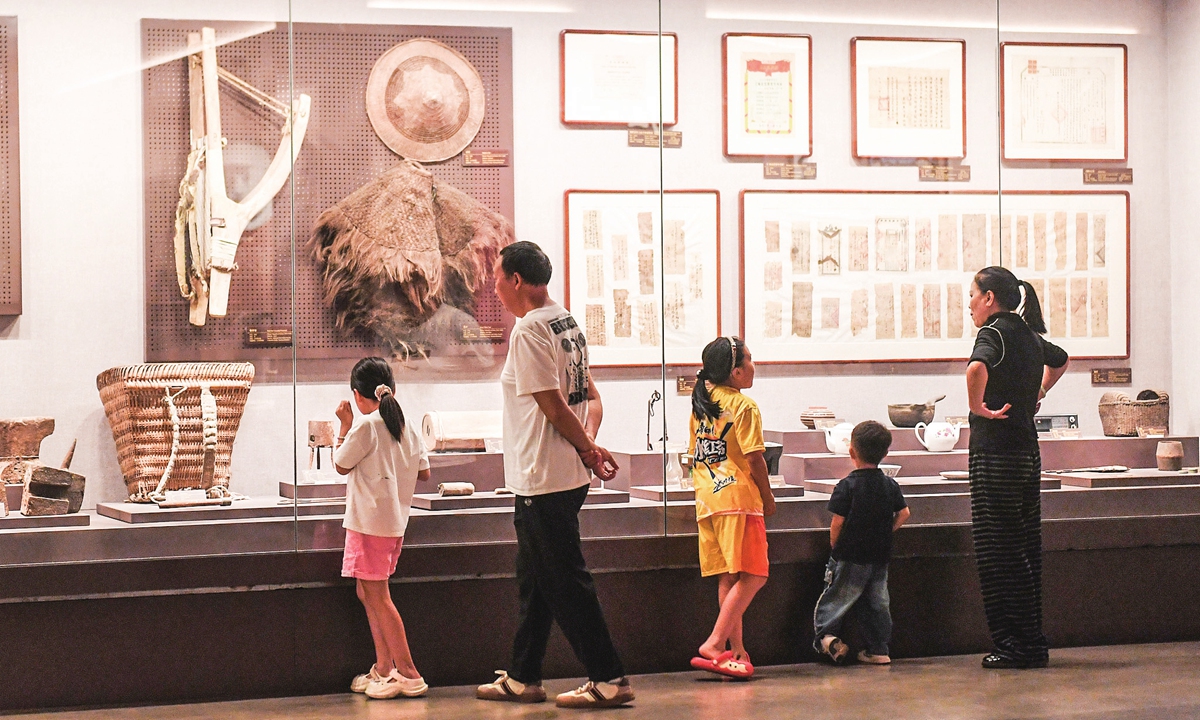
Parents and children visit the Renhuai Museum in Renhuai, Southwest China's Guizhou Province on October 7, 2025. Photos: VCG
With just a whiteboard and a marker, dull and difficult knowledge has been transformed into witty and informative comic-style stories by a short-video creator - covering everything from the roofs of ancient Chinese architecture and dynastic history to the advanced missiles showcased at the recent military parade in Beijing. Some viewers can't help but exclaim, "After watching the video just once, I have finally grasped some things I had never understood from textbooks."Chen Lei, also known as "Hunzi Ge (or Hunzi Brother)" on Douyin, is one of the newly emerged short-video creators on the Chinese social media who are reshaping how knowledge spreads thanks to their lighthearted teaching approach. Armed with curiosity, creativity and a camera, these "knowledge translators" have bridged the gap between academia and everyday life.
Another short video blogger Tang Shiwei, who is known as "Gu Mao" or "Old Cat" on Douyin, uses witty memes to tell scientifically rigorous stories about history and cultural heritage. With humor and an engaging, easy-to-understand style, he has won the hearts of many young viewers.
Tang, who graduated from Peking University's School of Archaeology and Museology, told the Global Times that the current craze for cultural heritage has sparked a public thirst for historical and cultural knowledge in China.
As a professional, he feels it is his responsibility to step forward and help clarify some common misconceptions.
"Many people are genuinely interested in the cultural relics around them and possess a deep, inherent sense of pride in traditional Chinese culture. However, the public's knowledge of cultural heritage remains quite limited. So, when people visit museums, it's often like stepping into an unfamiliar world. If my explanations can help spark greater interest in museums and allow people to experience cultural relics more authentically, then I believe my work is truly meaningful," said Tang.
In an era flooded with misinformation, the video bloggers stand out not only for spreading reliable, evidence-based knowledge, but also for inspiring a spirit of inquiry and critical thinking.
Zhang Zheng, a deputy dean of the School of Journalism and Communication at Tsinghua University, told the Global Times that knowledge content creators have resolved the conflict between today's fast-paced, snackable culture of media consumption and the relatively time-consuming, immersive experience of reading books. They also cater to netizens' demand for high-quality content on social media platforms and their tendency to "hoard information."
Comic narratives
When deciphering the rapid dynastic change from the Three Kingdoms (220-280) to Northern and Southern Dynasties (386-589), Chen depicted the Three Kingdoms period as three little figures from Wei, Shu and Wu "co-renting" three single rooms, while the Eastern Jin (317-420) period was shown as one little figure sharing a crowded group rental with a bunch of others.
A video of less than five minutes often takes him more than five hours to produce. Chen, who previously worked as a vehicle designer, works through every detail, from the script to the storyboard design, deciding which lines go with which visuals, when to write, and when to narrate. In Chen's view, the love for traditional culture is deeply rooted in the Chinese people.
"It's just that many haven't yet found the doorway yet. I hope to be the one who opens that door, so that people can learn with a smile on their face," Chen told the Jiading News.
Zhang Peng, a cultural researcher and associate professor at Nanjing Normal University, told the Global Times on Tuesday that in this age of fragmented attention, people are easily turned away by lengthy or complex content.
"Through comics and humor, abstract knowledge becomes vivid and accessible, allowing more people to approach culture and science on equal footing. In our short-video era, narrative techniques such as humor, personification and time travel spark viewers' curiosity and empathy, making the dissemination of knowledge warmer and more engaging," Zhang Peng noted.
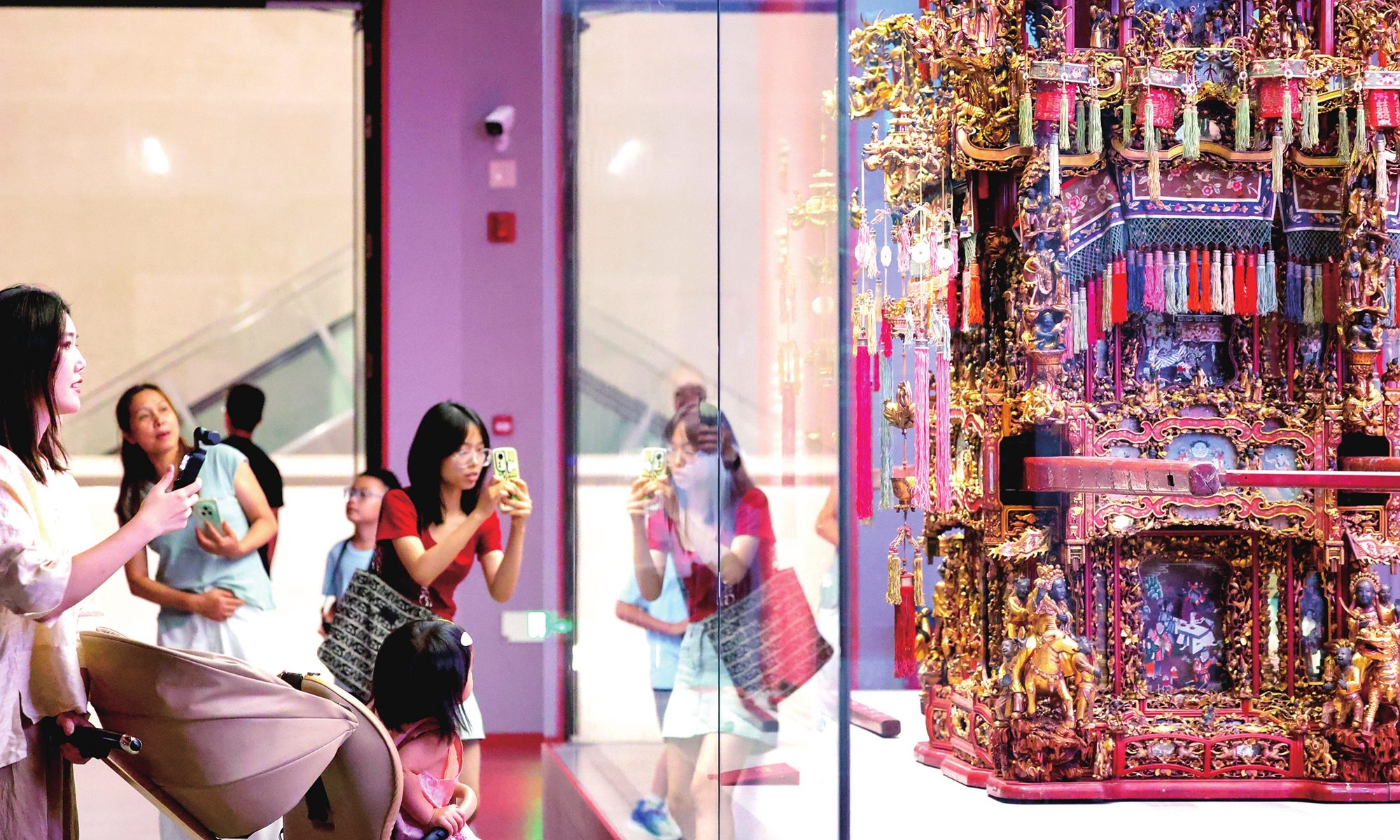
Tourists explore the Zhejiang Provincial Museum during the golden week holidays in Hangzhou, East China's Zhejiang Province on October 6, 2025.
Decoding relicsFocusing on cultural relics in the museum and decoding the treasures in the style of xiangsheng, a traditional Chinese comedic performance in the form of a dialogue between two performers, or, much less often, a solo monologue, Tang sparked greater public interest in museum content, bringing cutting-edge science, history and culture to many viewers who, otherwise, might never have thought of stepping into a museum.
There are 7,046 registered museums in China, 6,444 of which (over 91 percent) offer free admission. These museums have added 8.892 million new collections, hold more than 40,000 exhibitions each year and receive nearly 1.5 billion visits annually, according to a press conference held in September by the State Council Information Office.
Over the past year, Douyin, the Chinese version of TikTok, has witnessed an explosive growth in knowledge-based videos. The learning craze has reshaped the public's perception of the short-video platform. Data shows that in 2024, the number of knowledge-based creators with more than 10,000 followers reached 320,000, creating at least 570 million pieces of content throughout the year, China Newsweek reported in late April.
Often viewed as distant, intimidating places of research that are hard to approach or understand, museums can once again become a part of ordinary people's daily lives, thanks to this new technology-based teaching approach. "For us, as long as something helps make museums more popular, we'll keep doing it," Tang said.
Bloggers have unlocked new possibilities for cultural communication and educational innovation. Through a relaxed and approachable form of expression, such content broadens the public's knowledge base - representing a positive contribution of short videos to public culture, said Zhang Peng.
RELATED ARTICLES