Former Japanese Prime Minister Murayama, known for landmark ‘ Murayama Statement’, dies at 101: Japanese media
By and Xing Xiaojing Published: Oct 17, 2025 12:27 PM

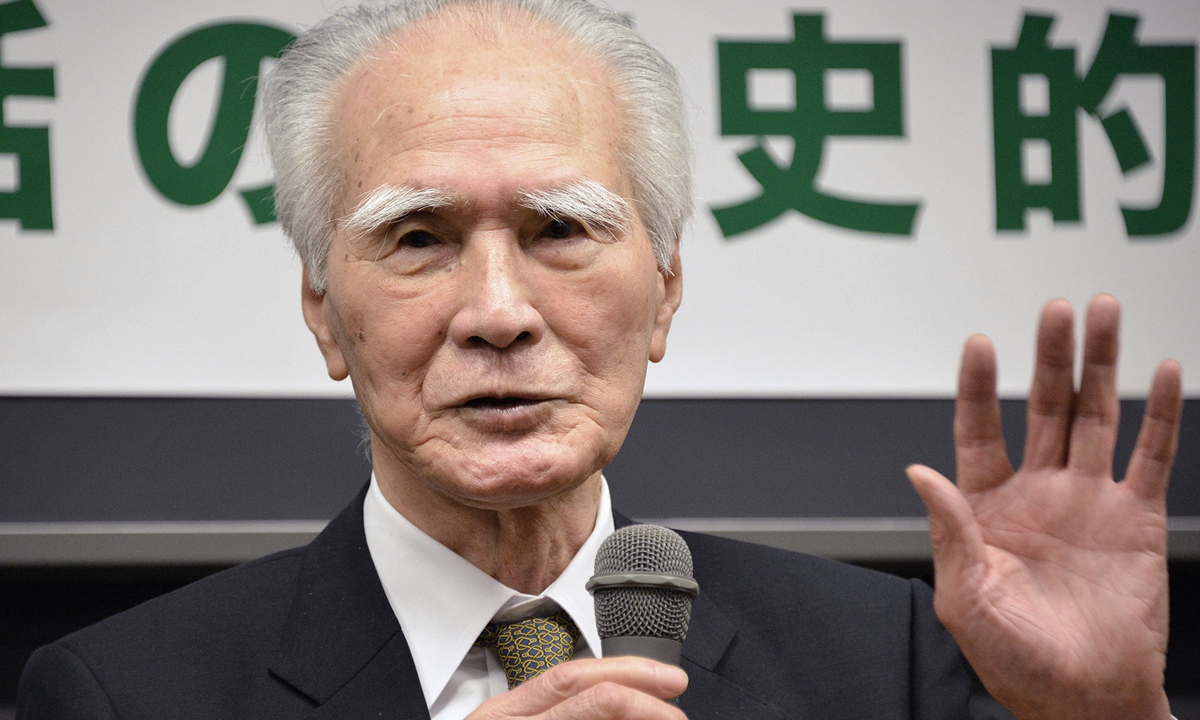
Photo: VCG
Japan's former Prime Minister Tomiichi Murayama dies at 101, multiple Japanese media reported on Friday.
In 1995, on the 50th anniversary of Japan's surrender, then-PM Murayama issued the landmark "Murayama Statement," acknowledging that Japan's colonial rule and aggression had caused "tremendous damage and suffering" to many countries, and expressed "deep remorse and heartfelt apology," according to the Xinhua News Agency.
Subsequent prime ministers echoed similar sentiments on the 60th and 70th anniversaries, but their wording gradually weakened. Prime Minister Junichiro Koizumi's 2005 statement retained terms like "colonial rule and aggression," "remorse," and "apology," yet omitted acknowledgement of "erroneous national policy," Xinhua said.
In March last year marking the 100th birthday of Murayama, Chinese Foreign Ministry spokesperson Mao Ning called Murayama an old friend of the Chinese people and said he had been committed to China-Japan friendship over the years.
In May 1995, then Prime Minister Murayama visited Lugou Bridge and the Museum of the War of Chinese People's Resistance Against Japanese Aggression during his visit to China, and wrote down the words "face up to history and pray for friendship and ever-lasting peace between Japan and China, Mao said during a press conference in March, 2024.
The "Murayama Statement" represents a solemn statement and commitment by the Japanese government to the people of victim countries in Asia with regard to the historical period of its aggression and colonial rule, the ministry's spokesperson Mao said.
"It needs to be honored with good faith. We hope Japan will face up to and reflect on its history of aggression, keep to the path of peaceful development, and work with China in the same direction to build a constructive and stable China-Japan relationship that meets the demands of the new era," the spokesperson said.
Murayama was a statesman who left behind an important political legacy in Japan's postwar politics, Xiang Haoyu, a distinguished research fellow at the Department for Asia-Pacific Studies of the China Institute of International Studies, told the Global Times on Friday.
During his tenure as prime minister, Murayama issued the landmark "Murayama Statement", which for the first time officially acknowledged Japan's wartime aggression and offered an apology to the Asian countries that suffered from it, Xiang noted. "The statement set a benchmark for Japan's historical awareness, and Murayama was regarded as a 'conscientious politician' who played a crucial role in advancing the process of historical reconciliation between Japan and its Asian neighbors," Xiang said.
Murayama was born in Oita in 1924. He was first elected to the House of Representatives in 1972 and served as leader of the then Socialist Party, which is now known as the Social Democratic Party, the Japan News reported.
He became prime minister in 1994 in a coalition government formed with the Socialist Party, the Liberal Democratic Party and the New Party Sakigake, according to the Japanese media report.
After leaving office, Murayama continued to devote himself to promoting friendship between China and Japan, Xiang noted.
"He visited China many times, actively supported and advanced people-to-people exchanges between the two countries, and stressed the importance of building a long-term peaceful and friendly relationship between Japan and China," Xiang said, noting that at a time when Japan's political rightward shift and historical revisionism are gaining momentum, Japanese politicians should revisit Murayama's political legacy, uphold pacifism, and foster good relations with Asian neighbors in a spirit of learning from history and looking into the future.
Standing at the milestone of the 80th anniversary of postwar era, although the international situation remains complex, at this key moment it is of the utmost importance to inherit and carry forward the spirit of the "Murayama Statement," Takakage Fujita, the Secretary-General of the Association for Inheriting and Propagating the Murayama Statement, told the Global Times in an earlier interview.
What we need is not a politics of "might makes right," but "the relations of trust between countries" advocated in the statement. It is a diplomatic asset for Japan, contributing to peace and stability in Asia, and helps correct today's turbulent world order, Fujita said.
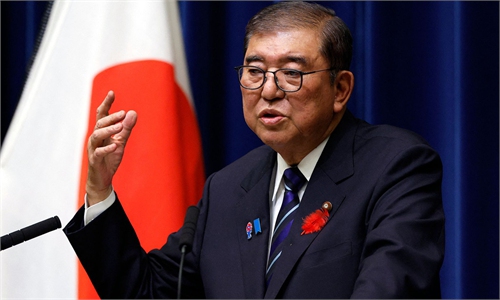
Shortly before his passing away, outgoing Japanese Prime Minister Shigeru Ishiba delivered a personal statement on October 10 to mark the 80th anniversary of the end of World War II, focusing on "why domestic political systems were unable to brake the momentum toward war."
RELATED ARTICLES