ARTS / CULTURE & LEISURE
Hernanes’ views a reminder for Chinese football amid signs of reform
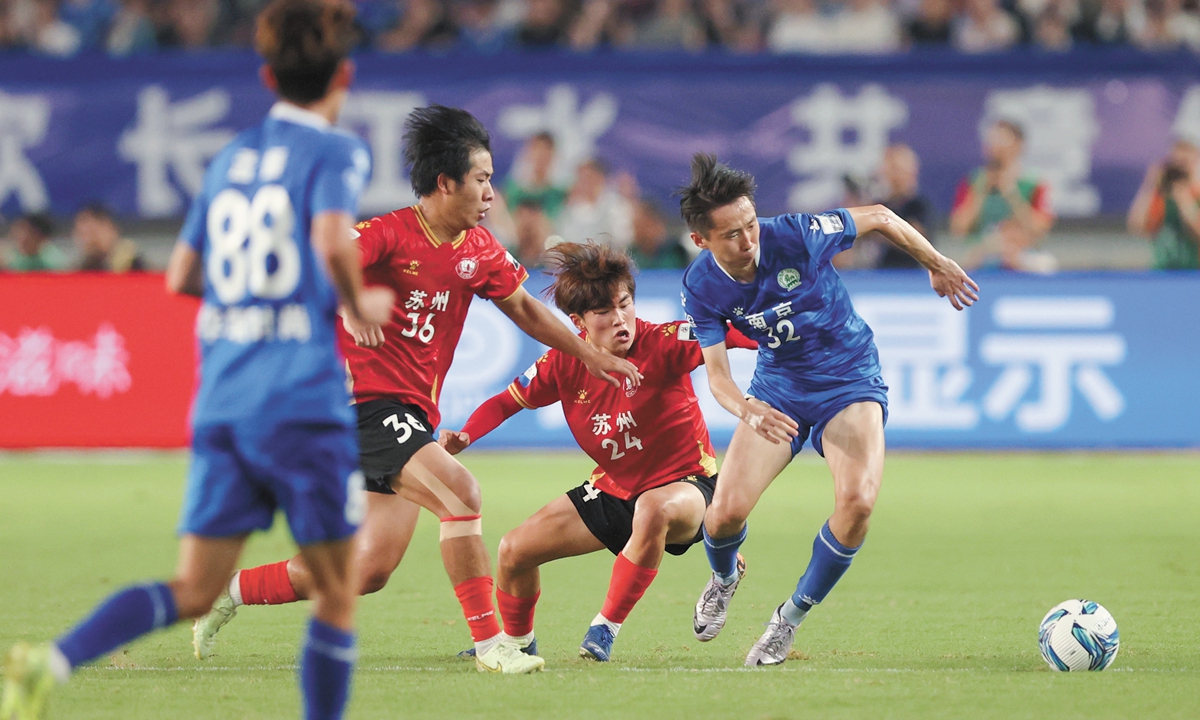
A football match holds between Nanjing and Suzhou from the Jiangsu City Football League in Nanjing, East China's Jiangsu Provinceon on May 5, 2025. Photo: Cui Meng/GT
Recently, Brazilian footballer Anderson Hernanes reentered the spotlight after his remarks on Chinese football triggered discussion among Chinese football fans. Reflecting on his time with the now-defunct Hebei China Fortune in 2017 and 2018 in an interview in Brazil, Hernanes described the Chinese Super League (CSL) as "resembling football" but not quite being it, highlighting a disconnect where local players earn star-level salaries without bringing the same level of the skill or professionalism."I wanted to teach the guys, pass on a little bit of what I learned," he said in an interview. However, he found that Chinese players, buoyed by inflated wages, lacked the drive to improve. He pointed to cultural differences, such as rigid hierarchies on and off the pitch, and physical attributes that he felt limited athletes' capabilities compared to their Brazilian or European counterparts. Respectfully, Hernanes emphasized this wasn't disdain but a frank assessment of a young football ecosystem. After all, he noted, modern Chinese football has only been developing for decades rather than a century.
Hernanes' observations hit at the heart of the money-burning era of the CSL, a period of extravagant spending that peaked around his arrival. Back then, domestic players could command after-tax salaries in the tens of millions of yuan, while foreign stars like Hernanes pocketed sums that rivaled Europe's top leagues. This financial bubble, fueled by ambitious club owners, aimed to elevate the profile of local football but instead bred complacency and fiscal irresponsibility. Clubs like Guangzhou, Hebei and Jiangsu poured money into imports without building sustainable foundations, leading to a league where, as he put it, midfielders like himself felt lost in a system prioritizing spectacle over strategy.
Yet, Hernanes' critique, while spot-on, underscores how far Chinese football has come since those heady days, or at least, how it's trying to. The turning point arrived in late 2020 when the Chinese Football Association (CFA) imposed strict salary caps for the 2021 season onward. Foreign players' annual earnings were limited to 3 million euros ($3.5 million) pre-tax, while domestic stars were capped at 5 million yuan ($700,000) pre-tax. These measures have dramatically improved clubs' financial health, curbing the exodus of talent and bankruptcies that plagued the league post-bubble. No longer can players rest on lucrative contracts without performance incentives; instead, the focus has shifted to merit-based growth, addressing exactly the "high salary, low ability" imbalance many fans have lamented.
This financial reset is part of a broader reform wave, amplified by a sweeping anti-corruption campaign that has rocked Chinese football since 2022. It has led to investigations and convictions of over a dozen high-profile figures, including former CFA presidents and coaches, for bribery, match-fixing, and embezzlement.
Encouragingly, these reforms are trickling down to youth development and international exposure, areas where China has historically lagged behind football powerhouses. Hernanes touched on the rarity of Chinese players venturing abroad, attributing it partly to comfortable domestic setups. But post-reform, the CFA has ramped up youth training, campus football programs, and incentives for playing overseas initiatives.
A shining example is 18-year-old striker Wang Yudong of Zhejiang FC, who has topped the domestic CSL scoring charts this season and drawn interest from clubs in Germany, France and England. Wang's potential move could signal a new era, proving that China's investments in academies are yielding talents capable of competing in more competitive leagues, something Hernanes might have deemed unlikely during his time in China.
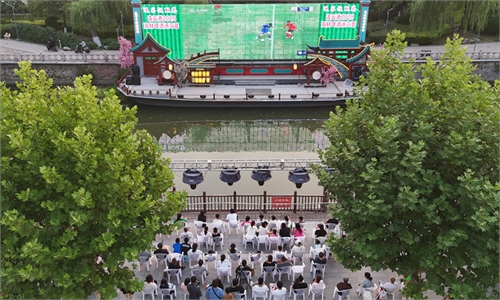
At the grassroots level, initiatives like the Village Super League in Guizhou Province and Jiangsu City Football League are injecting vitality into the sport's cultural fabric, countering Hernanes' concerns about rigid mindsets. While these amateur leagues do not directly feed the professional pipeline, it could build the explosive enthusiasm and cultural buy-in essential for long-term growth, especially among child fans.
Hernanes' insights serve as a valuable mirror for Chinese football's flaws, but they also highlight the potential for redemption. The CFA's reforms have stabilized finances, minimized corruption, and sparked grassroots fervor, setting the stage for genuine progress. But challenges remain as cultural shifts take time, but with growing young talents and grassroot leagues captivating millions, Chinese football could propel forward with a more reasonable future.
The author is a reporter with the Global Times. life@globaltimes.com.cn
RELATED ARTICLES