ARTS / ART
Museum fascinates visitors through tradition, tech, and engagement
From glass collection to city icon
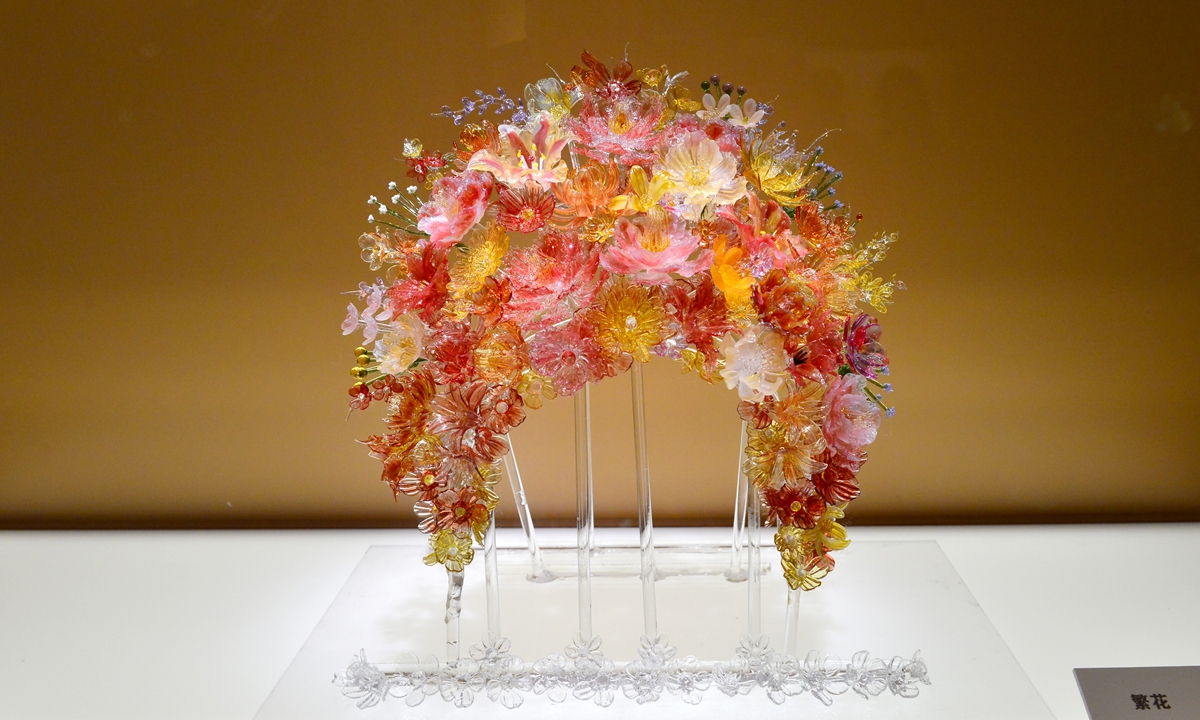
The Blooming Flowers, one of the exquisite glass works displayed at the Zibo Ceramic and Glass Museum Photos: Courtesy of the Zibo Ceramic and Glass Museum
During this year's eight-day National Day and Mid-Autumn Festival holidays, while drizzles lingered over the city of Zibo, East China's Shandong Province, the crowds at the Zibo Ceramic and Glass Museum were anything but dampened.Between October 1 and 8, more than 249,000 visitors poured into China's largest modern museum dedicated to ceramics and glass - a 24 percent increase over last year. Tickets sold out seven days in a row. The museum extended hours, opened special exhibition lanes, and reinforced visitor flow management to handle the surge.
"Even the rain couldn't cool the visitors' enthusiasm," Zhang Ming, head of the museum's Department for Promotion, Education and Cultural Creation, told the Global Times.
"Many visitors said they came to Zibo specifically to witness the unique charm of its glass art in person. The idea of 'traveling to a city just to see one museum' has become a new highlight of holiday cultural tourism, making Zibo's glass craftsmanship an ever-brighter attraction of the city."
Once known primarily as an industrial city, or, as a famous "barbecue capital" in recent years, Zibo has found a new identity rooted in art and heritage. The Ceramic and Glass Museum has become the beating heart of this transformation, attracting travelers from across China.
Cultural magnet
The numbers speak for themselves: 93.5 percent of visitors during the holidays came from outside the city, and more than half were from other provinces, according to the museum.
"During the holiday period, one out of every two visitors came from outside the Shandong Province, underscoring that the museum's appeal has extended beyond regional boundaries and is gradually becoming a major cultural destination in the country," said Zhang.
The museum's popularity has been boosted by creative exhibitions such as the "Illusion of Glass" digital light show and the "Flourishing in Fire - Zibo Lampworking Glass Art Exhibition," where intricate works such as Blooming Flowers became instant social-media sensations.
The Blooming Flowers is a dazzling glass piece inspired by Zanhua, the intangible cultural heritage of crafting colorful floral headdresses that originated from Quanzhou, East China's Fujian Province.
According to Zhang, The Blooming Flowers is the museum's most popular exhibit. This piece preserves the classical form of Zanhua, translating it through the transparency of the glass material, and giving the traditional intangible cultural heritage a fresh, modern vitality.
In addition to its creative exhibitions, the museum has enhanced its display formats, interactive experiences, and professional services, blending viewing, hands-on activities, entertainment and education to transform the visitor experience from a simple "photo op" into a fully immersive cultural journey.
Among the innovative additions to its offer, the museum has launched an original VR production that integrates AI and 3D technology.
Meanwhile, during the holidays, over a thousand people participated in pottery-making, print-rubbing, and paper-cutting workshops on a daily basis. Additionally, the museum has developed a range of cultural products, including AR fridge magnets inspired by the popular exhibit Blooming Flowers, as well as a series of items based on the museum's collection of precious artifacts.
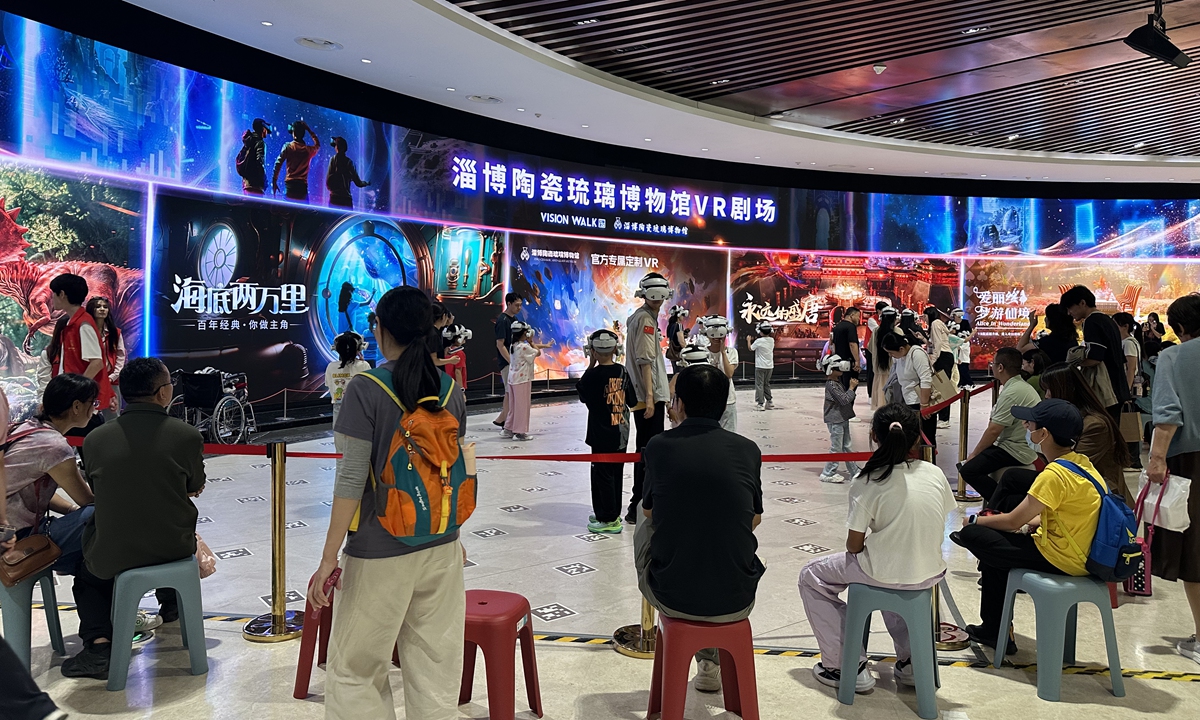
Visitors take VR tours during National Day holidays at the Zibo Ceramic and Glass Museum in October 2025.
Living legacyZibo's identity as a city of glass didn't emerge overnight. Archaeological finds trace its glassmaking history back to the Eastern Zhou period (770BC-256BC), with the country's only ancient glass workshop ruins discovered in the city. During the Ming and Qing dynasties (1368-1911), Zibo's glass industry reached its peak, with products distributed throughout China and even overseas.
Zibo's unique resources, centuries of craftsmanship, and deep industrial heritage have shaped its enduring identity as the city of glass, noted Zhang.
According to Zhang, the prosperity of the industry owes much to Zibo's exceptional natural advantages.
With its abundant mineral resources and a ceramic and glass-making tradition spanning over a thousand years, the city has supplied the essential raw materials, core firing techniques, and kiln equipment that underpin a complete industrial ecosystem. Its minerals, kilns, and craftsmen have shaped Zibo's glass culture for millennia.
Today, that legacy continues in both heritage and industry. In 2008, Zibo glass craftsmanship was listed as a national intangible cultural heritage, and the city now hosts a complete industrial ecosystem spanning art glass, daily-use products, and specialized materials.
The future of Zibo's glass industry lies in transforming its "momentary buzz" into "lasting, sustainable influence," remarked Zhang.
Facing the surge in popularity, the museum underwent a real-world "stress test," tackling challenges in artifact preservation, visitor experience, and service quality. To manage the influx, the museum introduced dynamic crowd control, optimized visitor routes, and enhanced comfort zones. It strengthened preventive conservation through real-time environmental monitoring and improved physical barriers around key exhibits.
"These measures not only safeguarded cultural relics but also elevated the museum's modern management and visitor experience for future large-scale operations," noted Zhang.
The vision extends beyond the museum walls. "Our goal is to turn cultural traffic into cultural belonging," Zhang explained.
The museum plans to continue hosting diverse exhibitions centered around Zibo's glass art, while launching digital showcases and expert interview programs to share the craftsmanship and innovation behind Zibo's ceramics and glass.
Through creative design, cross-industry collaboration, and cultural product development, it aims to transform glass from an exhibit into a marketable product and from a craft into a thriving industry, injecting new cultural vitality into the city's economic growth.
In the words of Zhang: "When a museum truly integrates with the rhythm and pulse of its city, it transcends its role as a static cultural landmark and becomes a dynamic engine driving the city's future."
RELATED ARTICLES