BRASIL 247 / MORE
Lula highlights strategic rapprochement between Brazil and Southeast Asia during ASEAN Summit
Brazilian president emphasizes trade growth and technological cooperation with the bloc, which now includes Timor-Leste
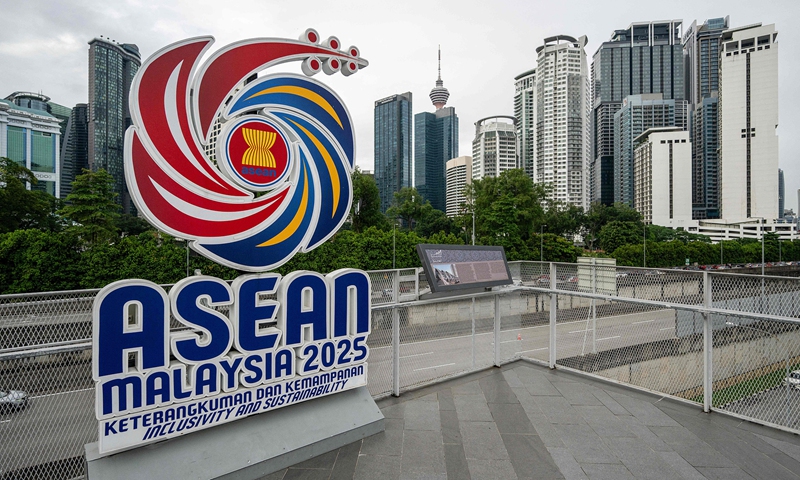
Photo: VCG
By Brasil 247 - Brazilian President Luiz Inácio Lula da Silva attended the opening of the 47th Summit of the Association of Southeast Asian Nations (ASEAN) on Sunday in Kuala Lumpur, Malaysia — marking the first time a Brazilian head of state has officially taken part in the event. The visit took place at the invitation of Malaysia, which currently holds the rotating presidency of the bloc, according to Brazil's federal government website.
In a social media post, Lula said Brazil's presence at the summit underscores the importance of strengthening ties with Southeast Asia and noted the sharp rise in trade between the two regions. "Being here reaffirms the significance of Brazil's relationship with Southeast Asia. Trade between Brazil and ASEAN countries exceeded $37 billion in 2024. The bloc is now Brazil's fifth-largest trading partner and accounted for 20% of our trade surplus last year," he stated.
Lula added that Brazil's invitation to the meeting reflects growing mutual recognition and interest. "This invitation is proof of our deepening partnership with the region and of our shared commitment to enhance cooperation, trade, and development," he said.
ASEAN expansion and regional integration
During the opening ceremony, Timor-Leste officially joined ASEAN, becoming the bloc's eleventh member alongside Brunei, Cambodia, Singapore, the Philippines, Indonesia, Laos, Malaysia, Myanmar, Thailand, and Vietnam. The expansion was welcomed by member nations, who described the move as a vital step toward greater regional integration.
Brazil's participation highlights the country's position as a key player in South-South cooperation and expands its diplomatic presence in one of the world's most dynamic regions for economic growth and technological innovation.
Bilateral accords with Malaysia and new cooperation fronts
Ahead of the summit, Lula visited Indonesia to meet with business leaders before traveling to Malaysia, where he held talks with Prime Minister Anwar Ibrahim in Putrajaya. According to the Brazilian government, the meeting marked the beginning of a new phase in bilateral relations, focusing on technology, innovation, and sustainability.
Seven cooperation instruments were signed, including memoranda of understanding in the areas of semiconductors, science and technological innovation, space research, and sustainable agriculture. Agreements between diplomatic institutions and research centers were also formalized, while six new markets were opened for Brazilian products.
Malaysia remains one of Brazil's most important trading partners in Asia. Bilateral trade reached $487.2 million in September 2025, with a Brazilian surplus of $205.5 million. The total trade volume in 2024 stood at $5.8 billion, up 5.9% from the previous year. Iron ore and crude oil were Brazil's top exports, accounting for 65% of the total — surpassing sales to European markets such as France, Italy, Portugal, and the United Kingdom.
Meeting with Gianni Infantino and the University of Sports
During the ASEAN Summit, Lula also met with FIFA President Gianni Infantino at the bloc's headquarters. The Brazilian leader invited Infantino to attend the inauguration ceremony of Brazil's forthcoming University of Sports, scheduled for later this year.
"I plan to invite leaders from other international sports organizations because we want to exchange knowledge and experiences. I was pleased by Infantino's enthusiasm for the project and his willingness to strengthen FIFA's partnership with Brazil," Lula said.
Brazil and ASEAN: a partnership in expansion
Lula's presence at the ASEAN Summit underscores Brazil's broader foreign policy goal of diversifying global partnerships. As ASEAN's fifth-largest trading partner, Brazil aims to deepen cooperation in technology, innovation, and clean energy — areas that are increasingly central to both Brazil's and Southeast Asia's development agendas.
(Reported by Brasil 247 on October 26, 2025)
