SOURCE / PRESS RELEASE
The World Federation of Engineering Organizations 2025 GA & GEC adopts Shanghai Declaration
In the autumn of 2025, the banks of the Huangpu River ushered in a landmark moment for the global engineering community. From October 12 to 17, the World Federation of Engineering Organizations 2025 GA & GEC was held in Shanghai. Under the theme “Engineering Shapes a Green Future,” the conference aimed to build a platform for in-depth exchange and cooperation within the international engineering community. It shared China’s engineering innovations and practical achievements, offering Chinese solutions for global engineering development. A historic consensus was reached at the conference with the unanimous adoption of the Shanghai Declaration. This declaration, bearing the mission of the global engineering community, clearly outlines the action path for engineering technology to address global challenges and implement sustainable development goals. It echoes the millennial civilizational lineage from prehistoric irrigation systems to modern mega-projects, highlighting engineering as the majestic force through which humanity illuminates civilization with wisdom and creativity.
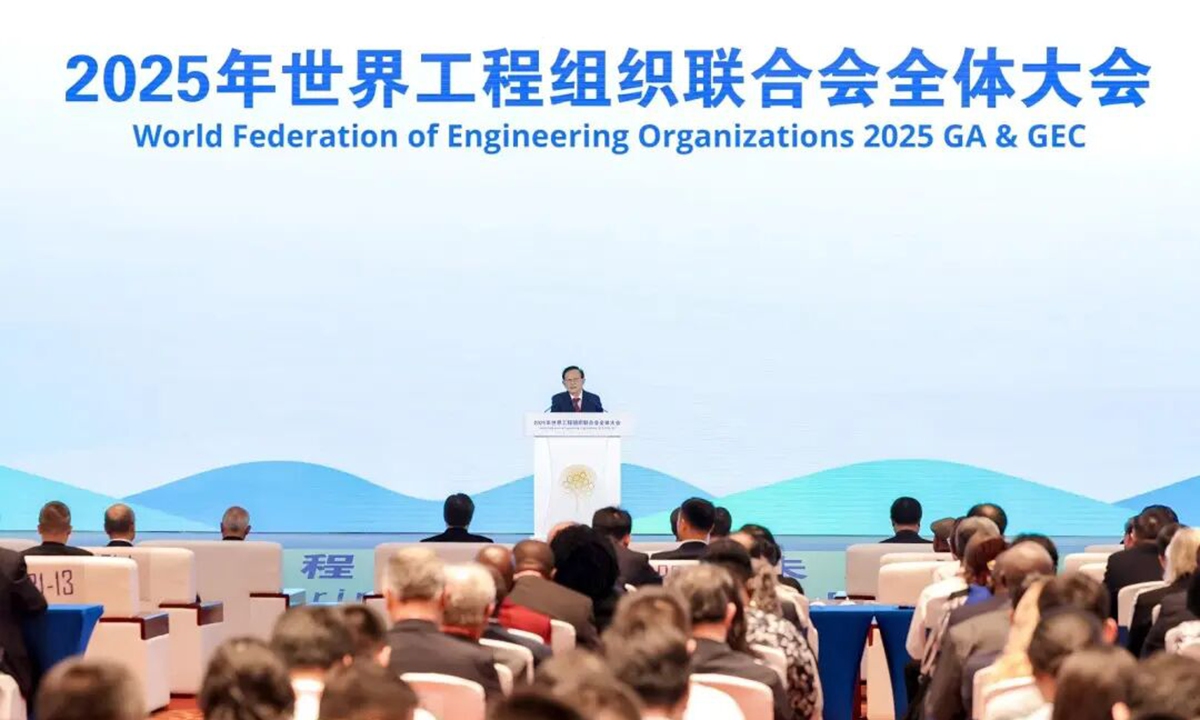
Shanghai Declaration released, anchoring new mission coordinates for global engineering
“Rising poverty, hunger, and inequality; the tangible threat of climate change; extensive economic growth that jeopardizes future generations’ right to survival; and the technological divide that triggers new inequalities” – The Shanghai Declaration's profound analysis of global challenges articulates the shared concerns of the attending representatives.

With only five years remaining until 2030, engineering, as a transformative force shaping the world, has been entrusted with an unprecedented mission. The Shanghai Declaration explicitly commits to “unprecedented speed, scale, and in-depth cooperation to harness the full power of engineering in accelerating the implementation of the 2030 Agenda for Sustainable Development, the Paris Agreement, the Pact for the Future, and the Global Digital Compact,” ensuring that engineering serves as a key driving force in addressing development bottlenecks and unlocking new momentum for global growth.
This commitment is deeply rooted in the practical needs of engineering practice. When the Blackwell GPU architecture, with its groundbreaking parallel computing design and very-large-scale integration (VLSI), provided critical support for the training and inference of large models with trillions of parameters; when the DeepSeek open-source large language model from China meteorically emerged as one of the fastest-growing AI applications worldwide; and when humanoid robots began replacing or assisting humans in completing tasks in various scenarios such as industrial manufacturing, medical rehabilitation, and specialized tasks, engineering technology has long proven through concrete actions that it not only can create countless material monuments that shine through the annals of history, but also accumulate extremely precious spiritual wealth of “innovation, collaboration, rigor and responsibility.”
The Shanghai Declaration has brought together this scattered practical force into a global consensus, and has outlined four major action directions for the engineering community: “green transformation of engineering,” “innovative solutions,” “engineering capacity building,” and “global partnership.”
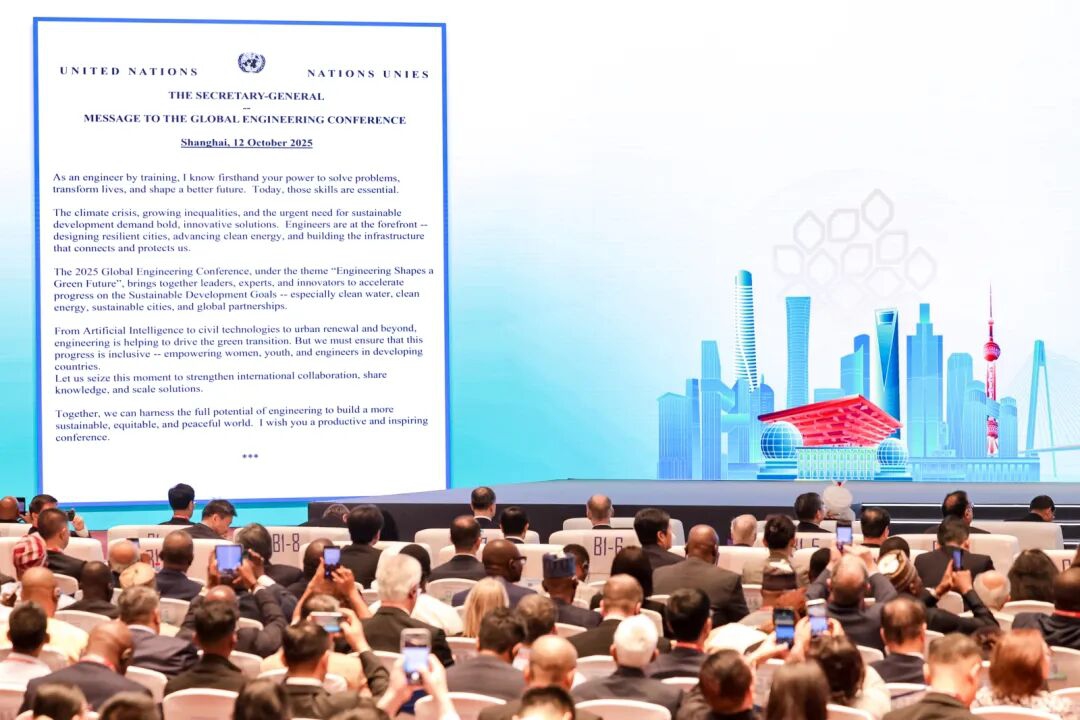
In a message to the event, UN Secretary-General António Guterres said that as an engineer by training, he knows firsthand engineers’ power to solve problems, transform lives, and shape a better future, and today those skills are essential. He noted that the climate crisis, growing inequalities and the urgent need for sustainable development demand bold, innovative solutions, and engineers are at the forefront – designing resilient cities, advancing clean energy, and building the infrastructure that connects and protects us.
The Shanghai Declaration not only sets the direction for action for the engineering community, but also serves as a clear signal from the international engineering community calling on global peers to act in unison and urging engineering forces from all countries to work together to meet global challenges and move forward together on the path of sustainable development.

Green transformation of engineering is established as the core objective, guided by three key principles for practice. First, to treat the carrying capacity of ecosystems as a non-negotiable constraint in engineering practices, accelerating economy-wide emission reduction (SDGs 12, 13) and safeguarding biodiversity on land and in oceans (SDGs 14, 15), thereby protecting our planet as the common home of humankind. Second, to prioritize social equity and justice in engineering practices, foster resilient cities, communities, and infrastructure (SDG 11), and catalyze industry innovation and decent work (SDGs 8, 9), building harmonious societies that are more inclusive and beneficial. Third, to ensure the right to survival and development as the fundamental goal of engineering, accelerate the eradication of poverty and health risks (SDGs 1–3), and guarantee fair access to food, clean water, and affordable energy (SDGs 2, 6, 7), advancing the common well-being of all humankind.
Innovative solutions serve as an engine for development, with three main innovation pathways. First, to push the frontiers of technology with responsibility, driving social transformation through advances in digital, biological, clean energy, and materials science technologies. Second, to draw from local wisdom to spark innovation, cultivating innovative and dynamic solutions that are rooted in local communities, land, and culture. Third, to harness nature-based solutions, leveraging the growth and self-repair power of nature to strengthen ecological security and societal resilience.
Engineering capacity building serves as an endogenous driver, strengthened across three key dimensions: First, to deeply integrate technology for good, global perspective, and interdisciplinary innovation capacity into engineering education and continuous professional development; second, to promote the integration of engineers into the heart of policy and decision-making processes, integrating engineering wisdom at the earliest stage into global governance; third, to break down barriers of gender and age, support the development of women and young engineers, foster an inclusive environment, and unlock the full potential of diverse perspectives.
In the face of common challenges to human survival and development, global partnerships are a powerful bond for progress. Building an open and inclusive global engineering cooperation ecosystem will focus on five key areas: First, to promote open access, data sharing, and the efficient global flow of best practices; second, to find the right balance between innovation and governance, collaboratively promote the reliable application of emerging fields such as artificial intelligence, and foster a safe, trustworthy, and controllable development ecosystem; third, to promote greater interoperability among international and national engineering standards to reduce the cost of cross-border services; fourth, to accelerate the bilateral and multilateral mutual recognition of engineering qualifications to facilitate the mobility of talent; fifth, to support and promote North–South, South–South, and triangular cooperation and foster experience exchange and technological solidarity to build strong global innovation linkages through the bonds of engineering.
Toward a green future: The global engineering community embarks on a new journey
Engineering, as a transformative force and an inexhaustible driver of human progress, has always responded to humanity’s enduring pursuit of a better life. Throughout the course of human development – from ignorance to nomadic societies, from agricultural and industrial civilizations to today’s digital era – engineers, in their unceasing efforts to open new chapters in history, have not only created countless monumental physical achievements of lasting significance, but have also cultivated an invaluable spiritual legacy of innovation, cooperation, rigor, and responsibility.
At the closing ceremony, the release of the Shanghai Declaration took center stage, marking a solemn commitment by the international engineering community to advance sustainable development. Representatives from over 60 countries pledged to turn the declaration’s action framework into concrete practice, using the “2025 global top 10 engineering achievements” as a starting point. This includes strictly upholding ecological carrying capacity in engineering design to ensure that every project avoids environmental harm; focusing technological innovation on improving people’s livelihoods so that engineering advances benefit the public; integrating a global perspective into talent development to cultivate engineers capable of international collaboration; and breaking down geographical barriers in international cooperation to foster a globally coordinated engineering community.

From the Liangzhu water conservancy project to the Three Gorges Dam, from transcontinental railways to high-speed rail networks, from the pyramids to the International Space Station, engineering has always been a core element in the evolution of human civilization. And now, the Shanghai Declaration anchors the coordinates of engineering civilization in the new era. As engineers from around the world pledge in Shanghai to pull together engineering wisdom, pursue bold innovation, and advance together, and with the joint support of the World Federation of Engineering Organizations (WFEO) and the China Association for Science and Technology (CAST), this landmark event is set to become a new starting point for using engineering technology to tackle sustainable development challenges. Engineering technology will, with greater initiative and openness, address global crises such as climate change, poverty, and hunger, guiding humanity toward a prosperous future of harmony between people and nature, and writing an even grander chapter in the story of human civilization.
Starting from Shanghai, to lead the new global wave of engineering innovation
As one of the cradles of modern industry in China, Shanghai has continued to achieve remarkable successes in the field of engineering technology. This stands as a vivid microcosm of China’s scientific and technological advancement. From the world’s first petabit-level ultra-high-capacity optical disk memory to the first fully high-temperature superconducting tokamak device; from major projects such as cross-sea bridges, river-crossing tunnels, and large-scale scientific facilities to national heavyweights including large passenger aircraft, supertankers, and deep-ocean drilling vessel; from multimodal large models, and intelligent computing chips to other breakthroughs in key technologies such as drug delivery — all these achievements demonstrate China’s significant progress in pioneering industries such as integrated circuits, biomedicine, and AI. They also represent China’s strengths and solutions for global progress and cooperation in engineering technology.
Looking into the future, China will continue to play a pivotal role in driving scientific and technological innovation and industrial leadership. We will uphold the principle of open, collaborative and shared innovation, persistently tackling major challenges in engineering technology, so that it can better serve humanity and shape a brighter future.
In the face of the rapidly evolving new round of scientific and technological revolution and industrial transformation, innovation forces represented by Shanghai are actively focusing on frontier fields such as embodied intelligence, synthetic biology, and future energy. Efforts are being made to strengthen innovation in modern engineering technologies, so as to generate a series of original and pioneering scientific and technological achievements. The digital, intelligent, and green transition of engineering technology is being accelerated, while the application of AI is being deepened across the entire chain — from project design and material development to process innovation and engineering construction — empowering green construction through green technological innovation and advanced technologies.
As a vital bridge connecting fundamental research and industrial transformation, engineering technology has become an important driving force in fostering new quality productive forces. Focusing on the engineering and industrialization needs of scientific and technological innovations, China is accelerating the development of systematic platforms for concept verification, pilot testing, and application validation. These efforts aim to strengthen capabilities in technical feasibility assessment, prototype development, process optimization, and engineering scale-up, expediting the transformation of new discoveries and technologies into new products and emerging industries.
In terms of talent development, China is advancing the integrated development of education, science and technology, and talent. Efforts are being made to strengthen the integration of engineering postgraduate and doctoral education with industrial practice, broaden channels for attracting high-caliber domestic and international talent, and support young scientific and technological professionals in undertaking frontier innovation tasks. A favorable ecosystem is being fostered where outstanding engineers, national-level master artisans, and highly skilled talent continue to emerge, providing sustained momentum for global engineering innovation.
Building a community with a shared future to benefit all humanity through engineering technology
At present, advancing progress and innovation in engineering technology has become a vital driver for strengthening development momentum and enhancing people’s well-being. It also represents an essential response to global challenges and a necessary path toward sustainable development. The Shanghai Declaration embodies the steadfast commitment of the global engineering community to build a community with a shared future for humanity and stands as a significant covenant oriented toward the future.
The vision of building a community with a shared future for humanity has been incorporated into multiple UN resolutions, evolving from a Chinese initiative into a broad international consensus. As the world faces a multitude of shared challenges, no nation can tackle them alone; multilateral cooperation remains the only path to resolving development bottlenecks. The global partnerships championed in the Shanghai Declaration are highly consistent with this vision. Through this declaration, the international engineering community pledges to break down barriers of geography, gender and age, promoting knowledge sharing, technological interconnectivity, and talent mobility. It also commits to working collaboratively to address global challenges such as climate change, food and energy security, and the eradication of poverty and hunger.

The Shanghai Declaration stated that we will find the right balance between innovation and governance, collaboratively promote the reliable application of emerging fields such as AI, and foster a safe, trustworthy, and controllable development ecosystem. Today, AI is emerging as a new bridge for global collaboration in engineering technology. From engineering design to project development, from energy dispatch to disaster monitoring, AI empowers engineers with unprecedented capacities for intelligent decision-making. Beyond enhancing efficiency, AI is ushering in a new era of real-time co-creation in global engineering, fostering a digital community with a shared future for engineering innovation.
The Shanghai Declaration further calls for pushing the frontiers of technology with responsibility, driving social transformation through advances in digital, biological, clean energy, and materials science technologies. The Perseverance Mars rover, integrating autonomous navigation, sample collection, and extraterrestrial exploration technologies, exemplifies the development trajectory of new quality productive forces. High-performance carbon fiber composites, widely applied in aerospace and new energy industries, are driving the transformation and value-chain upgrading of the new materials industry. Together, these achievements highlight the pivotal role of engineering technology in addressing global challenges.
Looking ahead, as the initiatives outlined in the Shanghai Declaration are progressively implemented, the global engineering community will further unite, leveraging engineering technology to strengthen bonds among nations and enable more countries and peoples to share in the benefits of engineering-driven innovation. Whether through AI-enabled smart cities, a green planet powered by renewable energy, or the vast frontiers opened by interplanetary exploration and deep-sea engineering, the spirit of engineering technology will continue to advance with greater openness and a stronger sense of responsibility, building a community with a shared future for humanity and illuminating the shared future of sustainable development for humanity.
When engineers across the globe illuminate one another with the light of technology, the community with a shared future for humanity will rest on the most solid foundation of engineering.
Shanghai Declaration released, anchoring new mission coordinates for global engineering
“Rising poverty, hunger, and inequality; the tangible threat of climate change; extensive economic growth that jeopardizes future generations’ right to survival; and the technological divide that triggers new inequalities” – The Shanghai Declaration's profound analysis of global challenges articulates the shared concerns of the attending representatives.
With only five years remaining until 2030, engineering, as a transformative force shaping the world, has been entrusted with an unprecedented mission. The Shanghai Declaration explicitly commits to “unprecedented speed, scale, and in-depth cooperation to harness the full power of engineering in accelerating the implementation of the 2030 Agenda for Sustainable Development, the Paris Agreement, the Pact for the Future, and the Global Digital Compact,” ensuring that engineering serves as a key driving force in addressing development bottlenecks and unlocking new momentum for global growth.
This commitment is deeply rooted in the practical needs of engineering practice. When the Blackwell GPU architecture, with its groundbreaking parallel computing design and very-large-scale integration (VLSI), provided critical support for the training and inference of large models with trillions of parameters; when the DeepSeek open-source large language model from China meteorically emerged as one of the fastest-growing AI applications worldwide; and when humanoid robots began replacing or assisting humans in completing tasks in various scenarios such as industrial manufacturing, medical rehabilitation, and specialized tasks, engineering technology has long proven through concrete actions that it not only can create countless material monuments that shine through the annals of history, but also accumulate extremely precious spiritual wealth of “innovation, collaboration, rigor and responsibility.”
The Shanghai Declaration has brought together this scattered practical force into a global consensus, and has outlined four major action directions for the engineering community: “green transformation of engineering,” “innovative solutions,” “engineering capacity building,” and “global partnership.”
In a message to the event, UN Secretary-General António Guterres said that as an engineer by training, he knows firsthand engineers’ power to solve problems, transform lives, and shape a better future, and today those skills are essential. He noted that the climate crisis, growing inequalities and the urgent need for sustainable development demand bold, innovative solutions, and engineers are at the forefront – designing resilient cities, advancing clean energy, and building the infrastructure that connects and protects us.
The message from UN Secretary-General António Guterres
To advance sustainable development, four key actions launchedThe Shanghai Declaration not only sets the direction for action for the engineering community, but also serves as a clear signal from the international engineering community calling on global peers to act in unison and urging engineering forces from all countries to work together to meet global challenges and move forward together on the path of sustainable development.
Green transformation of engineering is established as the core objective, guided by three key principles for practice. First, to treat the carrying capacity of ecosystems as a non-negotiable constraint in engineering practices, accelerating economy-wide emission reduction (SDGs 12, 13) and safeguarding biodiversity on land and in oceans (SDGs 14, 15), thereby protecting our planet as the common home of humankind. Second, to prioritize social equity and justice in engineering practices, foster resilient cities, communities, and infrastructure (SDG 11), and catalyze industry innovation and decent work (SDGs 8, 9), building harmonious societies that are more inclusive and beneficial. Third, to ensure the right to survival and development as the fundamental goal of engineering, accelerate the eradication of poverty and health risks (SDGs 1–3), and guarantee fair access to food, clean water, and affordable energy (SDGs 2, 6, 7), advancing the common well-being of all humankind.
Innovative solutions serve as an engine for development, with three main innovation pathways. First, to push the frontiers of technology with responsibility, driving social transformation through advances in digital, biological, clean energy, and materials science technologies. Second, to draw from local wisdom to spark innovation, cultivating innovative and dynamic solutions that are rooted in local communities, land, and culture. Third, to harness nature-based solutions, leveraging the growth and self-repair power of nature to strengthen ecological security and societal resilience.
Engineering capacity building serves as an endogenous driver, strengthened across three key dimensions: First, to deeply integrate technology for good, global perspective, and interdisciplinary innovation capacity into engineering education and continuous professional development; second, to promote the integration of engineers into the heart of policy and decision-making processes, integrating engineering wisdom at the earliest stage into global governance; third, to break down barriers of gender and age, support the development of women and young engineers, foster an inclusive environment, and unlock the full potential of diverse perspectives.
In the face of common challenges to human survival and development, global partnerships are a powerful bond for progress. Building an open and inclusive global engineering cooperation ecosystem will focus on five key areas: First, to promote open access, data sharing, and the efficient global flow of best practices; second, to find the right balance between innovation and governance, collaboratively promote the reliable application of emerging fields such as artificial intelligence, and foster a safe, trustworthy, and controllable development ecosystem; third, to promote greater interoperability among international and national engineering standards to reduce the cost of cross-border services; fourth, to accelerate the bilateral and multilateral mutual recognition of engineering qualifications to facilitate the mobility of talent; fifth, to support and promote North–South, South–South, and triangular cooperation and foster experience exchange and technological solidarity to build strong global innovation linkages through the bonds of engineering.
Toward a green future: The global engineering community embarks on a new journey
Engineering, as a transformative force and an inexhaustible driver of human progress, has always responded to humanity’s enduring pursuit of a better life. Throughout the course of human development – from ignorance to nomadic societies, from agricultural and industrial civilizations to today’s digital era – engineers, in their unceasing efforts to open new chapters in history, have not only created countless monumental physical achievements of lasting significance, but have also cultivated an invaluable spiritual legacy of innovation, cooperation, rigor, and responsibility.
At the closing ceremony, the release of the Shanghai Declaration took center stage, marking a solemn commitment by the international engineering community to advance sustainable development. Representatives from over 60 countries pledged to turn the declaration’s action framework into concrete practice, using the “2025 global top 10 engineering achievements” as a starting point. This includes strictly upholding ecological carrying capacity in engineering design to ensure that every project avoids environmental harm; focusing technological innovation on improving people’s livelihoods so that engineering advances benefit the public; integrating a global perspective into talent development to cultivate engineers capable of international collaboration; and breaking down geographical barriers in international cooperation to foster a globally coordinated engineering community.
From the Liangzhu water conservancy project to the Three Gorges Dam, from transcontinental railways to high-speed rail networks, from the pyramids to the International Space Station, engineering has always been a core element in the evolution of human civilization. And now, the Shanghai Declaration anchors the coordinates of engineering civilization in the new era. As engineers from around the world pledge in Shanghai to pull together engineering wisdom, pursue bold innovation, and advance together, and with the joint support of the World Federation of Engineering Organizations (WFEO) and the China Association for Science and Technology (CAST), this landmark event is set to become a new starting point for using engineering technology to tackle sustainable development challenges. Engineering technology will, with greater initiative and openness, address global crises such as climate change, poverty, and hunger, guiding humanity toward a prosperous future of harmony between people and nature, and writing an even grander chapter in the story of human civilization.
Starting from Shanghai, to lead the new global wave of engineering innovation
As one of the cradles of modern industry in China, Shanghai has continued to achieve remarkable successes in the field of engineering technology. This stands as a vivid microcosm of China’s scientific and technological advancement. From the world’s first petabit-level ultra-high-capacity optical disk memory to the first fully high-temperature superconducting tokamak device; from major projects such as cross-sea bridges, river-crossing tunnels, and large-scale scientific facilities to national heavyweights including large passenger aircraft, supertankers, and deep-ocean drilling vessel; from multimodal large models, and intelligent computing chips to other breakthroughs in key technologies such as drug delivery — all these achievements demonstrate China’s significant progress in pioneering industries such as integrated circuits, biomedicine, and AI. They also represent China’s strengths and solutions for global progress and cooperation in engineering technology.
Looking into the future, China will continue to play a pivotal role in driving scientific and technological innovation and industrial leadership. We will uphold the principle of open, collaborative and shared innovation, persistently tackling major challenges in engineering technology, so that it can better serve humanity and shape a brighter future.
In the face of the rapidly evolving new round of scientific and technological revolution and industrial transformation, innovation forces represented by Shanghai are actively focusing on frontier fields such as embodied intelligence, synthetic biology, and future energy. Efforts are being made to strengthen innovation in modern engineering technologies, so as to generate a series of original and pioneering scientific and technological achievements. The digital, intelligent, and green transition of engineering technology is being accelerated, while the application of AI is being deepened across the entire chain — from project design and material development to process innovation and engineering construction — empowering green construction through green technological innovation and advanced technologies.
As a vital bridge connecting fundamental research and industrial transformation, engineering technology has become an important driving force in fostering new quality productive forces. Focusing on the engineering and industrialization needs of scientific and technological innovations, China is accelerating the development of systematic platforms for concept verification, pilot testing, and application validation. These efforts aim to strengthen capabilities in technical feasibility assessment, prototype development, process optimization, and engineering scale-up, expediting the transformation of new discoveries and technologies into new products and emerging industries.
In terms of talent development, China is advancing the integrated development of education, science and technology, and talent. Efforts are being made to strengthen the integration of engineering postgraduate and doctoral education with industrial practice, broaden channels for attracting high-caliber domestic and international talent, and support young scientific and technological professionals in undertaking frontier innovation tasks. A favorable ecosystem is being fostered where outstanding engineers, national-level master artisans, and highly skilled talent continue to emerge, providing sustained momentum for global engineering innovation.
Building a community with a shared future to benefit all humanity through engineering technology
At present, advancing progress and innovation in engineering technology has become a vital driver for strengthening development momentum and enhancing people’s well-being. It also represents an essential response to global challenges and a necessary path toward sustainable development. The Shanghai Declaration embodies the steadfast commitment of the global engineering community to build a community with a shared future for humanity and stands as a significant covenant oriented toward the future.
The vision of building a community with a shared future for humanity has been incorporated into multiple UN resolutions, evolving from a Chinese initiative into a broad international consensus. As the world faces a multitude of shared challenges, no nation can tackle them alone; multilateral cooperation remains the only path to resolving development bottlenecks. The global partnerships championed in the Shanghai Declaration are highly consistent with this vision. Through this declaration, the international engineering community pledges to break down barriers of geography, gender and age, promoting knowledge sharing, technological interconnectivity, and talent mobility. It also commits to working collaboratively to address global challenges such as climate change, food and energy security, and the eradication of poverty and hunger.
The Shanghai Declaration stated that we will find the right balance between innovation and governance, collaboratively promote the reliable application of emerging fields such as AI, and foster a safe, trustworthy, and controllable development ecosystem. Today, AI is emerging as a new bridge for global collaboration in engineering technology. From engineering design to project development, from energy dispatch to disaster monitoring, AI empowers engineers with unprecedented capacities for intelligent decision-making. Beyond enhancing efficiency, AI is ushering in a new era of real-time co-creation in global engineering, fostering a digital community with a shared future for engineering innovation.
The Shanghai Declaration further calls for pushing the frontiers of technology with responsibility, driving social transformation through advances in digital, biological, clean energy, and materials science technologies. The Perseverance Mars rover, integrating autonomous navigation, sample collection, and extraterrestrial exploration technologies, exemplifies the development trajectory of new quality productive forces. High-performance carbon fiber composites, widely applied in aerospace and new energy industries, are driving the transformation and value-chain upgrading of the new materials industry. Together, these achievements highlight the pivotal role of engineering technology in addressing global challenges.
Looking ahead, as the initiatives outlined in the Shanghai Declaration are progressively implemented, the global engineering community will further unite, leveraging engineering technology to strengthen bonds among nations and enable more countries and peoples to share in the benefits of engineering-driven innovation. Whether through AI-enabled smart cities, a green planet powered by renewable energy, or the vast frontiers opened by interplanetary exploration and deep-sea engineering, the spirit of engineering technology will continue to advance with greater openness and a stronger sense of responsibility, building a community with a shared future for humanity and illuminating the shared future of sustainable development for humanity.
When engineers across the globe illuminate one another with the light of technology, the community with a shared future for humanity will rest on the most solid foundation of engineering.
