BRASIL 247 / MORE
Brazil's Equatorial Margin could add $74 billion to GDP, Petrobras study finds
Report highlights the strategic importance of Brazil's northern offshore region for energy security and economic growth
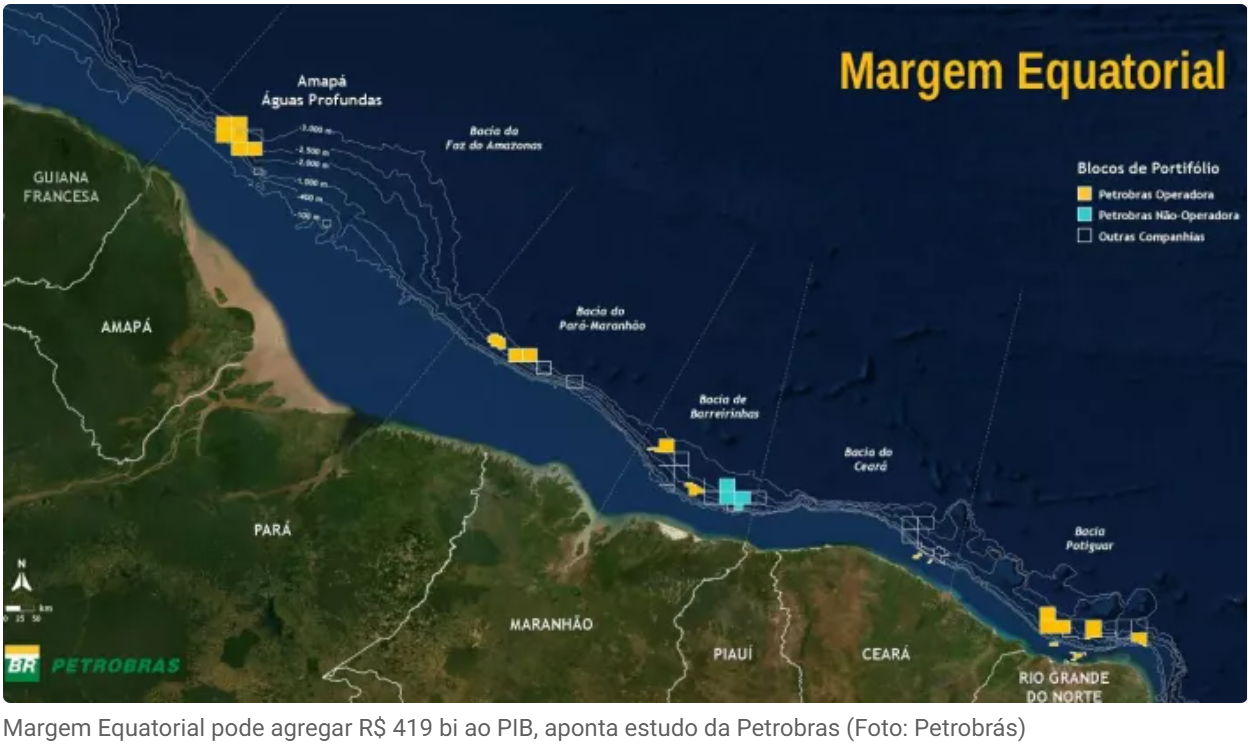
Photo: screengrab from the official website of Brasil 247
By Brasil 247 - Petrobras environmental licensing and sustainability executive manager Daniele Lomba said that the Equatorial Margin, a new exploratory frontier stretching from Rio Grande do Norte to Amapá, could become a turning point for Brazil's energy and economic development.
According to Estadão Conteúdo, Lomba explained in a presentation at the Getulio Vargas Foundation (FGV) that the oil basins in this region are even larger than those in the Southeast—Campos, Santos, and Espírito Santo—which have supported Petrobras's production since the 1950s. "From Rio Grande do Norte to Amapá is an area larger than the Southeastern basins, so it's important that we understand its potential, which will be essential for our self-sufficiency," she said.
Aligned with Petrobras president Magda Chambriard, Lomba defended an approach of energy addition rather than energy transition, arguing that oil remains vital for global security. "Oil is necessary to ensure the planet's energy security, and no major producer of the commodity has stopped producing because of environmental reasons," she stated.
The executive emphasized that exploration in the Equatorial Margin could play a key role in combating energy poverty and strengthening Brazil's economy. "New frontiers are essential to ensure energy security and help end energy poverty," she noted.
A Petrobras study presented by Lomba projects an economic impact similar to that seen in Guyana, where oil production now reaches about 700,000 barrels per day. The full development of Brazil's Equatorial Margin could generate 2.1 million direct jobs, add R$ 419 billion ($74 billion) to the national GDP, and bring R$ 25 billion in tax revenue, along with R$ 20 billion in royalties and special participations.
The report underscores the region's potential as a driver of both energy self-sufficiency and sustainable growth. For comparison, the current GDP of Amapá is approximately R$ 23 billion, highlighting the transformative impact the new offshore frontier could have on the northern states and on Brazil's overall energy landscape.
(Reported by Brasil 247 on October 27, 2025)
