ARTS / CULTURE & LEISURE
From niche hobby to national trend, outdoor sports have become new growth engine
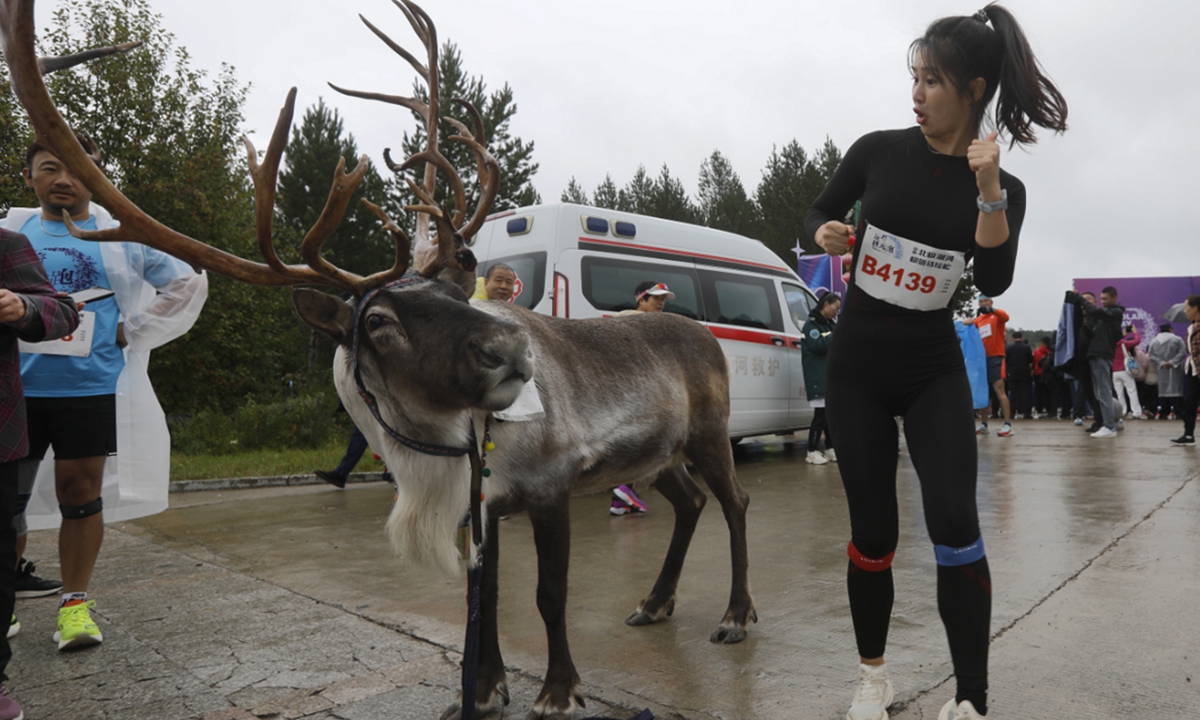
Photo: VCG
When more than 400 million people across China are stepping outdoors to climb, cycle, ski, or camp under the stars, it's no longer just a lifestyle choice but a social phenomenon. The evolving landscape of outdoor sports has marked a new milestone in the development of the national sports industry, an observer told the Global Times on Tuesday.
At the 2025 China Outdoor Sports Industry Conference recently concluded in Dali, Southwest China's Yunnan Province, a new China Outdoor Sports Industry Development Report was released, showing that the number of outdoor sports participants in China exceeded 400 million as of April, making the outdoor sports industry an important driving force behind the growth of the sports economy.
The overall economic and social development of the country, the hosting of high-level international sporting events, and favorable government policies have all fueled the rapid growth of outdoor sports, Luo Le, a sports scholar at Beijing University of Chemical Technology, told the Global Times on Tuesday.
In addition, the ongoing process of urbanization has sparked a growing desire among many people to reconnect with nature. The new landscape mirrors China's changing attitudes toward health, leisure, and quality of life, said Luo, who participated in the conference as a member of the professional committee of the Chinese Mountaineering Association.
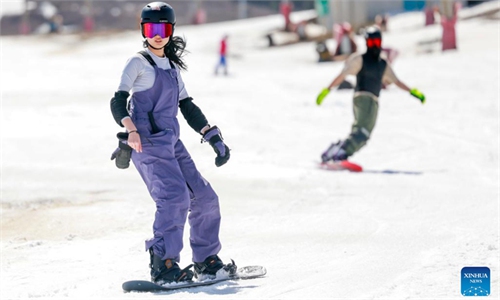
In terms of popular activities, participation is highest in ice and snow sports, mountain sports, and water-based activities, while marathons, cycling, triathlons, skiing, and rafting attract particularly strong attention, according to the report.
Meanwhile, according to the report, immersive experiences such as VR-based mountain climbing, cycling, and diving, as well as nighttime activities, including night hiking, glow-in-the-dark cycling, and stargazing camping, are emerging as new trends driving outdoor sports consumption.
The diverse choice demonstrates not only creativity but also a growing appetite for experiences that blend sports, community, and aesthetics.
In terms of consumer demographics, according to the report, young and middle-aged groups have become the main participants in outdoor sports, with those aged 25 to 34 and generally possessing higher education levels accounting for the highest proportion. High-intensity outdoor sports are dominated by male participants, while moderate and low-intensity activities are more favored by women.
The shift reflects how China's rising middle class is reimagining leisure through active, experiential living and their pursuit of physical health and mental well-being in balance with nature.
During the conference, the National Development and Reform Commission (NDRC) released the first list of 49 cities across the country designated as locations for implementing the development of high-quality outdoor sports.
Luo noted that representatives from all 49 locations attended the conference, promoted their respective projects and engaged in exchanges and collaboration.
This list is not an award, it marks a beginning. This beginning represents a sign of the nation's trust in these cities, providing them with the support they need to develop and manage themselves as high-quality outdoor sports destinations, he said.
Moving from high-speed growth to high-quality development, Luo said that the selected cities on the list need to focus on the quality of services and improving the standards of infrastructure.
Promoting the development of the sports industry and outdoor sports will feature in the nation's 15th Five-Year Plan (2026-2030) and other specific development plans, according to a press conference held by the NDRC in September.
By 2030, the nation aims to build around 100 high-quality outdoor sports destinations, which will be equipped with comprehensive facilities that can provide high-quality services and host diverse sports events, said Chen Jun, head of the NDRC's Department of Social Development, at the press conference.
With more participants comes greater responsibility to ensure safety, professionalism, and environmental sustainability, which are crucial to the healthy development of China's outdoor sports in the long run.
The author is a reporter with the Global Times. life@globaltimes.com.cn
RELATED ARTICLES