ARTS / CULTURE & LEISURE
From coal mines to a new dawn in tourism
A stroll through Datong
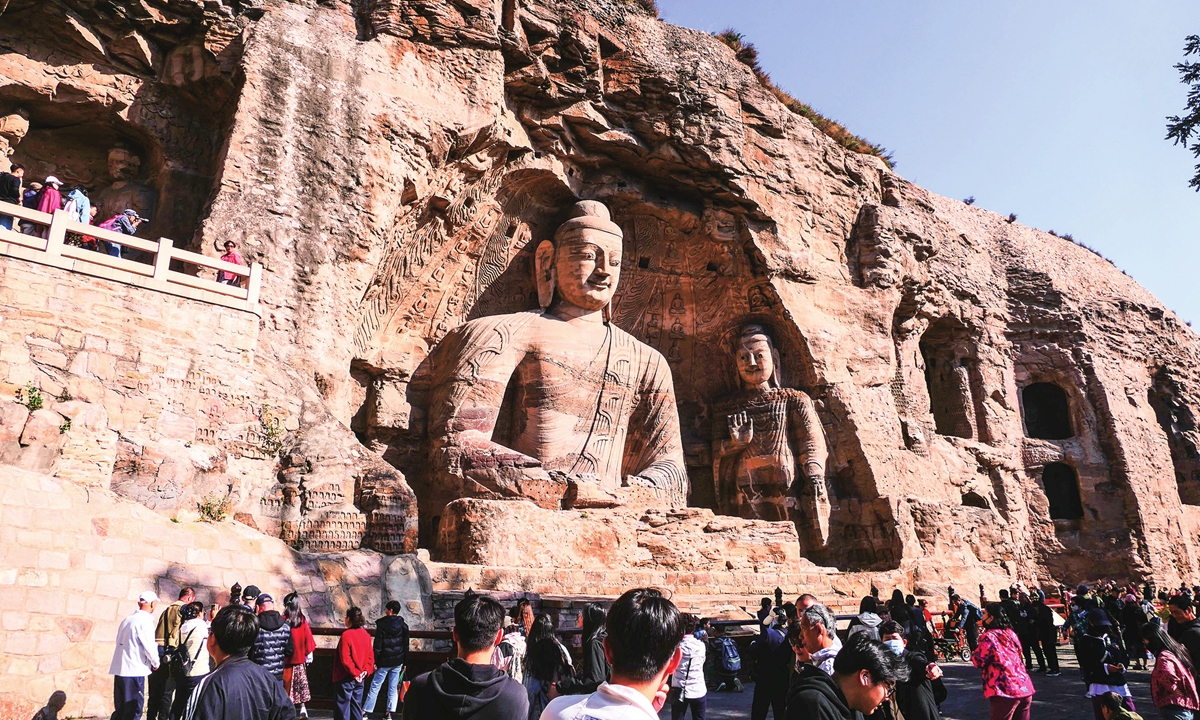
Tourists visit a Buddha statue in Cave 20 of the Yungang Grottoes in Datong, North China's Shanxi Province, on October 14, 2025. Photos: VCG
Along the central axis of Datong ancient city in North China's Shanxi Province, visitors enjoy walking through orderly streets and freshly restored stonework, an urban framework that has endured for more than 2,300 years. From above, traditional pavilions seamlessly integrate with modern buildings, reflecting how this old mining city in northern China has reinvented itself as a new fascinating travel destination.According to a recent report by Le Monde, a major publication in France, Datong lies just a two-hour high-speed train ride from Beijing. The city's low prices and relaxed pace, the inexpensive taxi fares and generous portions of local eateries, are drawing more and more travelers seeking a "budget-friendly" yet fulfilling travel experience.
"I used to think Datong was just a city dedicated to coal mining, but the restored streets of the old town really surprised me," Liu Jiayi, a tourist from Beijing, told the Global Times.
"At night, there are drone shows and light displays. We wandered around the city until after 10 pm, and many cafes and small shops were still open."
"Some shop owners talk about Datong's transformation in enthusiastic terms, sharing how an increasing number of people are choosing to stay, open shops, and get involved in creative projects in the city," she said. "The cost of living is low, but the city provides an overall satisfying experience."
Mining city transformation
Coal was once the defining feature of Datong. As one of China's major energy production centers, the city still occupies a strategic position in the national energy supply system.
Yet atop these black veins of coal, Datong is rewriting its own story.
Many of the city's old mining areas have been converted into nostalgic tourist attractions. In some areas, visitors can put on helmets, carry LED lamps, and step directly into the mines to explore the old tunnels.
The picturesque Kouquan township, located on the outskirts of Datong, is currently awaiting demolition and reconstruction before welcoming tourists, according to Le Monde.
The effects of this transformation are gradually becoming more tangible.
Data from the Datong Municipal Bureau of Culture and Tourism shows that in the first half of 2025, eight key monitored sites, including the Yungang Grottoes, Mount Hengshan, and Datong ancient city, facilitated approximately 7.87 million visitor trips, signifying a year-on-year increase of 14.65 percent. Ticket revenue reached 255 million yuan ($38 million), up 12.52 percent year-on-year.
This urban renewal has also changed the lives of many residents. Former mining families, whether still working or retired, can now move into modern city communities and enjoy more comfortable living conditions.
Guan Yifeng, the child of a former miner, now runs a guesthouse in Datong's ancient city.
He told the Global Times, "We grew up by the mines; the sky was always gray. Now, seeing tourists taking photos in the old streets and standing in awe before the grottoes, I feel a deep sense of wonder. People used to think only of leaving, but now staying here feels like it carries its own promise."
Datong's emergence as a tourism destination is far from accidental. The city's cultural roots run deep. The city was the capital during the Northern Wei Dynasty (386-534) and served as the Western Capital under the Liao and Jin dynasties (916-1234), leaving behind a wealth of internationally renowned heritage sites, including the Yungang Grottoes and the Hanging Temple.
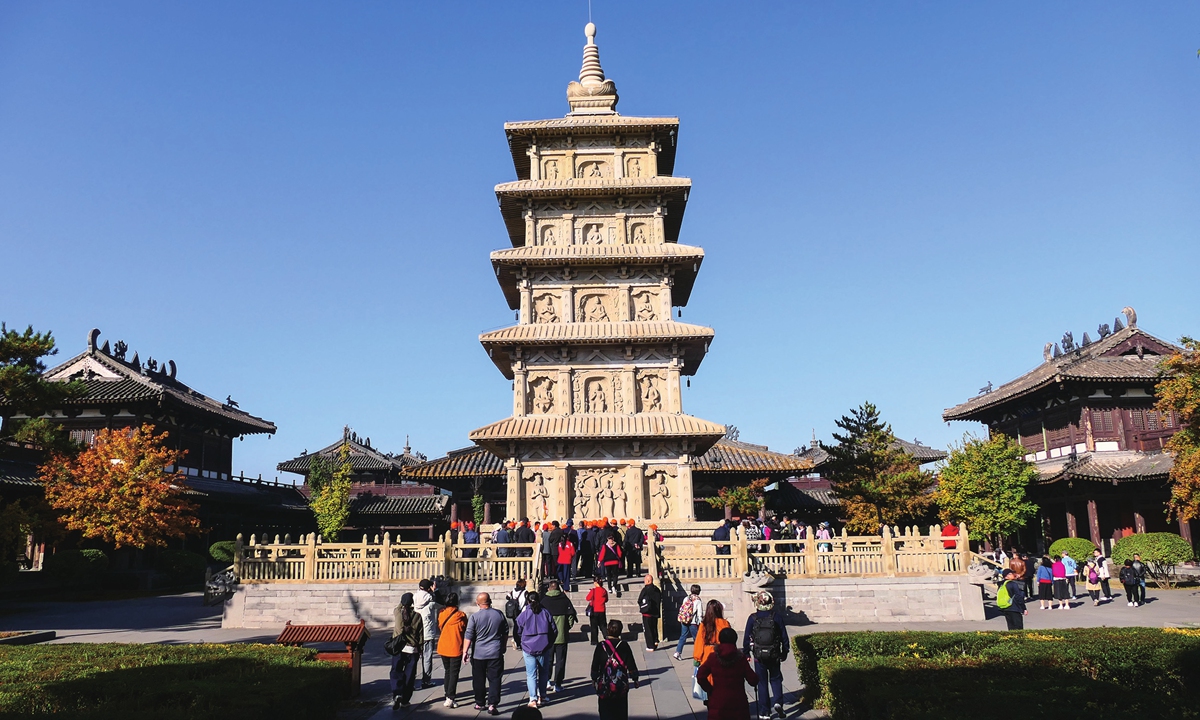
The stone pagoda at Lingyan Temple of the Yungang Grottoes in Datong, North China's Shanxi Province, on October 14, 2025
Cultural heritageStepping into the Yungang Grottoes, visitors can admire the tens of thousands of Buddha statues carved directly into the cliff faces, each depicting a distinct posture and serene expression.
Sunlight slants in through the cave openings, casting shadows that bring the carved lines to life, carrying the warmth of a thousand years of history.
The Yungang Grottoes are like a stone-engraved history book of the Northern Wei dynasty. More than 1,500 years ago, the Northern Wei royal family oversaw the construction of this vast Buddhist cave complex, which represents the pinnacle of fifth-century sculptural art, according to Xinhua News Agency.
The Great Buddha statue in Cave 20 stands tall, eyes gazing into the distance with unwavering focus, welcoming tourists with a serene expression and an understated yet profound smile.
Indeed, smiles are among the most striking features at Yungang; they seem to soften the cold stone and bring history back to life.
In recent years, Yungang has leveraged digital scanning and 3D printing to create life-size replicas that can be moved, touched, and experienced up close.
By the end of 2017, a 3D printed replica of the West Rear Chamber of the largest cave, Cave 3, was repurposed in Qingdao; in November 2018, part of Cave 18, including a 15.5-meter-high standing Buddha, was printed in Beijing. Through digital technology, Yungang's smiles are now accessible to an ever-growing audience, according to Xinhua.
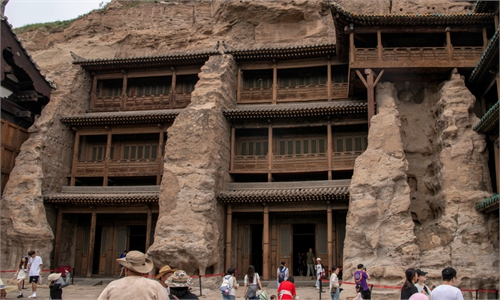
Beyond Yungang, the Hanging Temple at the foot of Mount Hengshan also draws steady streams of visitors. The Hanging Temple is built into a sheer cliff and renowned for its astonishing architectural craftsmanship.
According to the Culture and Tourism Department of Shanxi Province, the monastery was founded in the late Northern Wei period.
Before his death, Northern Wei Taoist master Kou Qianzhi (365-448) had left instructions to build a temple suspended in midair, "to reach the skies above and rise above worldly noise below." His disciples then raised funds, carefully selected the site, and completed the monastery.
"We welcome over a thousand visitors every day, from across China and abroad," Li Jingze, a tour guide at the Hanging Temple, told the Global Times.
"They are amazed to see a temple really suspended in midair. The site offers explanations in English and Korean, and many foreign visitors say that this is a true Chinese wonder.
From the black of coal to the glow of lights, from underground resources to above-ground stories, Datong is rediscovering its rhythm and reigniting its future.
RELATED ARTICLES