SPORT / MISCELLANY
Wushu leads the way as traditional sports go global from National Games
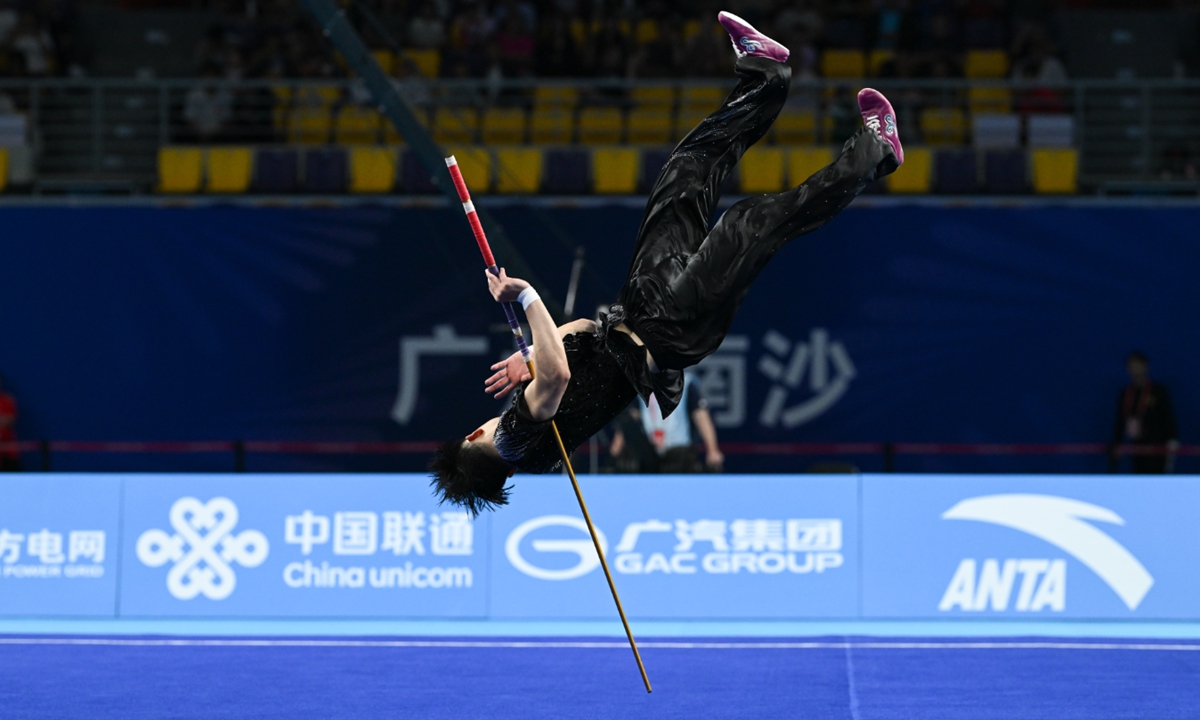
Wushu at the National Games Photo: VCG
When the president of the International Olympic Committee (IOC), during the 15th National Games, expressed her anticipation for Wushu's official debut at the 2026 Youth Olympic Games, it marked a symbolic moment of seeing the ancient martial art go from the national stage to the global spotlight.In addition to the martial art, a variety of traditional Chinese sports, including dragon boat racing, Taijiquan (or tai chi), and lion and dragon dancing, are being featured in the mass participation events for the ongoing National Games held across South China's Guangdong-Hong Kong-Macao Greater Bay Area.
Thanks to the dazzling showcase at the National Games, traditional Chinese sports have become powerful ambassadors of cultural communication, carrying forward stories of heritage, harmony, and shared human spirit, Luo Le, a sports scholar at Beijing University of Chemical Technology, told the Global Times on Wednesday.
After watching the Wushu Routine events and interacting with athletes in Guangzhou on Monday, IOC President Kirsty Coventry said that it is a beautiful competition. "Wushu is going to be featured in Dakar [in Senegal] at the 2026 Youth Olympic Games. For the first time, the Youth Games will be coming to the African continent. We're very excited about that."
Wushu will be included as a medal sport in the 2026 Youth Olympics, which is often regarded as a key indicator for the introduction of new sports into the Olympics.
The opening ceremony of the National Games also paid tribute to martial arts heritage with performances of Wing Chun, Nanquan (or southern fist) and Cudgel Routine.
As China's national sporting event, the National Games serve as a vital bridge for traditional sports to step onto the world stage. From the perspective of cultural exchange, disciplines such as Wushu and dragon boat racing are living embodiments of Chinese culture, Luo noted.
Through professional competitions that adopt standardized, competitive formats, these traditional practices are gaining international visibility - becoming a shared language for cross-cultural dialogue. This, in itself, is a vivid example of how China tells its story to the world, he said.
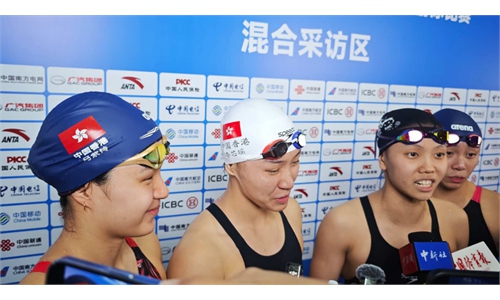
At the Freestyle Southern Lion Dance final of the National Games Mass Participation event on Tuesday, the Guangdong-Hong Kong-Macao joint team won gold with a score of 9.28.
Liang Guangzhuo, coach of the joint team, told reporters after the victory that the three regions forming a joint team and competing at the National Games was a memorable experience.
In lion dance performances, the coordination between the lion and the drum is crucial. During training, communication among team members from the three regions was smooth as Cantonese served as a natural common tongue, making teamwork more efficient. As cross-regional cooperation continues to deepen, hopefully this competition will inspire more young people to learn about and take part in lion dancing, said Liang.
The athletic and cultural cooperation among the regions has fostered unity in the Greater Bay Area and demonstrated how traditional sports can serve as a modern bridge for mutual understanding.
According to organizers, more than 1 million people joined the preliminary rounds of these mass participation events, reflecting the public enthusiasm for traditional sports as living cultural practices rather than relics of the past.
The National Games not only showcase the athletic excellence of professional competitors but also engage the public through mass participation events in Taijiquan, lion and dragon dancing, and other folk traditions. This "dual-track" model - combining elite performance with community involvement - allows the world to see the strength of Chinese athletes and the vitality of traditional culture in everyday life, Luo said.
In this sense, traditional Chinese sports have become powerful ambassadors of cultural communication, carrying forward stories of heritage, harmony, and shared human spirit.
RELATED ARTICLES