ARTS / CULTURE & LEISURE
‘Golden first snow’ brightens capital as Ginkgo Avenue becomes city’s top scenic spot
A unique journey through Beijing
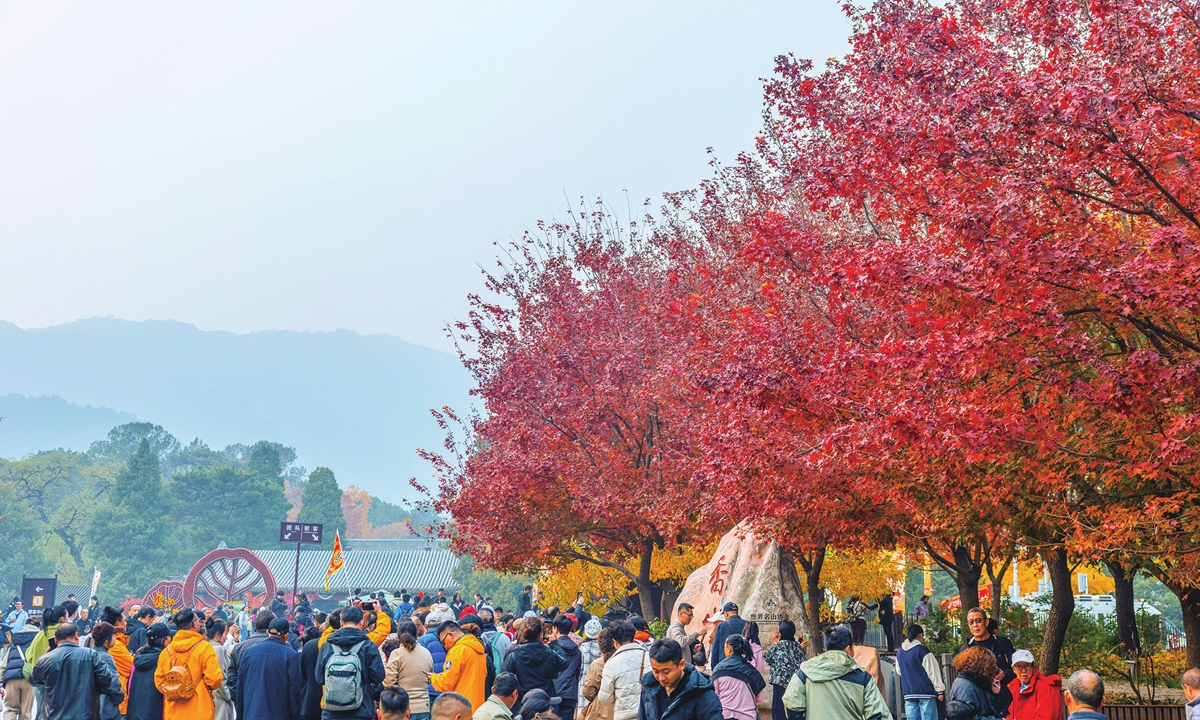
Visitors at the entrance of the Fragrant Hills Park in Beijing Photos: Li Hao/GT
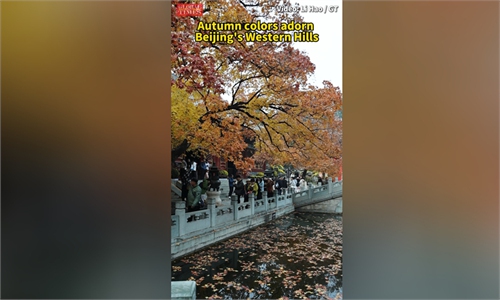
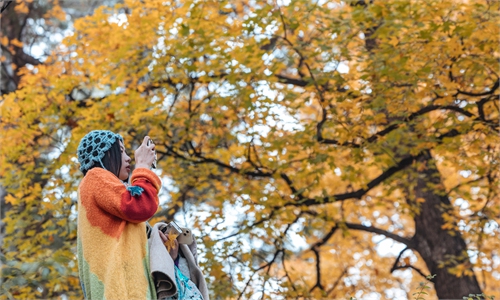
As winter sets in, Beijing has entered its leaf-falling season. The trending topic "Beijing's golden first snow" topped China's lifestyle-sharing social media platform Xiaohongshu, or RedNote's hot search list and continues to attract attention.With falling temperatures and refreshing rainfall, ginkgo and maple trees across the city have turned golden, painting an early winter spectacle among the red walls and ancient architecture.
Golden season ongoing
At the north gate of the Temple of Heaven, more than 1,000 ancient ginkgo trees have put on their golden attire, transforming the 600-year-old imperial altar into a sea of shimmering yellow. Sunlight filters through the branches and leaves, casting dappled shadows on the stone paths.
"The ginkgo trees at the Temple of Heaven have a spirit of their own. They blend perfectly with the red walls and carry a sense of solemn beauty, I never get tired of photographing them," shared Yin Songshi, a Beijing-based photographer who has photographed the temple's autumn scenery for more than a decade.
At the end of the ginkgo-lined avenue stands the Hall of Prayer for Good Harvests, which looks even more majestic against the golden backdrop. Its blue-glazed tiles and gilded rooftop gleam under the sunlight, while the ginkgo leaves form a natural golden wreath around the ancient structure, softening its grandeur with a touch of warmth.
Among the visitors was Zhao from Foshan, in South China's Guangdong Province, who was excitedly taking photos and video with her friends. "I'm in Beijing to enjoy the autumn colors, it's absolutely stunning!" she told the Global Times.
Zhao had flown to the capital over the weekend.
"In Foshan, it's green all year round," she said. "When I saw photos online of Beijing's golden ginkgo trees, I booked my flight right away."
Her "autumn-chasing journey" was carefully planned, with stops including Ditan Park, Beiluoguxiang, and Wanshou Temple, all popular spots for capturing the city's fall colors. She also shared tips about "how southerners can enjoy autumn" on social media.
As Zhao noted, beyond the Temple of Heaven and Ditan Park, there are many other places in Beijing worth exploring at a slower pace.
Beihai Park, with its red walls, white pagoda, and golden ginkgo trees mirrored in the lake, offers one of the city's most layered autumn scenes. For those hoping to avoid the crowds, Side Park and Dongbuyaqiao Hutong provide a more intimate glimpse of old Beijing - narrow lanes carpeted with fallen leaves and lined with quiet charm.
According to the Beijing Evening News, Beijing traffic police and local park authorities have issued reminders as tourist numbers continue to surge at popular spots, advising visitors to travel during off-peak hours and use public transport whenever possible.
This fleeting golden glow is more than just the farewell of a season - it is the city's tender footnote. Whether lifelong Beijingers or visitors from afar, everyone leaves with their own memory of this "golden first snow."
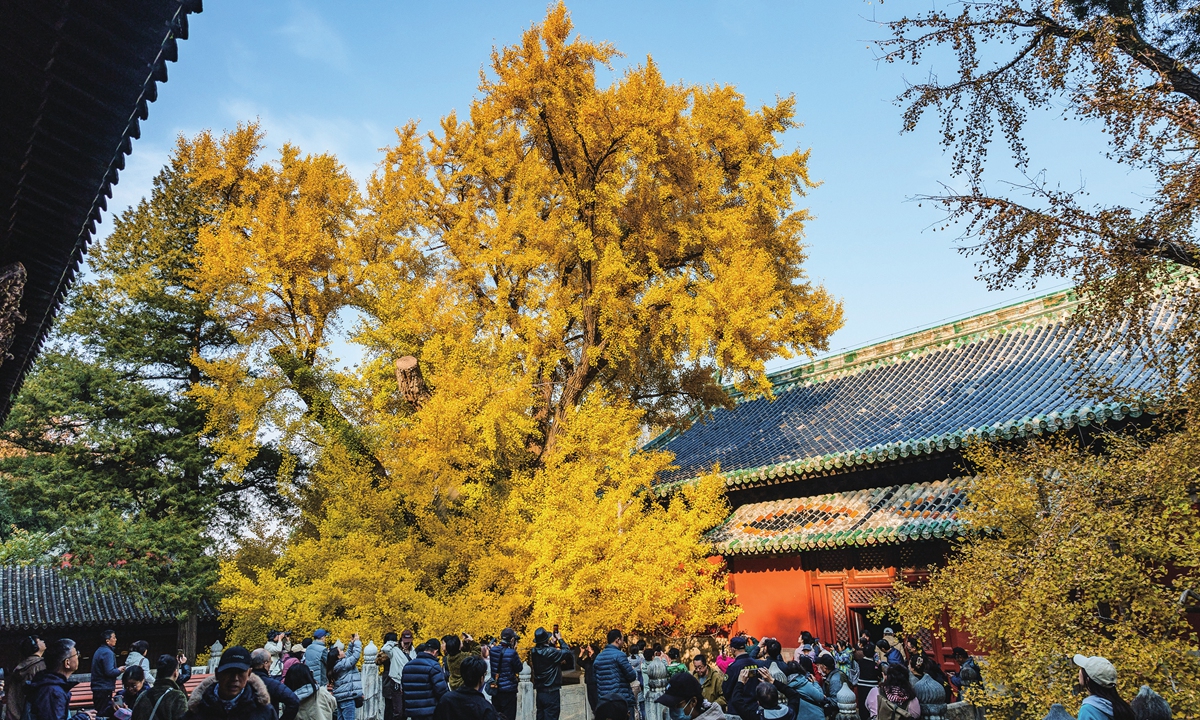
An ancient ginkgo tree at Dajue Temple in Beijng
Trees and traditionsZhang Mingxiang, a professor at Beijing Forestry University's School of Ecology and Nature Conservation, told the Global Times that "in autumn, common color-changing trees in Beijing include ginkgo, Acer truncatum (purpleblow maple), Cotinus coggygria (smoke tree) and Fraxinus chinensis (Chinese ash)."
During the season, as chlorophyll breaks down and carotenoids and anthocyanins accumulate, their leaves turn brilliant shades of yellow, red, and orange, creating a breathtaking scenery of autumn colors, added Zhang.
Beijing has a long history of cultivating ginkgo trees.
Ancient trees, such as the approximately 1,300-year-old ginkgo tree at Tanzhe Temple, stand as living witnesses to a millennium of ginkgo cultivation. And the famous 600-year-old ginkgo trees date back to the Yongle period of the Ming Dynasty (1368-1644).
"In classical gardens and temples, ginkgo trees are a common sight for several reasons," Zhang noted.
"Culturally, the ginkgo, often called a 'living fossil,' symbolizes longevity, resilience, and good fortune, reflecting Confucian ideals of enduring happiness and long life."
In Buddhism, the heart-shaped ginkgo leaf represents compassion and wisdom.
Its golden foliage evokes the radiance of Buddha's light, and its tall, upright trunk resembles a "pillar of gold," earning it the title of a sacred tree.
In addition, practically speaking, ginkgo wood is fine-grained and used for carving Buddha statues and ritual instruments such as wooden fish. Its nuts, ginkgo biloba, known as white fruits, are valued both as food and medicine, offering economic, and ecological benefits.
The color change in ginkgo and maple leaves results from Chlorophyll breakdown, changes in photosynthesis, and hormonal regulation. In addition, weather conditions play a crucial role.
According to Zhang, cool temperatures promote chlorophyll breakdown and accelerate anthocyanin formation. Adequate sunlight enhances pigment production and color saturation through UV stimulation, and moderate humidity with large day-night temperature differences further support pigment accumulation, creating vibrant autumn hues.
"Beijing's autumn weather in 2025 will be favorable, allowing the best viewing period for ginkgo and other trees to last until mid-November," said Zhang.
The timing varies slightly by species and local microclimate, he added.
Ginkgo trees typically peak from late October to early November. For example, the ginkgo avenue at Ditan Park reaches full color in early November, and the ancient ginkgo trees in the Forbidden City turn golden around the same time.
Acer truncatum and smoke trees usually show their most vibrant hues from mid-October through mid-November, said Zhang.
RELATED ARTICLES