ARTS / CULTURE & LEISURE
8,100-year-old site in Jiangsu identified as ‘earliest Jiangnan’
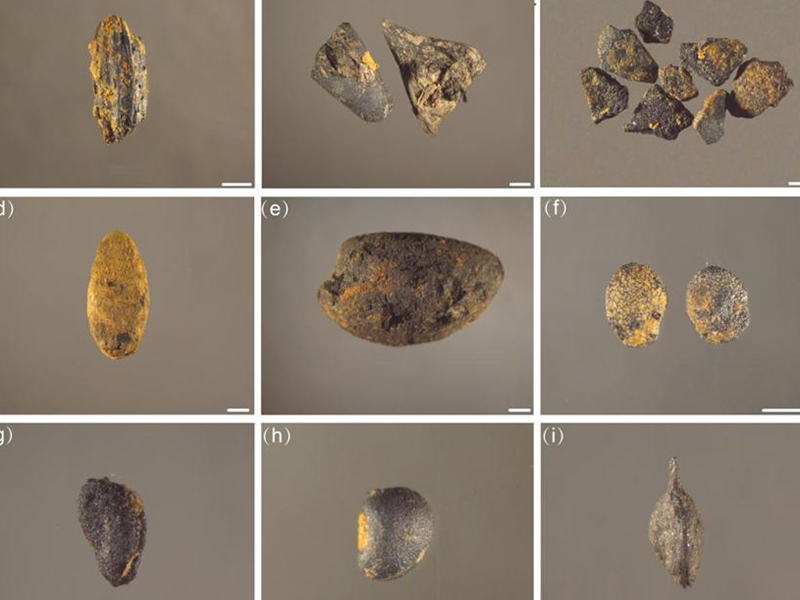
Plant remains discovered the Baojia site, East China's Jiangsu Province Photo: Courtesy of the Jiangsu Provincial Institute of Cultural Relics and Archaeology
First discovered in 2022, the prehistoric site is located on a terrace rising above the surrounding area and currently covers 20,000 to 30,000 square meters.
According to experts, the site fills a crucial gap in the Neolithic cultural sequence of the Taihu Lake region, while its distinctive cultural features have been described as the "earliest Jiangnan."
The region located in the coastal area south of the Yangtze River, which is called "Jiangnan" in Chinese, is an area that boasts rich agriculture, extensive trade, and influential artistic production in China, according to the Xinhua News Agency.
Hu Yingfang, the lead archaeologist of the Baijia site and a member of the Jiangsu Provincial Institute of Cultural Relics and Archaeology, told the Global Times on Monday that the current excavation area is concentrated along the eastern edge of the site, where more than 200 pits have been uncovered.
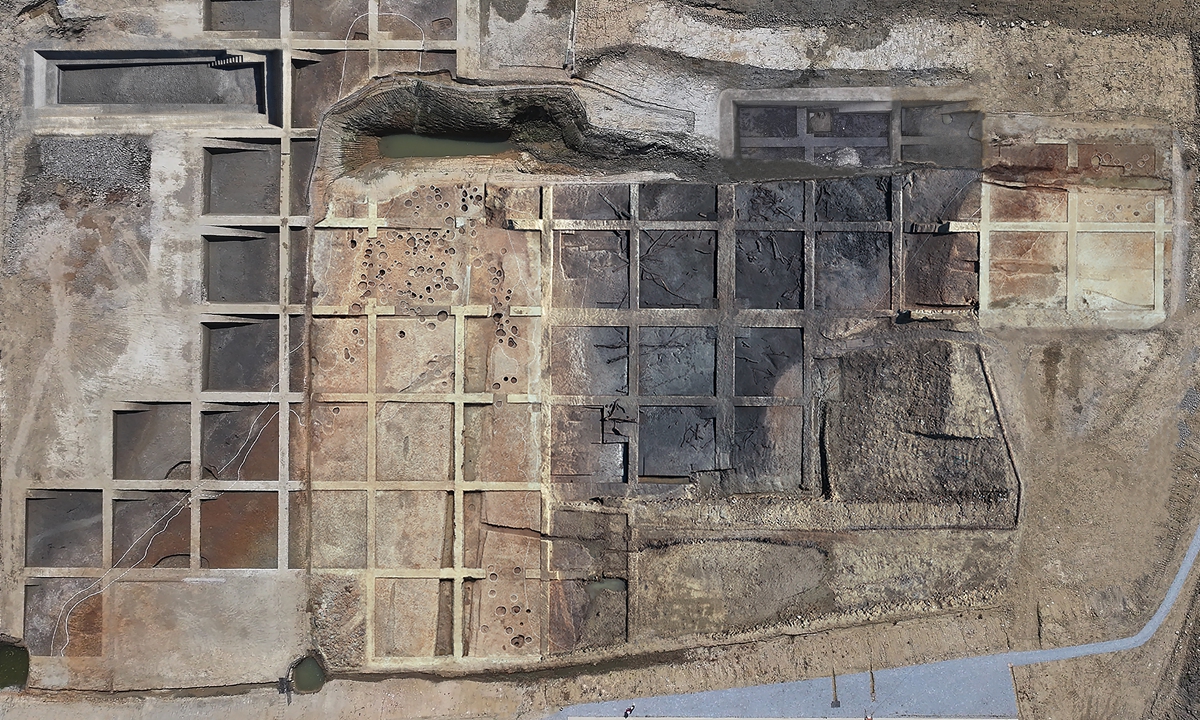
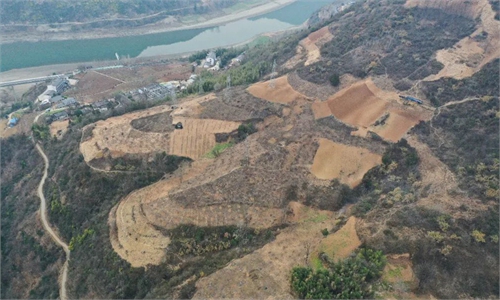
River channel remains discovered at the Baojia site, East China's Jiangsu Province Photo: Courtesy of the Jiangsu Provincial Institute of Cultural Relics and Archaeology
From gray-black soil and layers of clam shells 5 to 6 meters below the surface, the excavation team recovered large quantities of pottery shards, pieces of wood, and plant and animal remains, giving archaeologists a glimpse into the cultural landscape of the Baijia site.
According to Hu, the Baojia site is a major achievement in exploring the origins of civilization in the Jiangsu region.
Artifacts recovered from the site include jade ornaments, stone and shell tools. Pottery vessels such as jars, bowls and basins were also found, with some decorated with dotted or slanted patterns using red and black pigments.
The site remained waterlogged for long periods, which helped preserve artifacts. Remarkably, organic materials, including wooden pieces with mortise-and-tenon joints, have been preserved.
Animal remains show a diverse ecosystem that included water buffalo, deer, pigs, raccoon dogs, otters and rabbits. Avian species and fish, including carp, black carp and grass carp, as well as reptiles such as turtles, soft-shelled turtles and Chinese alligators were present as well. In addition, there were also large quantities of aquatic mollusks such as mussels, clams and shells, according to Hu.
These discoveries indicate that the area was rich in biodiversity and possessed a favorable ecological environment at the time, making it highly suitable for human habitation, Hu told the Global Times.
Wang Wei, a member of the Chinese Academy of Social Sciences, noted that the site dates to a key stage in the origins of Chinese civilization and has yielded the earliest painted pottery currently known in Jiangsu, as well as some representative pottery pieces.
Artifact studies show that the Baojia site has numerous connections with the Shangshan and Kuahuqiao sites in Zhejiang, yet it also possesses a distinct cultural identity of its own, providing crucial empirical evidence for tracing the origins of Yangtze River civilization.
RELATED ARTICLES