ARTS / CULTURE & LEISURE
Saving ICH from misuse is to save public’s trust
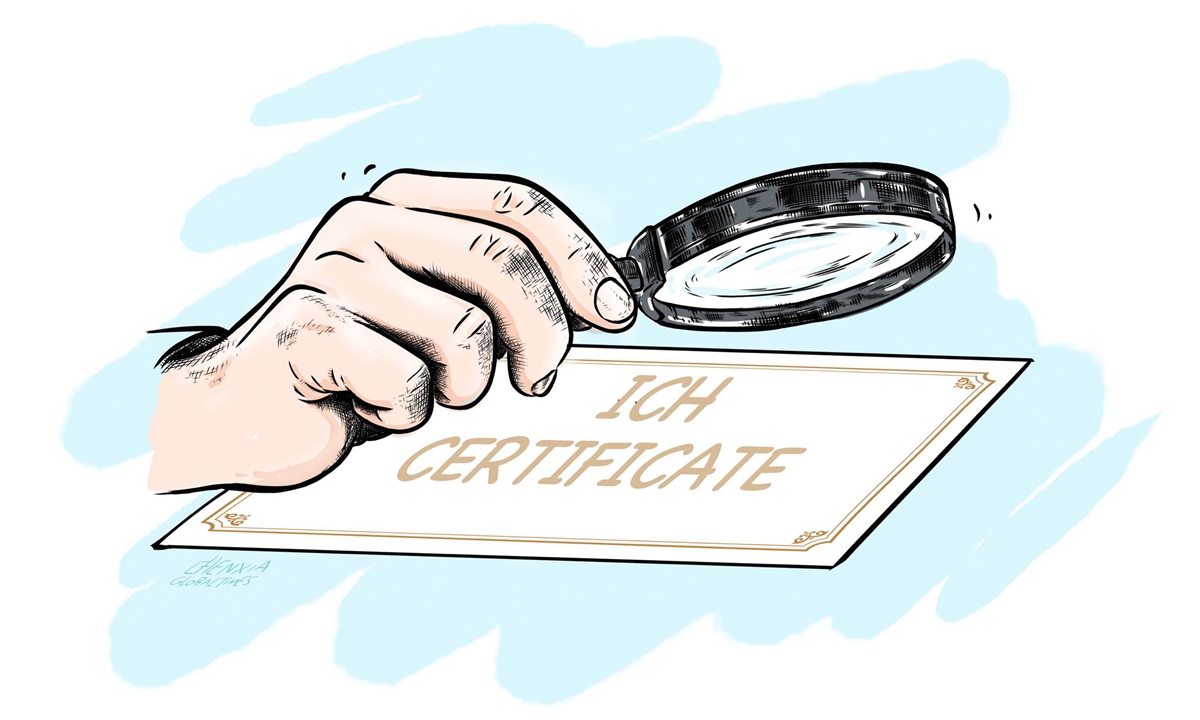
Illustration: Chen Xia/GT
Cases involving AI-generated images of fake intangible cultural heritage (ICH) inheritors or using ICH as marketing stunts to lure consumers were recently highlighted by China's Supreme People's Procuratorate as targeted cases in its efforts to protect China's ICH legacies.
These malpractices seem to be two sides of the same coin. One side reveals the public's passion for integrating ICH into daily life, while the other reflects how the authenticity of ICH must be preserved as it becomes more popular among the people.
Why is "authenticity" such a lifeline for ICH treasures? The answer to this question lies in ICH's stark contrast to tangible heritage.
Imagine, the genuineness of a physical vessel can likely be found in ancient texts, and verified through historical and scientific analysis like X-ray scanning. Yet, authenticating ICH is difficult because its value lies not in an object, but the creative skill involved in an intangible process.
Using the same example, while the bronze vessel itself is a physical item that can be passed down, the ancient techniques that were used to cast the bronze vessel are ICH. Ultimately, ICH refers to a form of flowing, formless cultural wisdom.
It is precisely because of this fluid and shapeless nature that ICH can easily circulate among people. Sadly, in turn, this also makes it easily distorted.
For example, "Jianzhan teaware," a Fujian-based ICH, is a prominent line of ceramics with roots in the Song Dynasty (960-1279).
Yet, its esteemed reputation is precisely what has prompted some merchants to engage in dubious ventures.
They deceive consumers with products wholesaling for as little as 10 yuan ($1.40), falsely labeling them as "authentic wood-fired Jianzhan teaware" while in reality they are mass produced, machine-made products.
In another case highlighted by Supreme Procuratorate, three social organizations in Beijing were found to have conducted unauthorized vocational skill evaluations for ICH, awarding false certificates of "ICH inheritor."
At its core, ICH is about the very people who bring it to life.
This case is then even more worrying since it strikes at the heart of inheritors' credibility. It might be disappointing to think: If we cannot trust inheritors, then what ICH are we actually preserving?
From falsely labeled ICH products to inheritors of doubtful credibility, these phenomena are fueled not by accident, but by a debatable profit-driven mind-set that seeks to exploit culture for money.
In recent years, traditional Chinese culture, including the ICH sector, has boomed in popularity. Blessed by the vast variety of Chinese ICH categories and the mature shop-to-digital commerce model, a growing number of ICH products have become prevalent in both online and offline markets.
Online, intangible regional ICH product sales are taking over live-streams, while offline, city streets are filled with various snacks with labels such as "ICH noodles."
This is being called "pan-ICH-ization," a buzzword for merchant growth. While profitable, this behavior also dilutes the very original cultural attributes that define ICH.
Turning living heritage into an easy-to-obtain commodity may lead to people growing tired of ICH.
Meanwhile, the presence of faking or shoddy ICH goods in an expanding market are likely worsening this scenario, turning public fatigue into an outright rejection and disappointment, ultimately putting out the last flame for ICH in the hearts of people.
In other words, ICH malpractice can damage the public's love for traditional culture, and consequently, make them hesitant to promote or pass on their cultural roots. This negative cycle must be broken through rigorous legal oversight and coordinated efforts.
To safeguard ICH, different regional inspection organs should establish mechanisms to share information, while joint law enforcement efforts should be coordinated with cross-sector departments overseeing matters such as culture tourism, market regulation, cyberspace administration.
Also, such supervising organs should oversee instances in which the inheritance of representative ICH projects is inadequately guaranteed, such as conducting annual qualification reviews of ICH inheritors.
With society's technological growth, the rise of AI-generated "fake ICH inheritors" demonstrates some of the limitations of traditional ICH protection like manual vetting and field visits.
These methods cannot keep up with the speed of AI, while it is getting increasingly difficult to differentiate what is real and what is AI-generated content.
Hence, improvements must be implemented soon. Means such as establishing high-fidelity digital models and audiovisual databases of certified ICH inheritors and their crafts can help distinguish AI replicas from real ICH.
Meanwhile, the public, the most direct consumers of ICH, can also join in safeguarding its authenticity by reporting cases of fraud while also insisting on purchasing authentic ICH products.
At its core, cracking down on distorted ICH aims to restore people's trust in traditional culture. The ultimate goal of these protection efforts is to empower the public to confidently embrace their traditions once again.
The author is a reporter with the Global Times. life@globaltimes.com.cn
RELATED ARTICLES