BUSINESS / PRESS RELEASE
COP30: Report of the State Grid Corporation of China on Contribution to the Global Security Initiative Receives Widespread Recognition from Experts
At the 30th United Nations Climate Change Conference (COP30) held in Belém, a city in the Amazon rainforest, State Grid Corporation of China (SGCC) officially released The Report on State Grid's Contribution to the Global Security Initiative. The report provides an in-depth analysis of the company's ongoing work to strengthen system reliability and grid resilience, against the backdrop of global climate change. It highlights SGCC's efforts to drive China's energy transformation—across energy consumption, supply, technology, and regulatory reforms—while expanding cooperative efforts with utilities and grid operators worldwide.
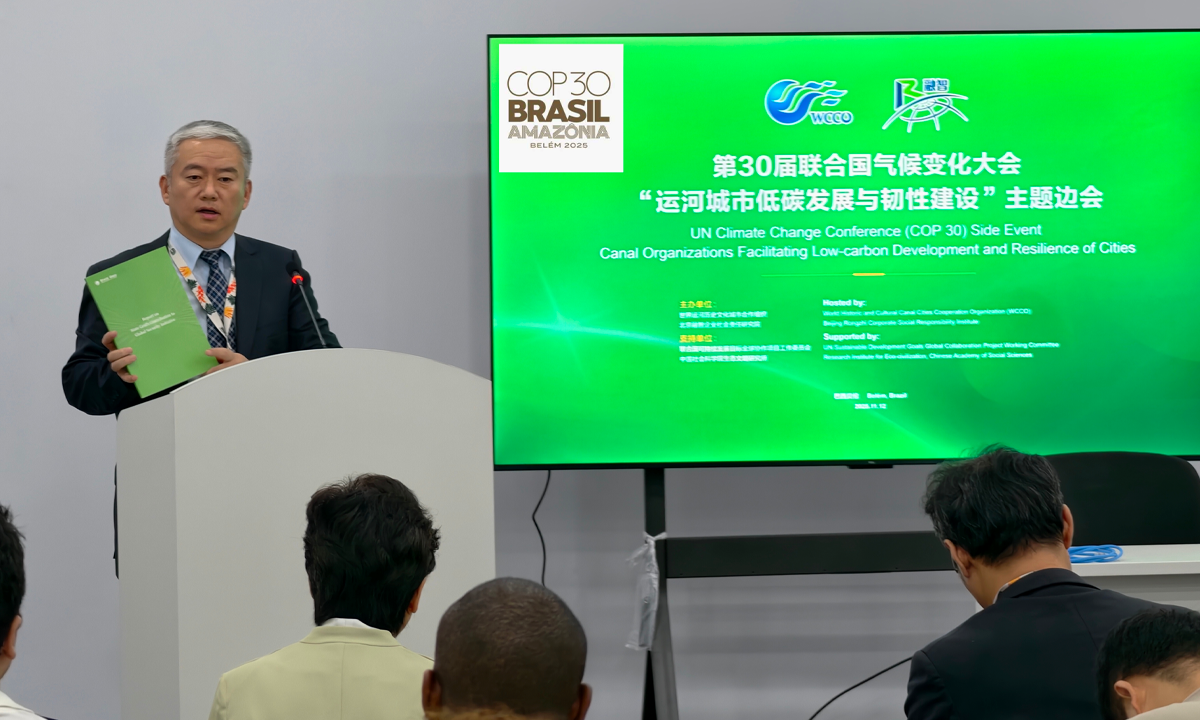
Wang further commented that the report was highly praised by participants at the conference, adding that he felt deeply proud as a delegate. He noted that although countries worldwide are expanding renewable energy generation, they continue to face power supply risks and challenges due to its inherent intermittency. SGCC has put forward innovative solutions to address this challenge, implementing a series of initiatives such as building a modernized power system and expanding international utility-sector partnerships in energy and electricity. These measures aim to strengthen the foundation of energy security by striking a balance between sustainable, low-carbon progress and maintaining dependable service for communities and businesses.
After reviewing the report, Dr. Paul Jefferiss, Director of the Center for Climate Engagement at Hughes Hall, University of Cambridge, remarked that he was pleased to see how China's State Grid has effectively balanced energy and power security, green and low-carbon transition, and economic development—an achievement that is highly commendable. "This success is underpinned by their sustained investment in grid infrastructure and continuous innovation in grid technologies, both of which are critical to ensuring an efficient and reliable supply of clean electricity.
Wang Xiaoguang, Dean of the Beijing Rongzhi Corporate Social Responsibility Institute, noted during the conference that the transition to renewable energy in response to climate change is, at its core, a restructuring of the global energy security landscape. He emphasized the report's demonstration—supported by extensive data and case studies—of how the State Grid Corporation of China is developing a next-generation power system to ensure an affordable, environmentally responsible, and secure transition toward high-quality and sustainable growth.
Wang further commented that the report was highly praised by participants at the conference, adding that he felt deeply proud as a delegate. He noted that although countries worldwide are expanding renewable energy generation, they continue to face power supply risks and challenges due to its inherent intermittency. SGCC has put forward innovative solutions to address this challenge, implementing a series of initiatives such as building a modernized power system and expanding international utility-sector partnerships in energy and electricity. These measures aim to strengthen the foundation of energy security by striking a balance between sustainable, low-carbon progress and maintaining dependable service for communities and businesses.
After reviewing the report, Dr. Paul Jefferiss, Director of the Center for Climate Engagement at Hughes Hall, University of Cambridge, remarked that he was pleased to see how China's State Grid has effectively balanced energy and power security, green and low-carbon transition, and economic development—an achievement that is highly commendable. "This success is underpinned by their sustained investment in grid infrastructure and continuous innovation in grid technologies, both of which are critical to ensuring an efficient and reliable supply of clean electricity.
