ARTS / CULTURE & LEISURE
Restorer repairs over 6,000 Sanxingdui artifacts, contributing behind scenes
Every bit holds the history
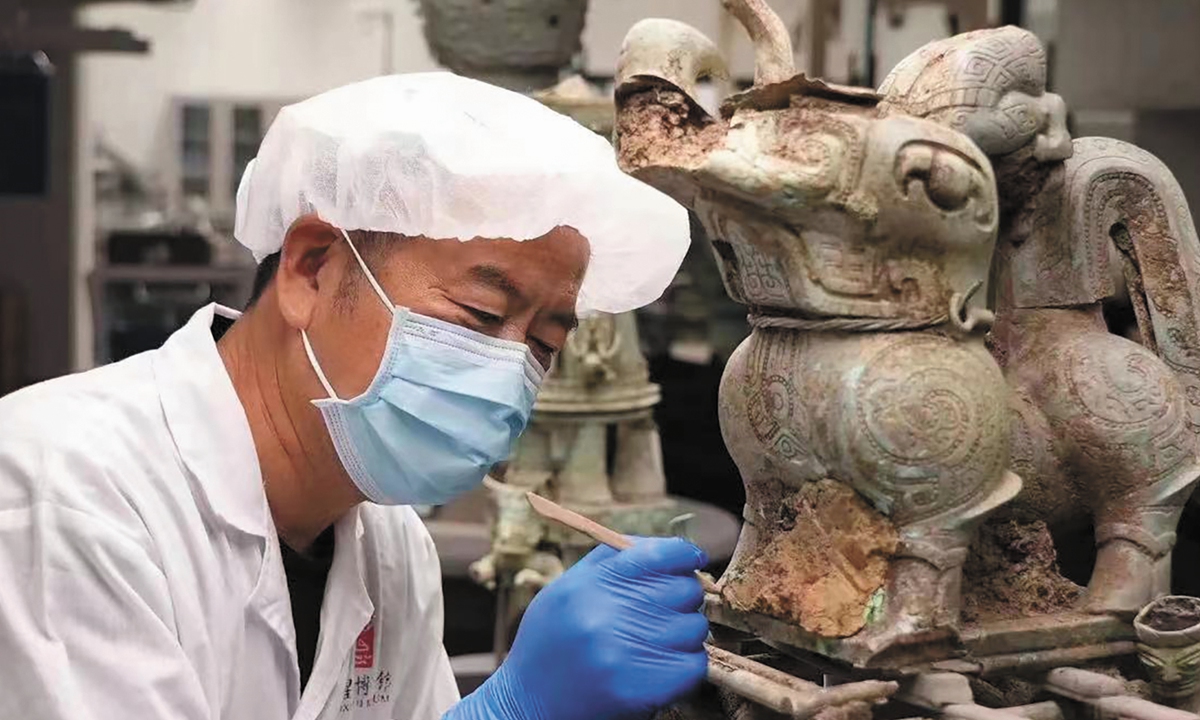
Cultural relic restorer Guo Hanzhong Photo: Courtesy of the Sanxingdui Museum
In March 2021, the latest round of on-site excavation at the Sanxingdui site in Sichuan Province was streamed live nationwide. Through their screens, people could watch conservators working inside the site's No.3 sacrificial pit as they wrapped a hefty bronze vessel with plastic film bit by bit to prepare it for extraction. They only had one shot to lift the vessel intact. Under the gaze of millions, Guo Hanzhong was the person to make that attempt.Taking on a mission that allowed no room for error, Guo remained poised. He rehearsed the procedure in his mind countless times, before proceeding. Although the pressure was great, this was nothing new for him as this type of "zero-mistake" situation was often part of his everyday job. Guo is a cultural relic restorer who has repaired more than 6,000 Sanxingdui artifacts over nearly 40 years.
While that bronze vessel was successfully extracted, Guo told the Global Times that "an unknown number" of Sanxingdui relics are still awaiting recovery. His task, he noted, is to "restore them to their original state" as part of groundwork for the site's future UNESCO World Heritage bid.
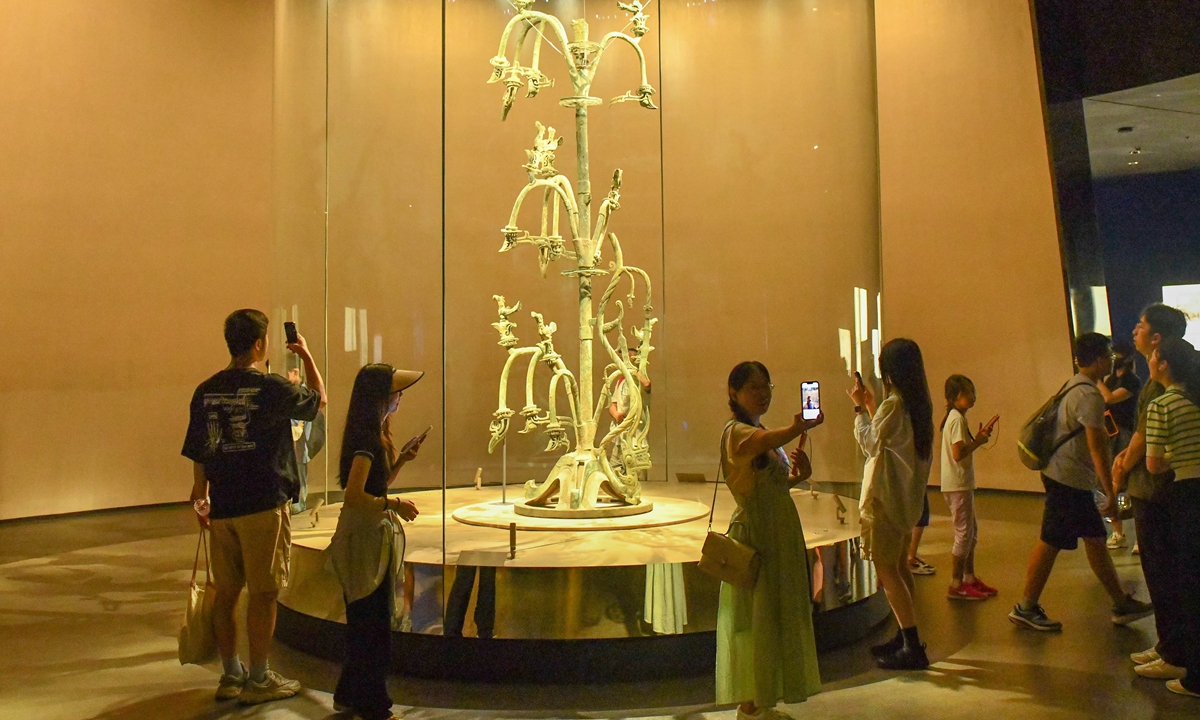
Visitors take photos of Sanxingdui's bronze tree. Photo: VCG
Paving the wayLocated in Southwest China's Sichuan Province, the Sanxingdui site and its nearby Jinsha Ruins are part of a joint plan to apply for UNESCO World Cultural Heritage Status. This initiative has been highlighted as one of the most important cultural programs of China's 15th Five-Year Plan 2026-30 period.
The Sanxingdui site is the largest and longest-lasting ancient Shu civilization site ever discovered in China. Guo has complex feelings toward its potential World Heritage bid. Having witnessed the discovery of one astonishing relic after another at the site since 1986, he feels confident about the bid. However, he also feels an urgency that he described as similar to "pre-exam nervousness."
"We've currently uncovered only around 90 percent of the site, and there's still much work to do to ensure that title," said Guo.
The "yet to be unveiled" parts of Sanxingdui include unexcavated cultural layers and smaller sacrificial pits. Even more crucial are the artifacts that remain unidentified, Guo revealed.
Compared to relics at other ancient sites, the items unearthed at Sanxingdui are highly fragmented and prolific. Making things even more difficult, pieces belonging to the same object are often buried in different pits.
Restorers have no choice but to compare the fragments' broken edges, while using their imagination and years of experience to reassemble them. Such a task is a job that demands no mistakes, since the fragments fit together in only one precise way and such ancient materials cannot withstand repeated attempts to be assembled.
Of all the relics Guo has pieced together, the Sanxingdui Bronze Tree, the largest bronze artifact of its kind discovered in China to date, has been imprinted in his memory.
In the 1980s, when this item was first discovered, no one recognized it as a tree. Scattered across the sacrificial pit were over 200 fragmented tubular bronze pieces, some adorned with bird motifs. "We had absolutely no idea where to begin the restoration. It was largely a process of trial and error, a tremendous test of patience," said Guo.
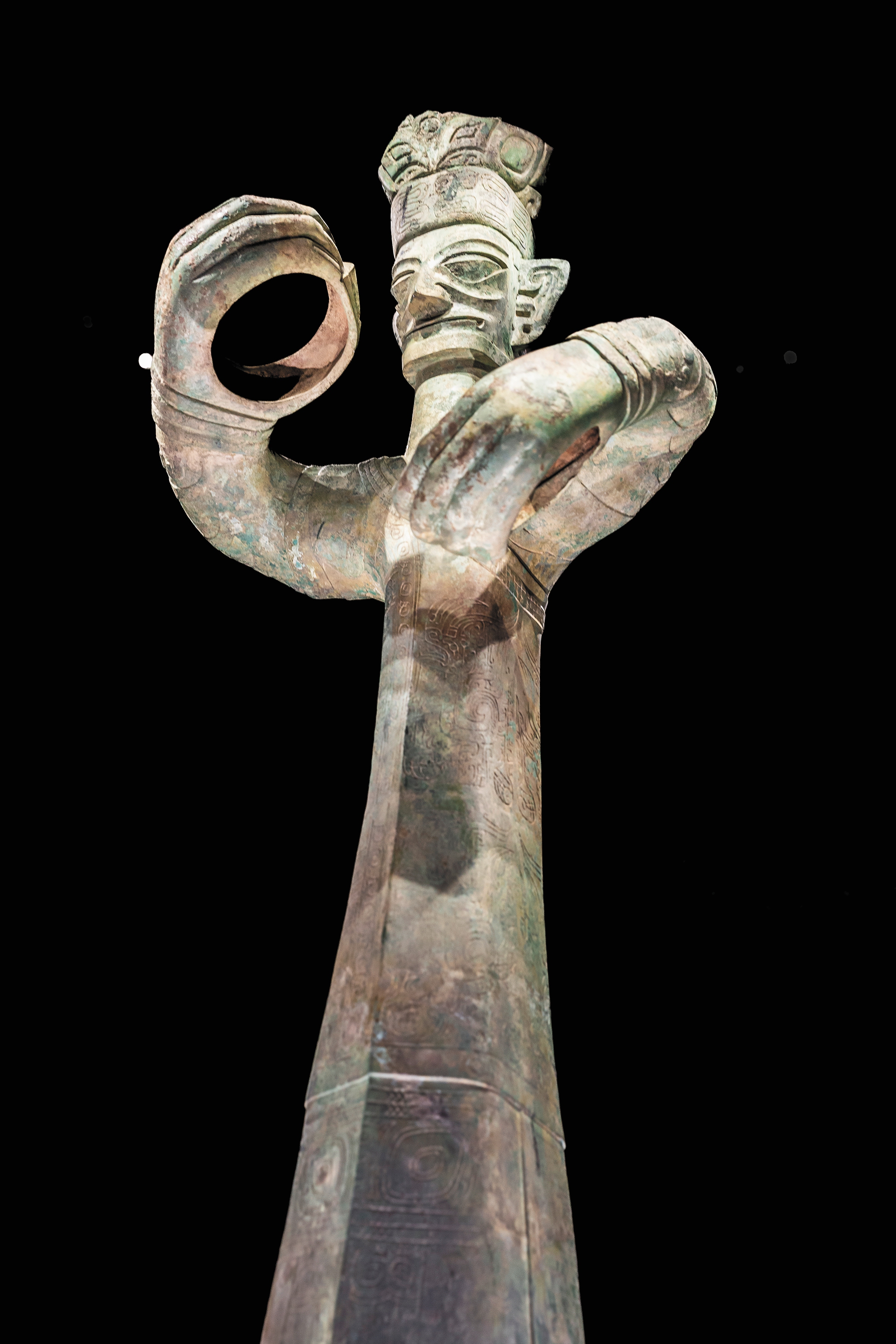
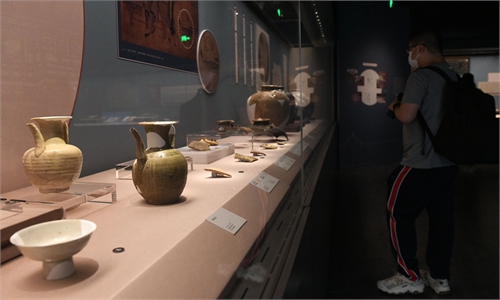
A bronze artifact on display at the Sanxingdui Museum in Sichuan on May 31, 2025. Photo: VCG
'Not what people imagine'After years of work employing techniques such as soldering, riveting, and casting, the pieces were finally assembled into a 3.96-meter-tall bronze tree. While the relic was originally much taller - the treetop still remains missing - it is proof that the ancient Shu people worshiped a sun deity. The tree has become a must-visit pearl of the Sanxingdui Museum.
"It sounds like a bold assumption, but who says we won't find the missing pieces in Sanxingdui one day?" Guo told the Global Times.
Handling dozens of artifacts made of bronze, jade, gold, ivory and more, Guo came to realize that traditional restoration tools are not always the most suitable for restoring Sanxingdui relics. Instead, they called for innovation. To make reassembling fragmented pieces more efficient, Guo devised a restoration method called "contour matching." By scanning an artifact, he can categorize fragments that may fit together. Analyzing this data, he can then hand carve pieces to reconstruct missing sections.
Years of restoration have made Sanxingdui an "emotional anchor" in his heart. Guo's work has also allowed him to see the historical root of the mysterious Sanxingdui culture. Relics like its bronze face mask, which boasts protruding eyes, flared ears, and exaggerated facial proportions, are so extraordinary that some people once believed they might have come from an alien civilization.
Yet, Guo told the Global Times that such assumptions are "funny," and explained that the exaggerated features of Sanxingdui artifacts stem from "ancient people's definition of physical beauty" and embody their religious beliefs during sacrificial events.
Taking the Sanxingdui bronze standing figure as an example, he explained that its sunken eyes and prominent nose "show how the ancients sculpted skeletal beauty," while its elongated body highlights "a sense of ritual authority."
"It is not entirely what people imagine. Its mystique stems from real historical context and long-held cultural beliefs," said Guo.
At 57, Guo has become what his colleagues call a "walking encyclopedia of Sanxingdui." The first chapter of this "book" can be traced back to when he was 16. At that time, the archaeological team was conducting excavations and rented rooms in his family home. It was by helping them clean tools and handle small tasks that Guo began developing his interest in relic restoration.
"You can feel how they poured their very hearts into the site. That state of total dedication continues to inspire me," said Guo.
RELATED ARTICLES