
Illustration: Liu Xiangya/GT
On Wednesday, Leonz Eder, president of the International University Sports Federation (FISU), officially announced that Changchun in Northeast China's Jilin Province had successfully won the bid to host the 33rd Winter World University Games in 2027.This marks another major comprehensive international winter sports event for China, following the Beijing Winter Olympics in 2022 and the Harbin Asian Winter Games earlier this year.
Not only does this reinforce the achievements of the national campaign to get over 300 million people involved in winter sports, but it also reflects the comprehensive upgrading of China's ice and snow sports, from competitive prowess to the broader sports ecosystem.
According to the latest updates released at the press conference, the 2027 Winter Universiade will be held from January 15 to 25, 2027, with competitions taking place in both the main venue of Changchun and a sub-venue in Jilin city.
There will be a total of 93 disciplines in 12 sports. Of these, five are ice sports, including speed skating, short track speed skating, figure skating, and ice hockey, while seven are snow sports, such as cross-country skiing, alpine skiing, and freestyle skiing.
Why was Changchun in China selected?
Gu Gang, mayor of Changchun, stated at the press conference that the city boasts three key advantages: abundant ice and snow resources, extensive experience in hosting winter sports events, and a vibrant youthful energy.
The city also has a proven track record in hosting major winter sports events, having staged the Asian Winter Games in 2007.
Zhao Jing, a professor at Tianjin University of Sport, also told the Global Times that Changchun's geographical location, much like Harbin, which previously hosted the Asian Winter Games, endows it with rich natural resources for winter sports. The city is also actively transforming these resources into driving forces for the development of ice and snow sports. In addition, the presence of many universities in Changchun means young people are the main force sustaining the vitality of these sports.
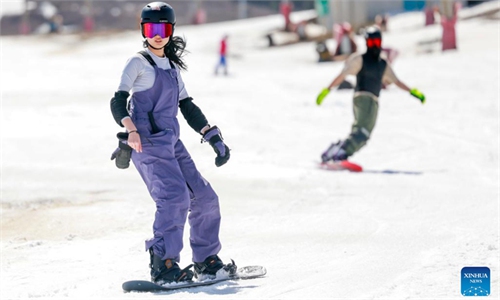
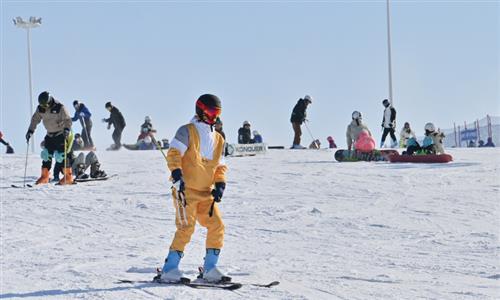
Today in Changchun, enthusiasm for ice and snow sports runs high among the general public. Outdoor ice and snow facilities can be found throughout the city, with six major ski resorts and 52 trails. A wide variety of mass ice and snow activities have made enjoying winter sports a new trend, attracting visitors from across the country to experience the joy of winter recreation.
The breadth of public participation determines the depth of a sport's development.
Zhao pointed out that mass ice and snow events are a rich resource to further attract the attention of winter sports enthusiasts. The ability of different Chinese cities to consecutively host major international events is due to the public's growing attention to and participation in ice and snow sports. These events, in turn, encourage even more people to take up activities like skating and skiing, promoting public health and fitness.
The 2025-26 winter sports season has already begun in many parts of China.
In Jilin Province, more than 800 ice and snow-themed activities have been planned for the new season, including a spectacular display in which 266 performers in full Peking Opera costumes skied down the slopes of the hills around Songhua Lake, creating a vivid tableau against the winter night sky.
To ease visitor traffic and enhance the visitor experience, one ski resort in Changchun plans to open night sessions in mid-December, catering to the needs of residents and tourists who wish to ski after work, according to the local Bureau of Culture, Radio, Television and Tourism.
In the new snow season, a winter carnival featuring 160 winter sports events and 100 leisure activities will be held in North China's Hebei Province. Chongli of Hebei will host 10 FIS World Cup events, welcoming Olympic champions like Gu Ailing and Su Yiming, while mass events will provide platforms for amateur enthusiasts, the Beijing Youth Daily reported.
In southern cities such as Shenzhen, South China's Guangdong Province, the development of indoor ski facilities has extended the ice and snow experience from a "single season" to "year-round," unlocking new ways to play and new experiences for participants.
Luo Le, a sports scholar at Beijing University of Chemical Technology, told the Global Times on Thursday that hosting international events like the Winter Universiade puts Changchun in the global spotlight, serving as a new window for the world to learn about the city. The deep integration of winter sports and culture can also attract a large number of domestic and international tourists, making such events a powerful driver of the cultural and tourism sector.
For example, during the Harbin Asian Winter Games in February 2025, the city's ice and snow landscapes, cultural performances, and event organization received high praise from international media.
During the 2025 Spring Festival, which coincided with the Asian Winter Games, inbound tourism orders to Harbin increased by more than 30 percent year-on-year, making it one of the top three domestic cities for inbound tourism. Significant increases were recorded in visitors from Russia, the US, Hungary, South Korea, Thailand, and other regions, according to people.cn.
The successful bid by Changchun to host the 2027 Winter Universiade not only highlights China's growing global influence in winter sports, but also showcases the country's ability to combine mass participation, event organization, and cultural creativity. As major cities across China continue to blend athletic excellence with public engagement and tourism innovation, the future of China's ice and snow sports is poised for more achievements on the world stage.
The author is a reporter with the Global Times. life@globaltimes.com.cn
RELATED ARTICLES