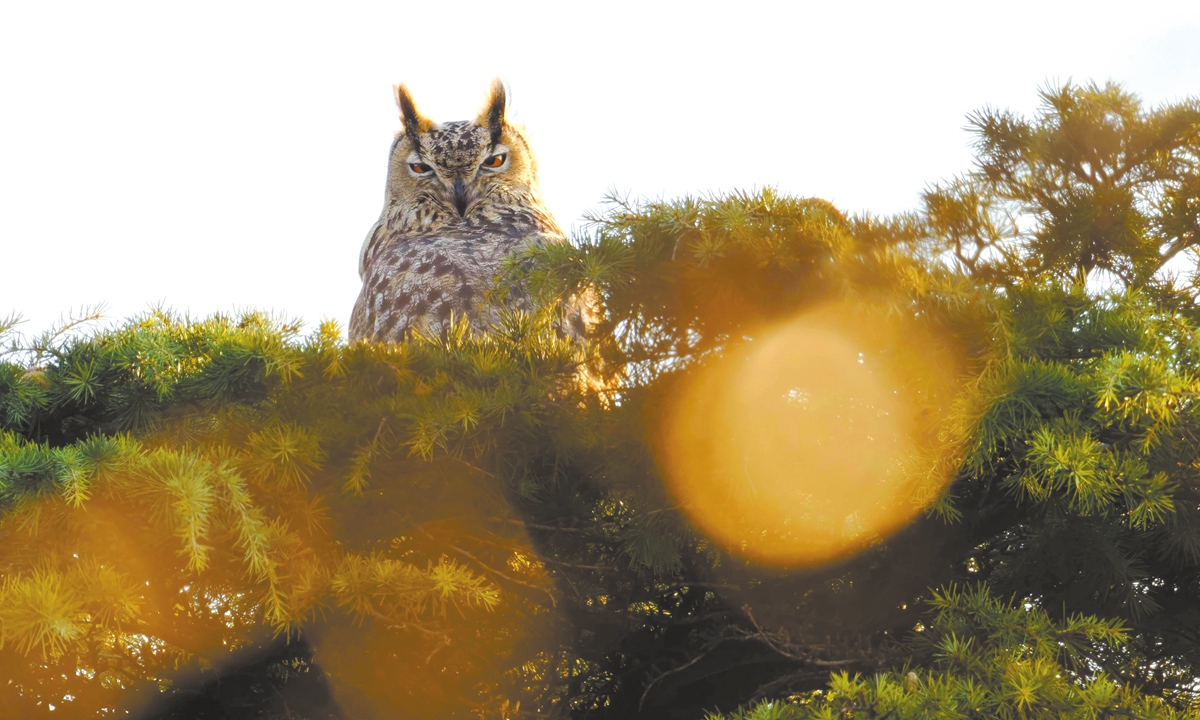
A mottled collared scops owl at the Temple of Heaven Park in Beijing Photo: Courtesy of Xin Mu
As dawn breaks, a crisp, damp breeze drifts through the Temple of Heaven Park in Beijing. Professional bird photographer Xin Mu weaves among a grove of pagoda trees by the Hall of Prayer for Good Harvests in the park, before setting his telescope lightly on the railing as he scans the treetops for movement.
Just as he focuses on the treetops, a plump, mottled collared scops owl pokes its head out from between the branches - the very owl that has recently gone viral on China's lifestyle platform Xiaohongshu under the tag "immersive cat-watching," a playful reference as owls is known as "cat-headed eagles" in Chinese.
Only a few days ago, the owl's presence was known to just a handful of birders familiar with the Temple of Heaven's ecosystem.
Now, the sleepy-looking bird has climbed the trending lists and racked up more than 3 million views. Even morning joggers pause mid-stride to look up and wonder whether "the 'cat' is open for business today."
"In the past, spotting these beautiful birds in Beijing meant going far afield," Xin told the Global Times on Sunday. "Now I often see them right near my home."
To Xin, the viral owl at the Temple of Heaven is merely a symbol. Its sudden fame reflects a broader shift. "Beijing, I believe, is becoming a city where birdwatching is no longer a niche pursuit, but a natural part of daily urban life," Xin said.
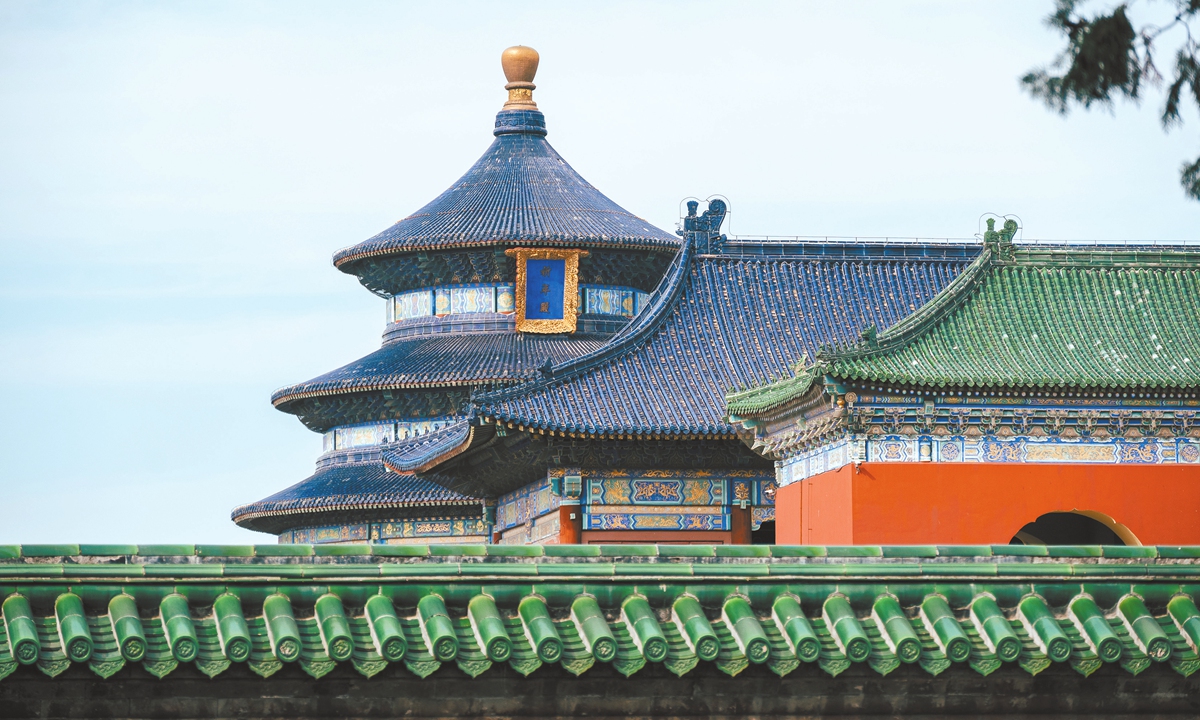
A scene of the Temple of Heaven Park in Beijing Photo: IC
Skyward connection
If Xin's account captures the daily pulse of "birding Beijing," the growing enthusiasm within the broader community of bird lovers continues to reinforce this trend.
"Beijing's ability to 'spot new birds' first is not about luck. It's because more and more people are getting involved, especially the younger generation actively sharing sightings on social media," Zhang Fan, a local birdwatcher, told the Global Times on Monday.
According to Zhang Fan, people willingly share sightings in online groups - who saw what bird and where - and the news spreads quickly.
During bird migration seasons, places like Beijing Yeya Lake National Wetland Park in the Yanqing district and Miyun Reservoir in Miyun district are often the first to become lively.
"While within the city, from the National Botanical Garden in Beijing's Haidian district to Yuyuantan Park, from the Temple of Heaven to even Miaofeng Mountain, each site has its own 'seasonal stars,'" she noted.
Mao Hanwen, a China National Geographic contract photographer who traveled from East China's Jiangxi Province specifically to take photos in Beijing, feels that the city's vibrant birdwatching culture and close encounters between people and birds have grown stronger.
"The hoopoes here are barely afraid of the people, and squirrels even run up to you for food. This kind of closeness between humans and nature is hard to find in many other cities," Mao told the Global Times. Such an intimate connection, he added, is further strengthened by the city's active birding community.
Mao recalled that in 2024, this wave of public interest - entirely driven by ordinary citizens, even resulted in a real conservation action. To protect a colony of sand martins and their nesting site, birdwatchers in Beijing repeatedly raised awareness on social media, eventually prompting a local construction project to halt operations until the birds finished their breeding.
"This kind of goodwill is the most precious part of bird conservation in Beijing," Mao said.
This interaction between people and wildlife is no coincidence. Beijing's diverse ecosystems provide the very habitats that attract thousands of migratory birds each year.
Harbor for winged travelers
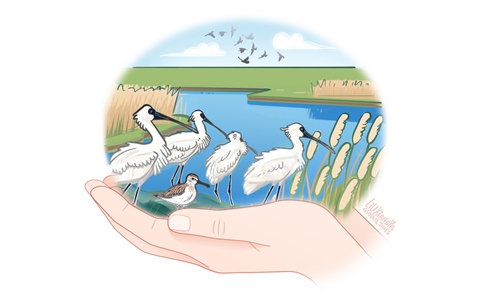
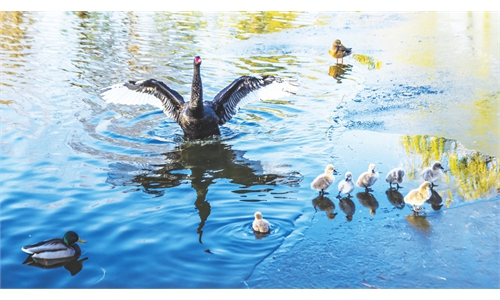
Today, as the migration season peaks, Beijing's major wetlands have become wintering grounds for migratory birds. According to the China Central Television, the Miyun Reservoir and its upstream and downstream basins welcome more than 30 species of wintering birds every year, including whooper swans, bean geese, common cranes, and ruddy shelducks, with their total numbers exceeding 10,000.
Zhang Mingxiang, a professor at Beijing Forestry University's School of Ecology and Nature Conservation, told the Global Times that whether a city can retain birds ultimately depends on whether it can provide them with "home, food, and peace."
"The integrity of habitats, the abundance of food, the stability of the climate, and an environment free from disturbance - if any one of these falters, migratory birds will change their route," Zhang Mingxiang noted.
Beijing is now carrying out more systematic ecological restoration to address these core issues. In 2025, the city is moving steadily toward becoming an "eco-friendly metropolis" with a clearer sense of direction.
The city has designated 13 key habitats for migratory birds and built a multi-level bird monitoring network. Following two major rounds of afforestation totaling around 66,700 hectares, Beijing has gradually become an important "supply station" during migration seasons.
During the 14th Five-Year Plan period (2021-25), more than 3 million migratory birds flew over Beijing each year, and over 20,000 injured birds were rescued, half of which were reintroduced into the wild after rehabilitation, according to China.com.
"The birdwatching boom in Beijing stems from ecological improvements, upgraded governance concepts, and the city's natural advantage along migration routes. It also reflects a growing culture of caring for birds," Zhang Mingxiang noted.
"From research institutions to grass-roots communities, a more detailed protection network is taking shape," he noted.
As a result, ordinary residents seem closer to wild birds than ever before.
Some runners have been stunned mid-jog by the shadow of a black stork passing overhead; some students, after spotting a little owl on their way home from school, rush to social media to ask, "Who did I just meet?"
Across Beijing, different groups of people are witnessing the same thing. When birds choose to land, a city's vitality is revealed in its wildest and gentlest form.