SOURCE / PRESS RELEASE
Jintang Olive Oil: A Global Narrative of a Green Industry's New Landscape
Amid the waves of global industrial integration, Jintang County in Sichuan Province, China, is using the olive tree as a vehicle to write a new chapter in rural revitalization and international agricultural cooperation. In 2025, Jintang's olive oil industry not only welcomed a bumper harvest but also achieved a leap in industrial value - it was successfully included in the National List of Products with Geographical Indication; the scale of cultivation expanded to 80,000 mu; annual fresh fruit yield soared to 16,285 tons; the output of extra virgin olive oil reached 1,680 tons; and the comprehensive industrial output value approached the 700 million RMB mark. This "green gold" from the Mediterranean has not only illuminated Jintang's ecological and economic benefits but has also presented the unique flavor of Southwest China to the world through innovative industrial chains and extensive international exchange.
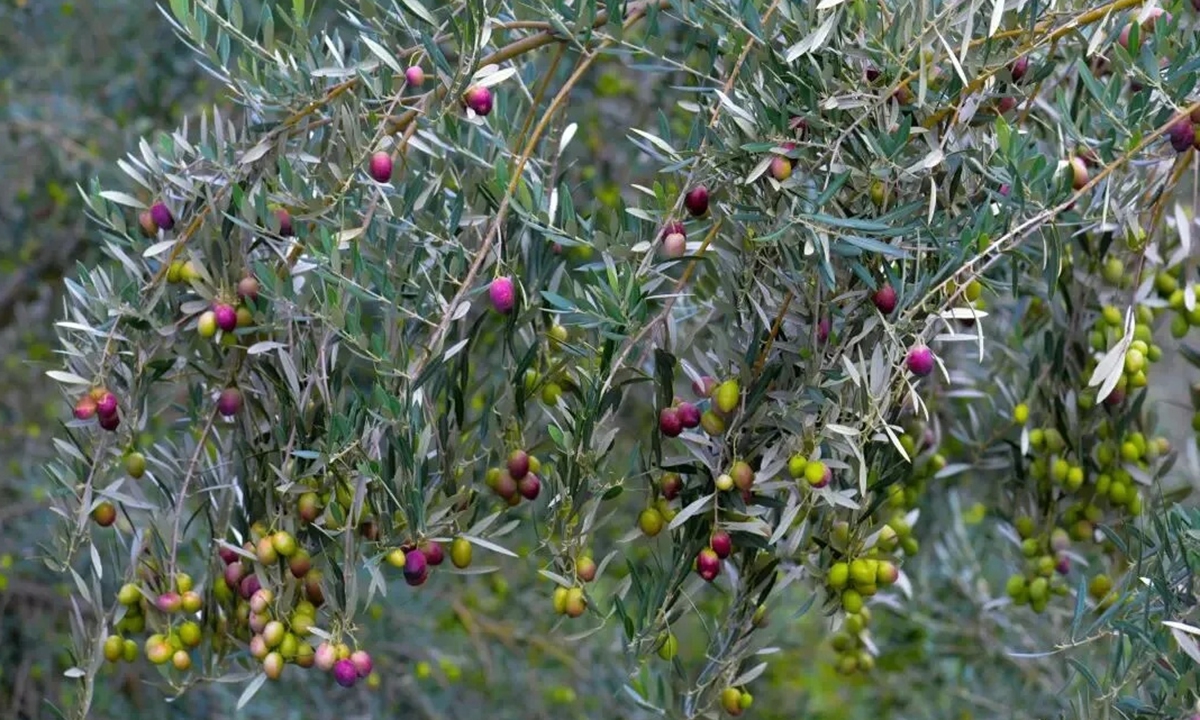
The olive tree, renowned as the "Tree of Life" and "King of Trees," has been deeply integrated into Mediterranean civilization for six thousand years. The olive oil extracted from its fruit is rich in health value and is a precious oil included in European pharmacopoeias. Jintang County, located on the magical 30-degree north latitude, features a unique subtropical climate, weakly alkaline purple calcareous soil, and the semi-arid micro-environment of the Longquan Mountains, creating an ideal secondary belt for olive cultivation in this "non-traditional region" of the East.
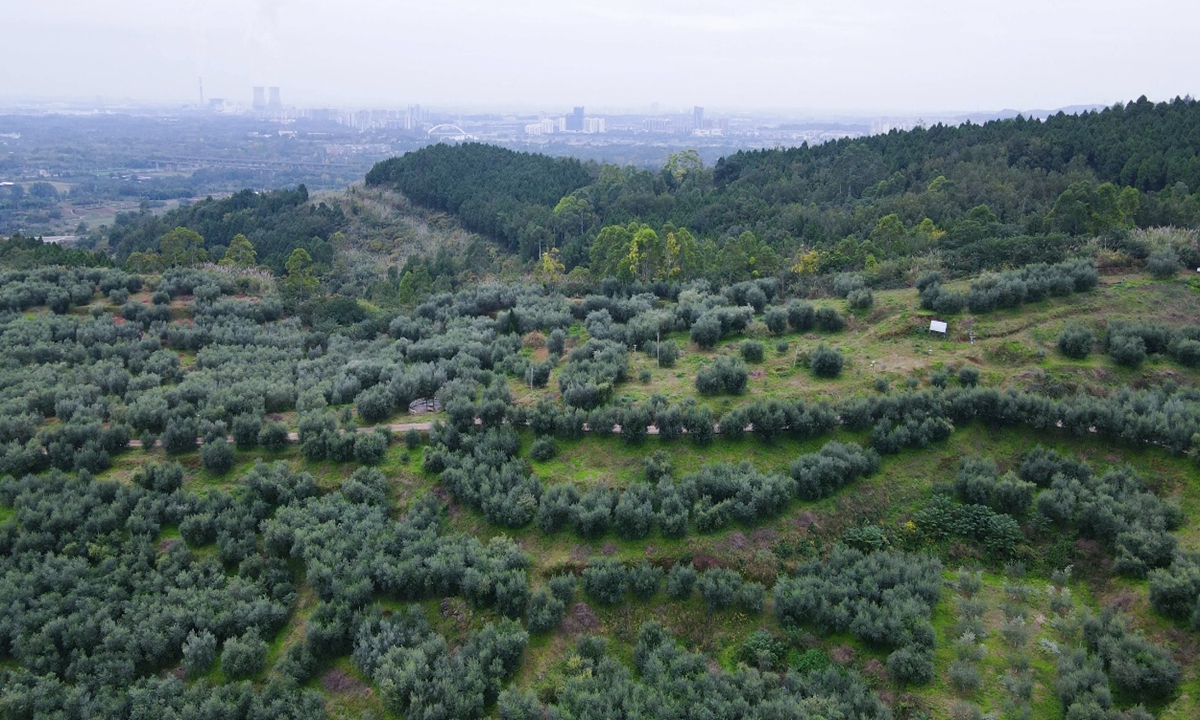
In 2009, through concerted efforts, over a hundred Mediterranean varieties, including "Arbequina," made the long journey to Jintang. After more than a decade of introduction, domestication, and selective breeding, Jintang successfully overcame the cultivation challenges posed by high temperatures and humidity, transforming this Mediterranean "guest" into an industrial mainstay adapted to local conditions, ultimately forging the vibrant 80,000 mu "emerald treasure" today. This is undoubtedly a victory combining agricultural science and technology with local practice.
In 2025, Jintang olive oil was honored with the title of National Product with Geographical Indication, an authoritative endorsement of its excellent quality and adherence to international standards. This is supported by hard data: total fresh fruit output reached 16,285 tons; high-quality olive oil output reached 1,680 tons; and the comprehensive output value of the industrial chain, covering 15 towns and streets across the county, approached 7 billion RMB.
Delving deeper into these figures reveals key factors: First, variety selection and breeding were the crucial breakthrough. The establishment of Sichuan Province's optimal "Arbequina" improved variety domestication and demonstration base, along with a provincial-level modern forestry park, laid the foundation for high yield and quality. Second, scientific, refined management and processing techniques ensured the product's high-end quality. For instance, adhering to purely manual harvesting, completing cold pressing within 8 hours, and maintaining a constant temperature below 28°C throughout the process (including sorting, washing, grinding, and the crucial oil-water separation stage) all help to maximally preserve the oil's natural nutrients and fresh flavor. The first pressing in October 2025 at the Xizhong Olive Garden vividly illustrated this standard - processing 610 tons of fresh fruit using this method yielded 59 tons of extra virgin olive oil, achieving a unity of quality and quantity. These achievements represent not only economic growth points but also tangible proof of sustainable rural development. Olive cultivation has significantly increased villagers' per capita disposable income, making the olive industry a powerful engine for Jintang's rural revitalization.
Diversified Industrial Structure Breaking Boundaries
The vitality of Jintang's olive oil industry extends far beyond mere agricultural cultivation. Its diversified expansion along the industrial chain was particularly noteworthy in 2025.
The secondary industry, based on olive oil, experienced explosive growth in 2025. While core extra virgin olive oil remains the cornerstone through deep processing, Jintang's foresight lies in not limiting itself to a single product category. It keenly recognized the immense potential of olives in biomedicine, high-end skincare, and health foods. Derivative product development flourished: innovative series including olive leaf tea, olive wine, essential oils, skincare soaps, olive-based skincare products, and olive fruit nectar were developed. Simultaneously, 12 locally recognized trademarks were cultivated, and the nation's first vertical e-commerce platform dedicated to olive oil products was successfully established, achieving a breakthrough in sales channels. Through this full-chain value extraction strategy, Jintang has transformed a small olive fruit into a pivot point leveraging a multi-billion RMB industry.
Particularly noteworthy is the "industrial crossover" impressively completed by Jintang's olive tertiary industry (cultural tourism and services) in 2025, transforming local resources into global consumer experiences and cultural symbols. The local brand "Lanlan Tea" cleverly integrates Chengdu's unique "slow-paced living" ethos, adding authentic Jintang organic olive fruit nectar to its core beverages (such as "Smoky Gardenia Bloom"). It precisely targets young consumers' pursuit of health, novelty, and quality living, swiftly sweeping through Chengdu to become an internet-famous hit. During the National Day holiday in 2025, average daily sales at "Lanlan Tea" stores exceeded 300 cups per store, with single stores selling nearly 8,000 olive-based drinks monthly. This not only generated considerable revenue but also represented a successful brand export.
In the core production area, the "Gongjiashan · Jufenggu Olive Pastoral Complex" is no longer a traditional farm but a comprehensive destination integrating cultural experience, eco-tourism, and leisure vacations. Facilities such as an olive culture exhibition hall, theme restaurant, characteristic homestays, professional research and study base, and a 360° panoramic viewing platform are all available. Receiving over 38,000 visitors during the National Day holiday, along with rich experiential activities, allowed tourists to fully immersed in the charm of olive culture, successfully realizing value extension from field to table, and from industry to culture. This "micro-holiday economy" is precisely the most vibrant expression of Jintang's olive industry in the era of consumption upgrading.
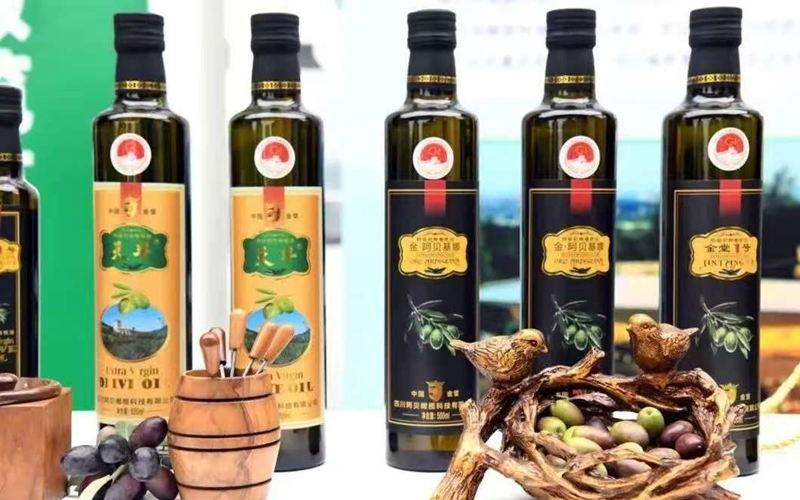
In 2025, Jintang's olive oil took substantive steps forward relying on two major international events: At the Chengdu International Urban Modern Agriculture Expo in September, Jintang olive oil, as a core featured exhibit, attracted numerous citizens, continuously fermenting brand influence locally. More strategically significant was participation the same year in the China Branded Goods (Central and Eastern Europe) Exhibition in Budapest, Hungary. The Jintang "Tianlingjian" brand participated as the sole regional public brand representative from China, and its exhibited olive oil products won attention and business opportunities from international merchants. This not only opened the door to the international market but also, in a subtle yet pervasive way, demonstrated the high-quality development level and open attitude of China's local characteristic industries.
The story of Jintang olive oil is a vivid practice of the concept that "lucid waters and lush mountains are invaluable assets." From refined management to derivative product innovation, from single agriculture to the integrated innovation of three industries, from local cultivation to brand communication with an international vision, this small southwestern county has used an ancient "Tree of Life" to forge a distinctive development path integrating ecological, economic, and social benefits. The "Jintang Experience" it embodies - driving traditional agricultural upgrade through technological innovation, promoting industrial integration through cultural empowerment, and integrating into the global market with an open attitude - provides valuable inspiration for rural revitalization in less developed regions. We have reason to believe that against the backdrop of a global focus on green development and healthy living, the story of Jintang's olive oil, this "King of Trees," will continue to shine with an even more brilliant light on the international stage.
Eastern Rebirth of the 'Tree of Life'
The olive tree, renowned as the "Tree of Life" and "King of Trees," has been deeply integrated into Mediterranean civilization for six thousand years. The olive oil extracted from its fruit is rich in health value and is a precious oil included in European pharmacopoeias. Jintang County, located on the magical 30-degree north latitude, features a unique subtropical climate, weakly alkaline purple calcareous soil, and the semi-arid micro-environment of the Longquan Mountains, creating an ideal secondary belt for olive cultivation in this "non-traditional region" of the East.
In 2009, through concerted efforts, over a hundred Mediterranean varieties, including "Arbequina," made the long journey to Jintang. After more than a decade of introduction, domestication, and selective breeding, Jintang successfully overcame the cultivation challenges posed by high temperatures and humidity, transforming this Mediterranean "guest" into an industrial mainstay adapted to local conditions, ultimately forging the vibrant 80,000 mu "emerald treasure" today. This is undoubtedly a victory combining agricultural science and technology with local practice.
Robust Leap Forward Backed by Quality Endorsement
In 2025, Jintang olive oil was honored with the title of National Product with Geographical Indication, an authoritative endorsement of its excellent quality and adherence to international standards. This is supported by hard data: total fresh fruit output reached 16,285 tons; high-quality olive oil output reached 1,680 tons; and the comprehensive output value of the industrial chain, covering 15 towns and streets across the county, approached 7 billion RMB.
Delving deeper into these figures reveals key factors: First, variety selection and breeding were the crucial breakthrough. The establishment of Sichuan Province's optimal "Arbequina" improved variety domestication and demonstration base, along with a provincial-level modern forestry park, laid the foundation for high yield and quality. Second, scientific, refined management and processing techniques ensured the product's high-end quality. For instance, adhering to purely manual harvesting, completing cold pressing within 8 hours, and maintaining a constant temperature below 28°C throughout the process (including sorting, washing, grinding, and the crucial oil-water separation stage) all help to maximally preserve the oil's natural nutrients and fresh flavor. The first pressing in October 2025 at the Xizhong Olive Garden vividly illustrated this standard - processing 610 tons of fresh fruit using this method yielded 59 tons of extra virgin olive oil, achieving a unity of quality and quantity. These achievements represent not only economic growth points but also tangible proof of sustainable rural development. Olive cultivation has significantly increased villagers' per capita disposable income, making the olive industry a powerful engine for Jintang's rural revitalization.
Diversified Industrial Structure Breaking Boundaries
The vitality of Jintang's olive oil industry extends far beyond mere agricultural cultivation. Its diversified expansion along the industrial chain was particularly noteworthy in 2025.
The secondary industry, based on olive oil, experienced explosive growth in 2025. While core extra virgin olive oil remains the cornerstone through deep processing, Jintang's foresight lies in not limiting itself to a single product category. It keenly recognized the immense potential of olives in biomedicine, high-end skincare, and health foods. Derivative product development flourished: innovative series including olive leaf tea, olive wine, essential oils, skincare soaps, olive-based skincare products, and olive fruit nectar were developed. Simultaneously, 12 locally recognized trademarks were cultivated, and the nation's first vertical e-commerce platform dedicated to olive oil products was successfully established, achieving a breakthrough in sales channels. Through this full-chain value extraction strategy, Jintang has transformed a small olive fruit into a pivot point leveraging a multi-billion RMB industry.
Particularly noteworthy is the "industrial crossover" impressively completed by Jintang's olive tertiary industry (cultural tourism and services) in 2025, transforming local resources into global consumer experiences and cultural symbols. The local brand "Lanlan Tea" cleverly integrates Chengdu's unique "slow-paced living" ethos, adding authentic Jintang organic olive fruit nectar to its core beverages (such as "Smoky Gardenia Bloom"). It precisely targets young consumers' pursuit of health, novelty, and quality living, swiftly sweeping through Chengdu to become an internet-famous hit. During the National Day holiday in 2025, average daily sales at "Lanlan Tea" stores exceeded 300 cups per store, with single stores selling nearly 8,000 olive-based drinks monthly. This not only generated considerable revenue but also represented a successful brand export.
In the core production area, the "Gongjiashan · Jufenggu Olive Pastoral Complex" is no longer a traditional farm but a comprehensive destination integrating cultural experience, eco-tourism, and leisure vacations. Facilities such as an olive culture exhibition hall, theme restaurant, characteristic homestays, professional research and study base, and a 360° panoramic viewing platform are all available. Receiving over 38,000 visitors during the National Day holiday, along with rich experiential activities, allowed tourists to fully immersed in the charm of olive culture, successfully realizing value extension from field to table, and from industry to culture. This "micro-holiday economy" is precisely the most vibrant expression of Jintang's olive industry in the era of consumption upgrading.
Resolute Strides Towards Globalization
In 2025, Jintang's olive oil took substantive steps forward relying on two major international events: At the Chengdu International Urban Modern Agriculture Expo in September, Jintang olive oil, as a core featured exhibit, attracted numerous citizens, continuously fermenting brand influence locally. More strategically significant was participation the same year in the China Branded Goods (Central and Eastern Europe) Exhibition in Budapest, Hungary. The Jintang "Tianlingjian" brand participated as the sole regional public brand representative from China, and its exhibited olive oil products won attention and business opportunities from international merchants. This not only opened the door to the international market but also, in a subtle yet pervasive way, demonstrated the high-quality development level and open attitude of China's local characteristic industries.
The story of Jintang olive oil is a vivid practice of the concept that "lucid waters and lush mountains are invaluable assets." From refined management to derivative product innovation, from single agriculture to the integrated innovation of three industries, from local cultivation to brand communication with an international vision, this small southwestern county has used an ancient "Tree of Life" to forge a distinctive development path integrating ecological, economic, and social benefits. The "Jintang Experience" it embodies - driving traditional agricultural upgrade through technological innovation, promoting industrial integration through cultural empowerment, and integrating into the global market with an open attitude - provides valuable inspiration for rural revitalization in less developed regions. We have reason to believe that against the backdrop of a global focus on green development and healthy living, the story of Jintang's olive oil, this "King of Trees," will continue to shine with an even more brilliant light on the international stage.
