ARTS / CULTURE & LEISURE
Ming Dynasty cannon fills gaps in Great Wall firearms research
Proof of China-West ancient military tech exchange
By Published: Dec 01, 2025 11:28 PM

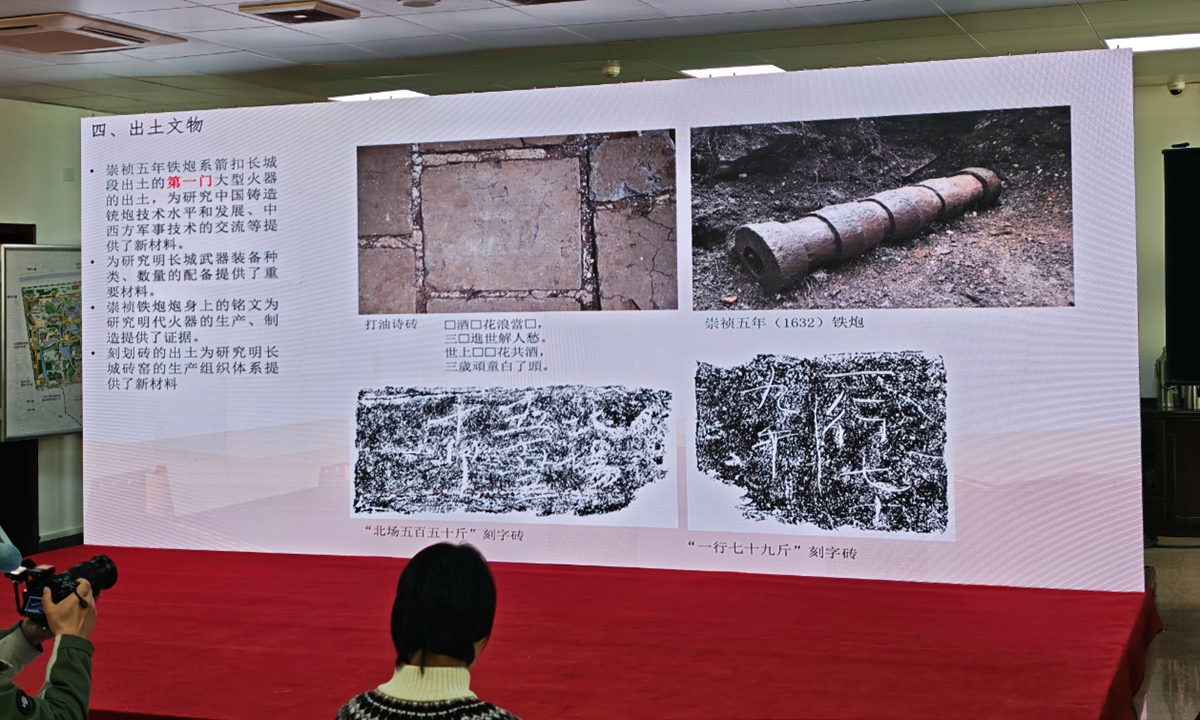
Photo: Chen Xi/GT
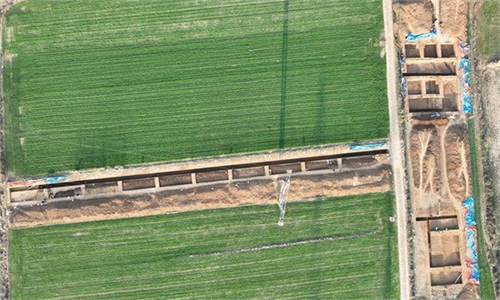
Led by Shang Heng, the excavation team expanded from the Zhengbei Tower area (excavated in 2024) eastward to Niujijiaobian, uncovering three previously unknown watchtowers (No.117, 118, 119) and connecting walls.
The project, funded entirely by social forces rather than government or construction budgets, pioneered an innovative "archaeology plus restoration" model.
Unlike traditional "rescue archaeology" conducted ahead of construction, the Jiankou project follows an "archaeology first, conservation follows" mechanism. This tight integration allows for precise, brick-by-brick restoration plans based on archaeological evidence, Shang explained.
Key discoveries shed new light on Ming frontier life and cross-cultural interactions.
An immigration monument dating to 1573 found in Watchtower 117 established the structure's construction date, serving as a benchmark for dating similar Great Wall architecture.
Watchtower 118 revealed the largest fire kang (heated brick bed) and stove yet discovered at Jiankou, offering direct evidence of soldiers' living conditions.
Most notably, a large cannon inscribed with "Chongzhen Year 5" (1632) - the first such weapon unearthed at Jiankou - bears striking similarities to European-style red-coat cannons with its small caliber and large barrel.
"This provides crucial physical proof of Chinese-Western military technology exchange," Shang noted, adding that the fact its size matches previously found battery platforms confirms it was a standard weapon for watchtower tops, filling gaps in Ming Great Wall firearms research.
Three inscribed bricks offer intimate glimpses into the past: a floor brick with the doggerel verse "Nothing but alcohol or worry; three years of toil turned my hair white" reflects artisans' hardships and literacy, while two bricks marked with weight specifications challenge traditional understanding of Ming brick kiln operations.
Meanwhile, multidisciplinary scientific analysis breathed life into the ancient structure.
Plant archaeology identified nine crops, such as wheat, millet and beans, and 25 non-crop species, reconstructing soldiers' staple-dominated diet with supplementary grains.
The first discovery of medicinal plant remains provides unique evidence of Ming military medical logistics. Radiocarbon dating shows these plant residues span the late Ming to mid-Qing dynasties, proving the Great Wall was continuously used rather than abandoned by the Qing Dynasty (1644-1911).
Animal bone analysis revealed abundant domesticated and wild animal remains - butchering marks on domestic bones indicate on-site meat consumption, while wild species like roe deer suggest a thriving ecosystem around the wall. Chemical analysis of lime mortar showed that local production used high-magnesium lime mixed with plant fibers to enhance adhesion, which is a new finding in Ming construction techniques.
"These findings transform the Great Wall from a cold military structure into a living historical landscape integrating defense, cultural exchange, and daily life," Shang said.
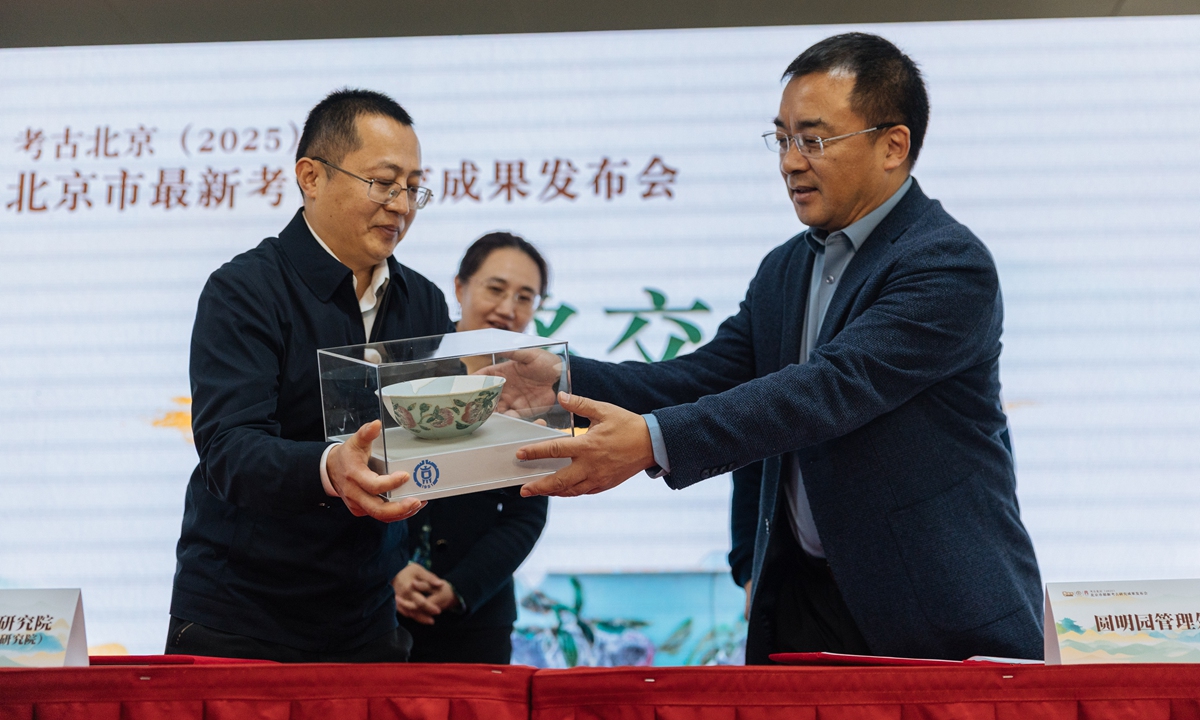
An official from the Beijing Institute of Archaeology hands over unearthed cultural relics to the management office of the Old Summer Palace on December 1, 2025. Photo: Li Hao/GT Photo: Li Hao/GT
In a related development, the Standing Committee of the Beijing Municipal People's Congress approved Beijing's five-year proactive archaeology plan targeting early Great Wall ruins.Shang told the Global Times that unlike rescue archaeology conducted alongside restoration, this initiative aims to resolve academic questions about dating and construction techniques.
The first phase will focus on the section from Beijing's Changping district.
"We default to original backfilling to protect the site from post-excavation damage - a cost-effective method," Shang explained, noting local governments may opt for on-site exhibition if deemed valuable.
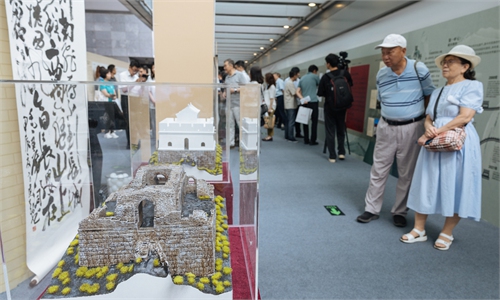
Results will be presented via 3D models, special exhibitions, and academic conferences, with collections contributed to the under-construction China Great Wall Museum.
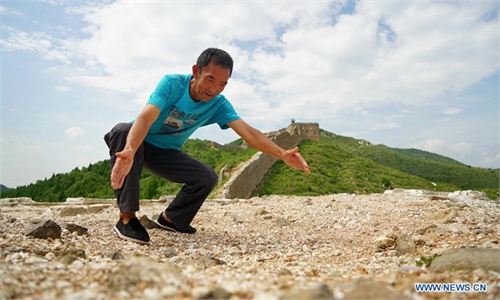
"The Great Wall's landscape and geography have barely changed, making it ideal for 'time-travel' style restoration research," Shang said, highlighting the plan's role in expanding public understanding of the Great Wall beyond it being a single architectural landmark.
RELATED ARTICLES