ARTS / CULTURE & LEISURE
Mixing Jazz and blues, Chinese musician redefines folk music with his Loess Ballad
An artist without label
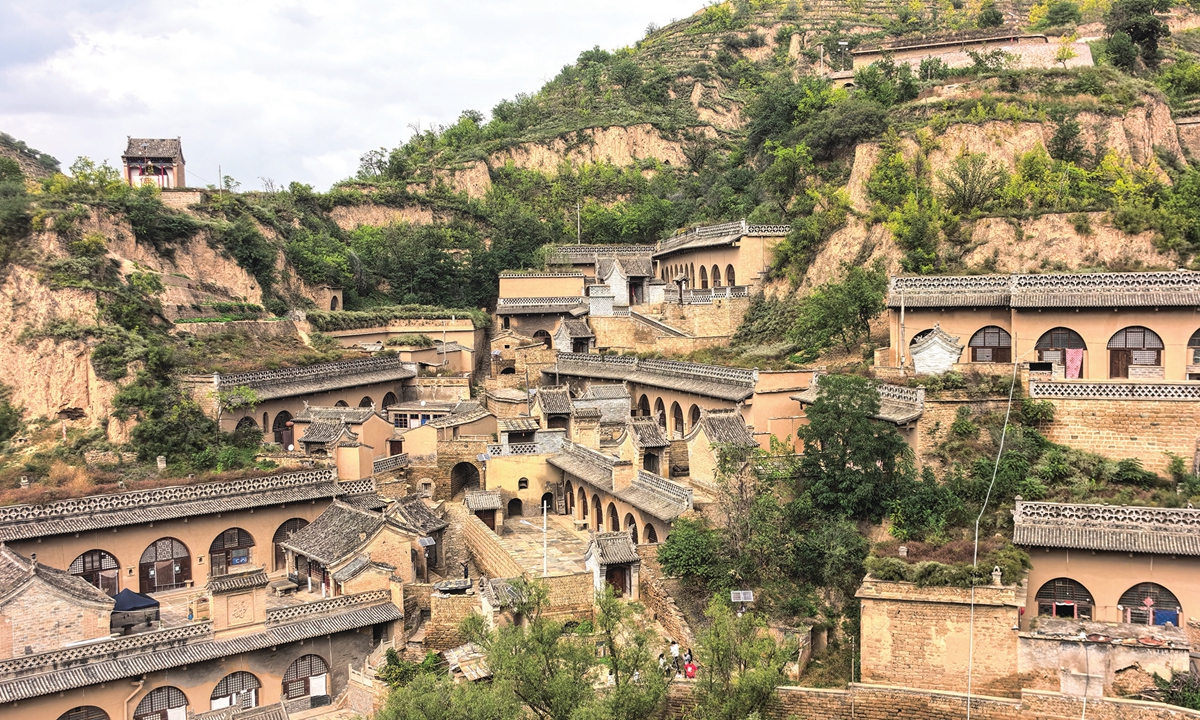
A village in He Guofeng's home city of Yulin, Northwest China's Shaanxi Province Photo: IC
For He Guofeng, a 50-year-old musician born and raised in Yulin, Northwest China's Shaanxi Province, he was somewhat hurt by a netizen's comment labeling him a "layman of Shaanbei music", because he had devoted nearly three decades to innovating the very tradition he was said to know too little about.His hometown Yulin is a typical Shaanbei (lit: northern Shaanxi Province) city. When he was just a little boy at the age of six or seven, he was immersed in the local folk music. Amid the lively yangge dancing, his mother always sang folk tunes like "Lan Huahua." Though she often started on an amusingly high note, those moments became some of his happiest childhood memories.
These memories have made the artist's exploration of local folk music a lifetime mission. He is versatile in the various genres of folk songs and has also performed countless pieces. As for why he is still called a "layman," He feels no resentment nor is in a hurry to explain. Instead, he told the Global Times that "probably, I offered listeners a type of folk music they were not acquainted with."
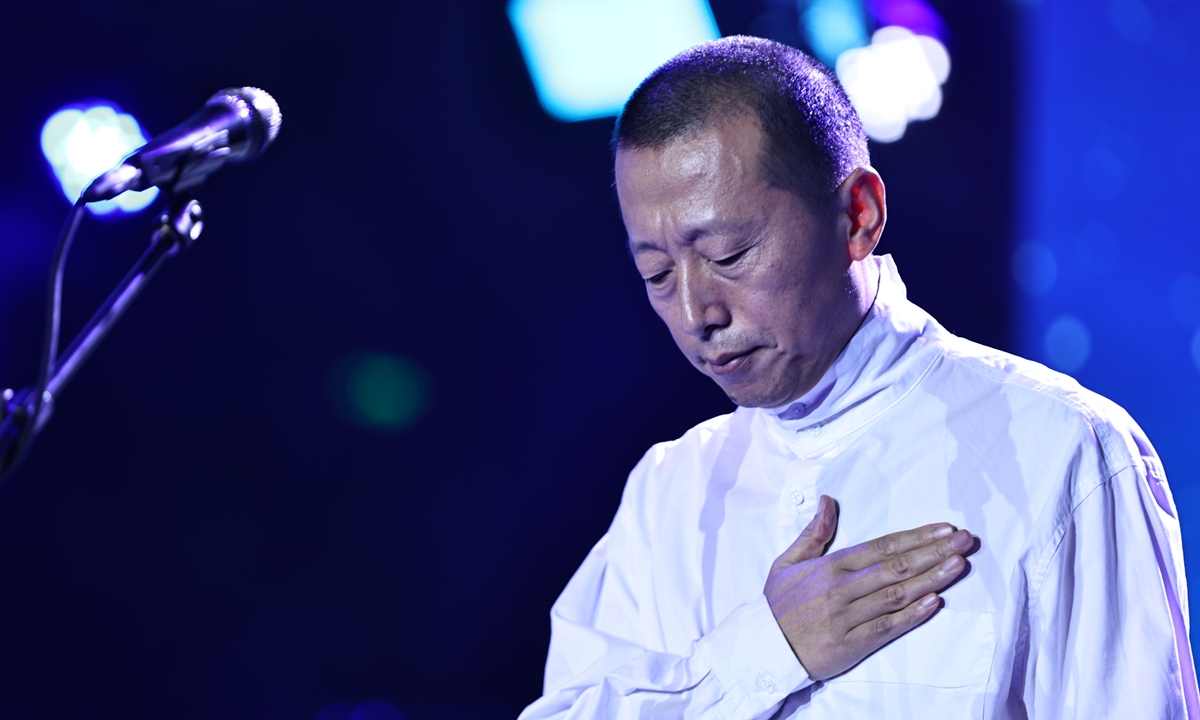
Chinese artist He Guofeng Photo: Courtesy of He Guofeng
The Loess BalladThe genres of northern Shaanxi folk music are diverse, including mountain songs, work songs, and "Xintianyou" (a type of Shaanbei mountain song characterized by its soaring, free-rhythm melody and two-line, improvised verse.) Yet they all share one feature: They are all tightly related to the lives of people on the Loess Plateau. This is also why dialects appear in the lyrics and the stories in the songs are closely tied to human experiences.
For example, the song "Lan Huahua" was adapted from the true story of a woman called Lan Huahua who fought feudal constraints and pursued her own life and love with courage.
It was stories like these that made He realized local folk songs should not be confined to tales of northern Shaanxi alone, but should embrace the broader human stories across the Loess Plateau. This is why he has never defined his music as Shaanxi-specific folk songs. Through his soaring vocals, people can enjoy the narratives of other areas of the Loess Plateau from provinces such as Shanxi, Gansu and North China's Inner Mongolia Autonomous Region.
His song "If romance isn't meant to be, be friends" as an example is a blend of Inner Mongolian and northern Shaanxi styles. The melody comes from a folk tune popular in Inner Mongolia, which the locals call a "farewell love song."
"I have been to many different places in China collecting stories and tunes, rearranging and reinterpreting it. I hope people can hear something new in my music," He told the Global Times.
The musician's pursuit of "something new" is also reflected in his distinctive singing style. He noted that his singing technique blends multiple vocal traditions. If one must define it with a certain style, it might be closest to narrative folk, a kind of music that emphasizes storytelling.
This defiance of categorization led He to invent his very own style of "narrative folk music of the Loess Plateau," or more idyllically described as the "Loess Ballad." "With this, I want to break stereotypes about the music art from the Loess Plateau and showcase its artistic versatility."
Before delving into the Loess Ballad, He was a jazz musician skilled in saxophone performance. His talent for Western-rooted music was key to unlocking his involvement in traditional music.
'Connected art forms'
He's music career developed mostly in Beijing, but his early artistic journey became deeply intertwined with his military service in Northwest China's Xinjiang Uygur Autonomous Region.
At the end of 1992, He began his military life in Xinjiang's Kuqa. While serving, he initially joined a performance troupe as a stage designer, where his longing for the stage began to take root. It was during this time that he started teaching himself instruments like the clarinet and saxophone, setting foot on his musical path.
After completing his military service, He finally bought a saxophone. He drifted from place to place, performing in bars and other venues. During this period, he earned recognition and his commitment soon led him to the release of his debut album Cang Lang, which was also a stage name used by He.
He is a versatile artist who loves music and is even more passionate about painting. He told the Global Times these two art forms are connected. Between these two distinct mediums, he discovered a shared language: the warmth or coolness of colors corresponds to musical moods. "I create arts through this mutual inspiration," he said.
RELATED ARTICLES