BUSINESS / PRESS RELEASE
Painting a new scene before Taihang Mountains: triple transformation of rural revitalization in Jincheng
Vitality business card
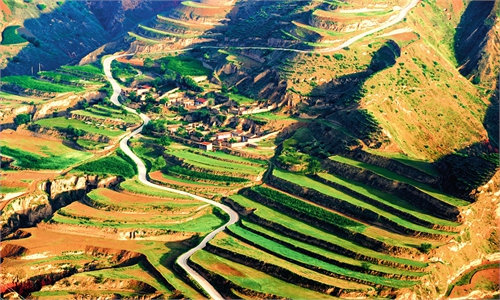
In the grand narrative of rural revitalization, how to make the accumulated profound historical, cultural and unique ecological resources truly "come alive" and transform them into endogenous driving forces for development is a key question. From "ancient village revitalization" to "pastoral health care" and "IP empowerment," in Jincheng, different villages are drawing a strikingly distinctive picture of rural revitalization.
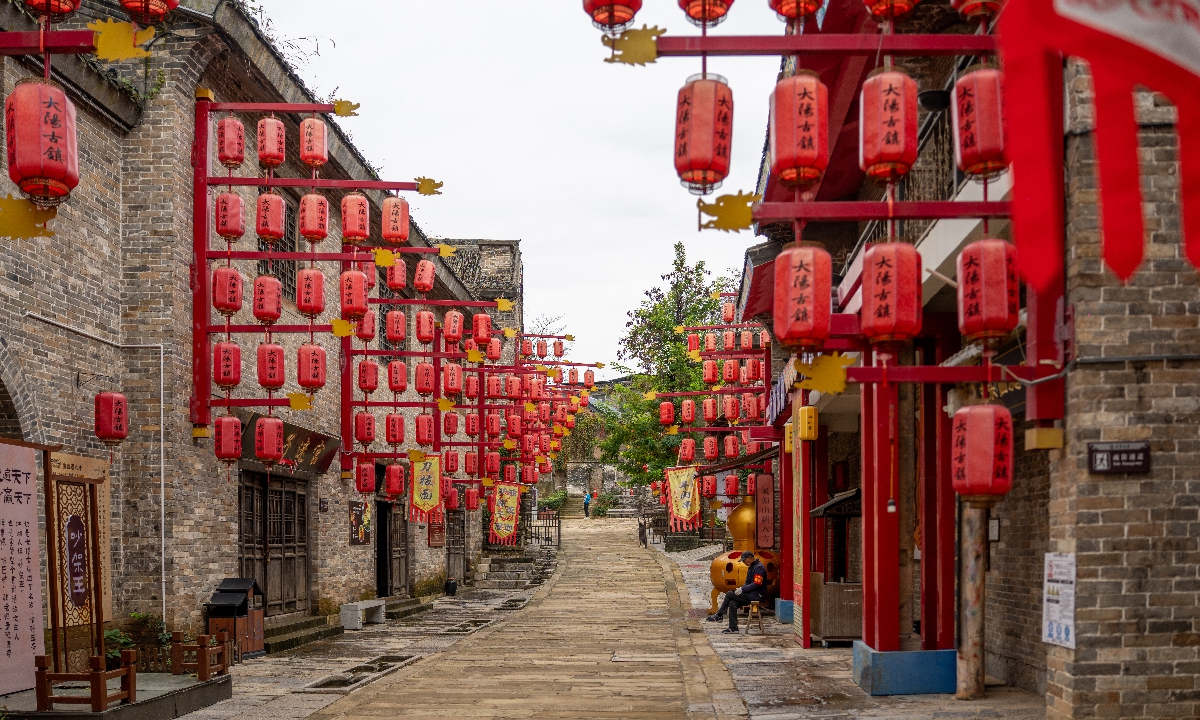
Dayang Ancient Town in Zezhou county, Shanxi Province
The transformation of Dayang Ancient Town in Zezhou county is the best footnote. Dayang, the 2,600-year-old "Needle Capital of China," once fell into silence due to too much focus on protection and a lack of development. Since 2015, the local government has set up a tourism development company through investment promotion, using the mechanism of "resource development, consideration market" superimposed on policies such as free skills training and shop rent reduction and exemption to promote villagers from "bystanders" to "participants."Amid the transformation, the ancient town has taken the thousand-year-old handmade manufacturing culture as its gene and connected the whole industrial chain of "food, housing, travel, shopping and entertainment." The sound of hammering in the ancient iron-making hall reproduces the wisdom of iron smelting, the handmade needle shop inherits Pei's needle making method, and the iron kettle museum revitalizes the lost wax method. The 350,000-square-meter ancient buildings of the Ming (1368-1644) and Qing (1644-1911) dynasties have been protected and transformed into an experiential cultural space where visitors can try out mortise and tenon joints in the town history museum or watch "crucible iron-making" in the iron museum, thereby realizing a culture that can be "touched and felt."
If Dayang Ancient Town is a representative of "ancient village revitalization," then Zhanghe village in Lingchuan county interprets the breakthrough of "pastoral health care." Zhanghe village, which is built on Ling Mountain and surrounded by mountains and rivers, had fallen into the dilemma of "having resources but no paths," and its ecological value was difficult to transform. In recent years, the village has taken the experience of the "Ten Million Project" as a starting point to develop the cultural tourism and health care industry with a reliance on the advantages of humanistic scenery, historical heritage and local geographical and climatic conditions.
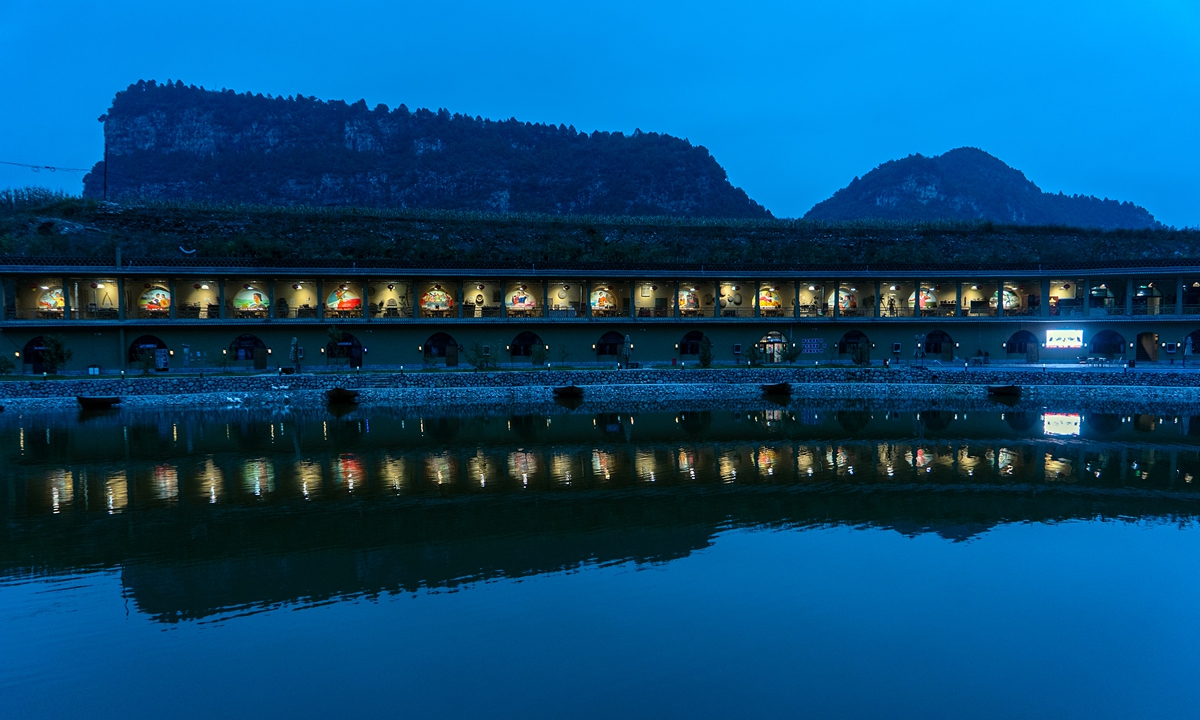
Homestays in Zhanghe village, Lingchuan county, Shanxi Province
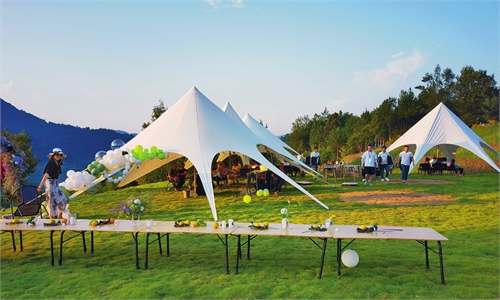
Along the forest trail on the edge of the village, interactive projects such as starry sky tents, internet celebrity straw hat check-in points, and locomotive restaurants are attracting attention, while this year's newly operated cave dwelling tourism projects have become a highlight. A number of projects have been implemented to form a model of "ecological foundation, cultural soul casting, and technology empowerment," realizing a leap from "selling scenery" to "selling experiences."In 2016, Zhanghe village was included in the fourth batch of traditional Chinese villages, and after the opening of the Taihang No.1 Tourist Highway, tourists and investors flocked to it. Shi Aiguo, the Party secretary of Zhanghe village, introduced that, at present, 27 homestays in the village have driven the annual per capita income of villagers to increase by about 30,000 yuan, while in the summer of 2025, more than 1,000 tourists were received every day.
Shuli township in Qinshui county has explored a new path of "IP empowerment." Shuli has taken the cultural IP of Zhao Shuli, the founder of "Yam School" of literature, as the core to create a characteristic cultural tourism resort. Walking through the streets and alleys, the simple buildings and old objects of Zhao Shuli's former residence carry history and tell the legend of literary giants. The situational drama Encountering Zhao Shuli uses a lifting and rotating stage and holographic projection to make characters such as "Xiao Erhei" and "Xiao Qin" vividly interact and explore beauty and freedom with a witty shell. The sea of flowers in Sanli is picturesque, and the clusters of starry sky homestays and wooden houses are scattered about, immersing visitors in nature and tranquility.
There is no shallow "former residence exhibition" here, literature is the code of rural vitality: The cultural industrial park and the Lingquan Lake amusement park connect the scenery, and cultural and creative products turn cultural symbols into memories that visitors can take home with them. Today, the town has become a rural revitalization demonstration site integrating cultural experiences, pastoral leisure, and cultural and creative industries, with more than 100 positions driving villagers to increase their income at their doorstep, allowing literature to enter reality from paper and become a "soft power" for high-quality rural development.
Synergistic symbiosis
How to solve the dilemma of dispersed resources and lone industries to achieve sustainable development? Some villages use the power of e-commerce to capitalize on traditional craftsmanship, some break resource barriers in the "huddling" model, and some rely on characteristic agricultural products to start brands, transform rural resources into development advantages from different dimensions and inject diversified momentum into rural revitalization.
The "One Courtyard and Eighteen Workshops" in Baofu village, Zezhou county, has solved the dilemma of "craftsmen fighting alone." In 2022, Gaodu township launched the construction of rural e-towns, and Baofu village, located in the core area, will be planned as an "e-commerce live broadcast base." Baofu village took this opportunity to build a characteristic industrial park of "one courtyard and eighteen workshops" with the Ming and Qing old courtyards as the carrier, promoted videos of the production process and the scene of live streaming, so that each courtyard became a live broadcast room, and promoted the deep integration and coordinated development of the e-commerce economy and traditional industries.
In this industrial park transformed from an idle ancient courtyard, not only are millet, vinegar, Zezhou hawthorn wine and other local specialties displayed and sold, New Year's paintings, paper-cutting works, Zezhou iron kettles and other special handicrafts are up for sale as well. According to the staff at the service center, the e-commerce public service team carries out live broadcast training for settled merchants. So far it has trained more than 110 anchors: the oldest one is 72 years old. After the completion of the "One Courtyard and Eighteen Workshops," a number of tourism teams came to visit, which not only drove the sales of specialties, but also increased the popularity of online stores, with a daily turnover of more than 2,000 yuan for the surrounding farmers' food stalls, and an annual increase of more than 200,000 yuan in the village collective economy.
If Baofu village has realized how to capitalize on the "cluster" of craftsmanship and e-commerce in the courtyard, then Qinjiazhuang village in Lingchuan county has broken village boundaries to promote the "aggregation" of resources in a wider space. Qinjiazhuang and seven surrounding villages have established a joint Party committee to explore a rural revitalization path for cluster development. Lu Jiangping, secretary of the Party branch and director of the village committee of Qinjiazhuang, said that in order to maximize the efficiency of resource allocation, the joint Party committee of Qinjiazhuang concentrated the land resources of the three hollow villages and uniformly planned and developed facility agriculture, forsythia planting, and leisure tourism, driving the village collective to increase its annual income by more than 50,000 yuan, solving the employment of more than 300 villagers, and realizing the transformation from "going it alone" to "winning in a group."
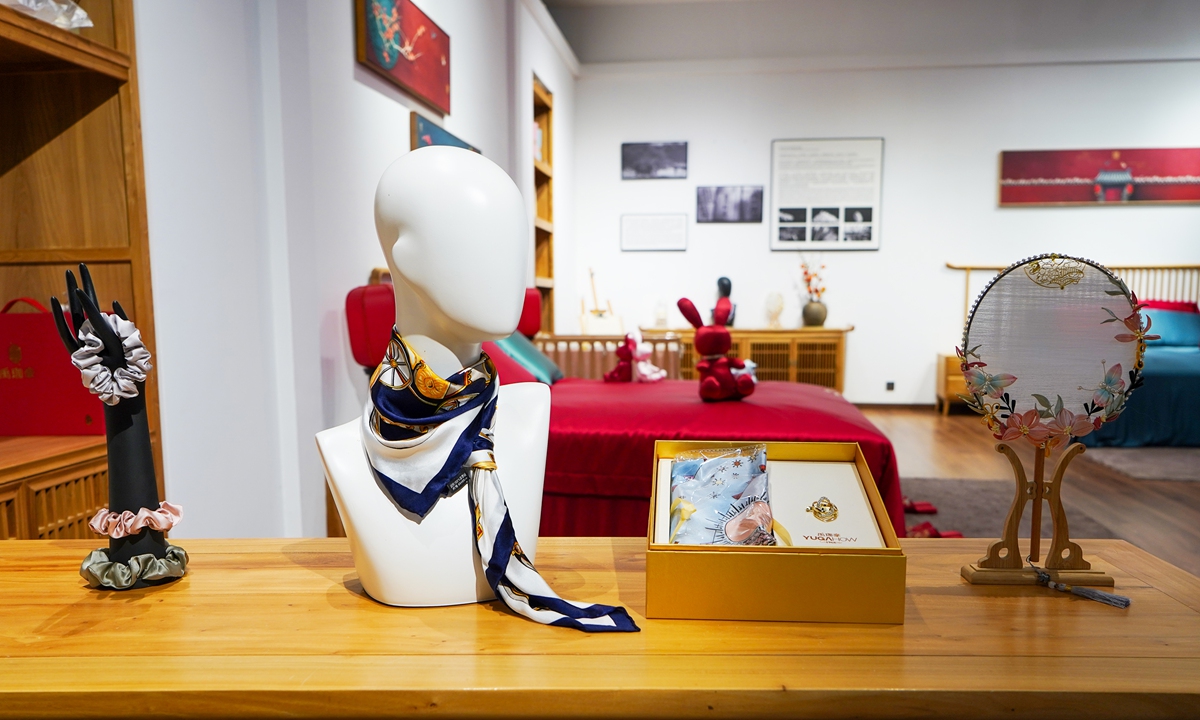
Silk products from Sitou township, Yangcheng county, Shanxi Province
Green engineThe final chapter of the magnificent picture of Jincheng's rural revitalization is being written by "new quality productivity." When scientific and technological innovation and the concept of green development are deeply integrated, traditional industries are reborn and a new green engine for high-quality development is cultivated.
In Qinshui county, the bio-based materials project at Shanxi Longjun Eco Environmental Protection Technology Co, Ltd is a good example of this transformation. The company has broken through the usual dependence on traditional plastic products to use renewable resources such as corn starch as raw materials, and use bio-modification technology to produce fully degradable environmentally friendly lunch boxes. These "green products" are high temperature resistant, durable, can be completely decompose in the natural environment, making them a favorite of domestic and foreign catering brands.
Not far away, in Dachequ village, the digital factory belonging to Long Granary Grain and Oil Company shows the "intelligent" upgrade of traditional agriculture. This smart factory has realized the digital control of the whole process from wheat grains to flour. "Here, our flour extraction rate remains stable at 77 percent, and the product qualification rate reaches as high as 99.6 percent," said general manager Wang Junni.
From biomanufacturing to smart agriculture, these new productive forces rooted in the countryside are reshaping the rural economy. They mark that Jincheng's rural revitalization has evolved from a single resource-driven model to a new stage of high-quality development driven by innovation and guided by green development - offering an insightful "Jincheng Plan" for the transformation of resource-based regions.
RELATED ARTICLES