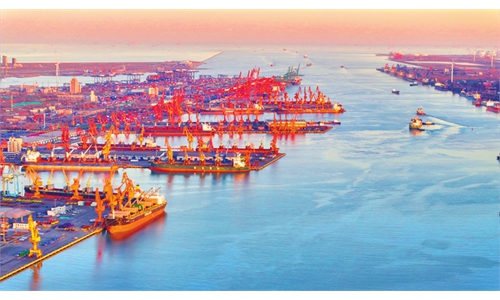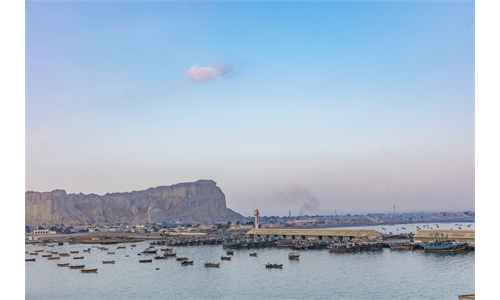
Illustration: Liu Xidan/GT
China Railway Construction Corp (CRCC) said on Wednesday that it has completed track-laying on the PK330 Bridge, Africa's longest heavy-haul railway bridge, marking a key milestone in Algeria's Western Mining Railway, a flagship project under the Belt and Road Initiative (BRI) that is expected to strengthen transport links and support regional economic development, the Xinhua News Agency reported.The rapid progress of projects such as the PK330 Bridge reveal how BRI cooperation, which has entered the stage for high-quality development, is turning more difficult terrain into channels of connectivity, combining China's engineering capacity with local development needs, and injecting economic dynamism into broader regions and markets that were previously blocked by geographical challenges.
The site for the PK330 Bridge is primarily composed of loose sand and gravel layers, posing a severe challenge to construction. However, the main structure of the 6-kilometer bridge was completed within just one year, highlighting the advanced engineering capabilities and efficient project management that BRI cooperation brings to complex infrastructure projects.
While the PK330 Bridge is a technical marvel on its own, it also exemplifies the broader strategic and economic significance of BRI projects across Africa and other regions across the world.
During its construction, the project brought tangible economic benefits to the local area. CRCC said that the project created more than 7,000 local jobs and trained more than 1,000 skilled workers. It will link mines, industrial zones, and ports in southwestern Algeria, releasing local economic potential and supporting regional economic development.
Chinese companies have cumulatively participated in building and upgrading more than 10,000 kilometers of railway in African countries under the BRI, according to Xinhua. From the Mombasa-Nairobi Railway in Kenya to the Ethiopia-Djibouti Railway, Chinese-built rail lines are acting as "steel arteries," reducing transport costs, improving regional connectivity, and accelerating trade flows in the continent.
This interconnectivity demonstrates the BRI's tangible benefits for regional economic development. These modern rail links strengthen economic integration, support industrial growth, and create new opportunities for African countries to engage more competitively in regional and global markets.
As the BRI enters a new stage of high-quality development, its impact extends far beyond individual projects or regions. By fostering modern infrastructure, logistics networks, and industrial corridors, BRI cooperation is enhancing connectivity across Asia and Africa, facilitating smoother trade flows, cross-border investment, and technology transfer. These developments strengthen global supply chains at a critical time of rising disruptions caused by certain countries' unilateralism and protectionism.
Under the BRI, for example, robust trade cooperation between China and ASEAN countries is unlocking new opportunities as connectivity deepens. In the first three quarters of 2025, China's imports and exports with ASEAN reached about 5.57 trillion yuan ($815 billion), up 9.6 percent year on year, according to latest official data.
Despite its clear mutual benefits, BRI cooperation has been slandered by some foreign media outlets with unfounded claims such as "debt trap." Yet many participating countries have repeatedly emphasized the initiative's win-win nature, rejecting these negative portrayals. And the steady progress of projects such as the PK330 Bridge offer an even more powerful rebuttal to these cynical slanders.
Now entering a new stage of high-quality development, the BRI is expanding beyond traditional infrastructure to embrace digital connectivity, green energy, and sustainable industrial growth. Future projects are set to strengthen regional and intercontinental trade corridors, enhance supply chain resilience, and drive technological innovation.
After the development of more than a decade, and built on the advancements in connectivity, BRI cooperation is expanding to a platform for trade and industrial cooperation. China is ready to work with all parties to strive for solid progress in pursuing high-quality BRI cooperation for common development and a win-win future, Chinese Foreign Ministry spokesperson Guo Jiakun noted in July.
By promoting collaboration in areas such as smart logistics and cross-border e-commerce, the initiative can help economies move toward higher-value industries, create jobs, improve living standards, and foster inclusive development. As BRI partner countries deepen policy coordination and people-to-people exchanges, the initiative is poised to continue delivering tangible benefits.
The author is a reporter with the Global Times. bizopinion@globaltimes.com.cn
RELATED ARTICLES