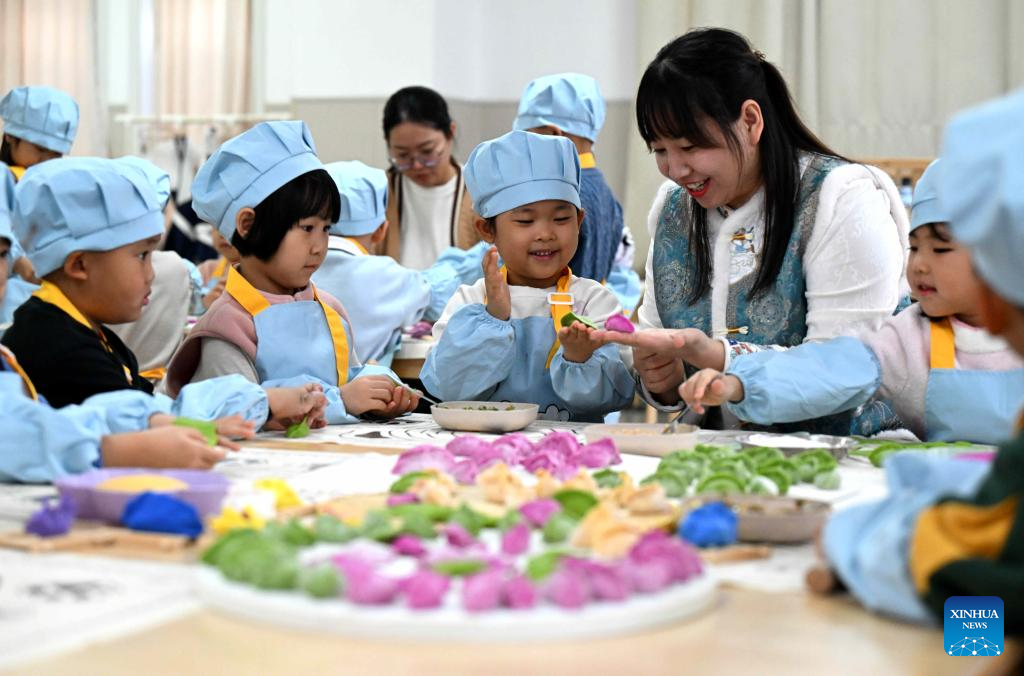
A teacher teaches children to make dumplings at a kindergarten in Zunhua City, north China's Hebei Province, Dec. 19, 2025. Winter Solstice, the shortest day of the year, which will fall on Dec. 21 this year, denotes the beginning of deep winter and a break from farming in traditional agricultural society in Chinese culture. Northern China has maintained the tradition of eating dumplings on this day, while people in southern China eat tangyuan (glutinous rice balls). (Photo by Liu Mancang/Xinhua)
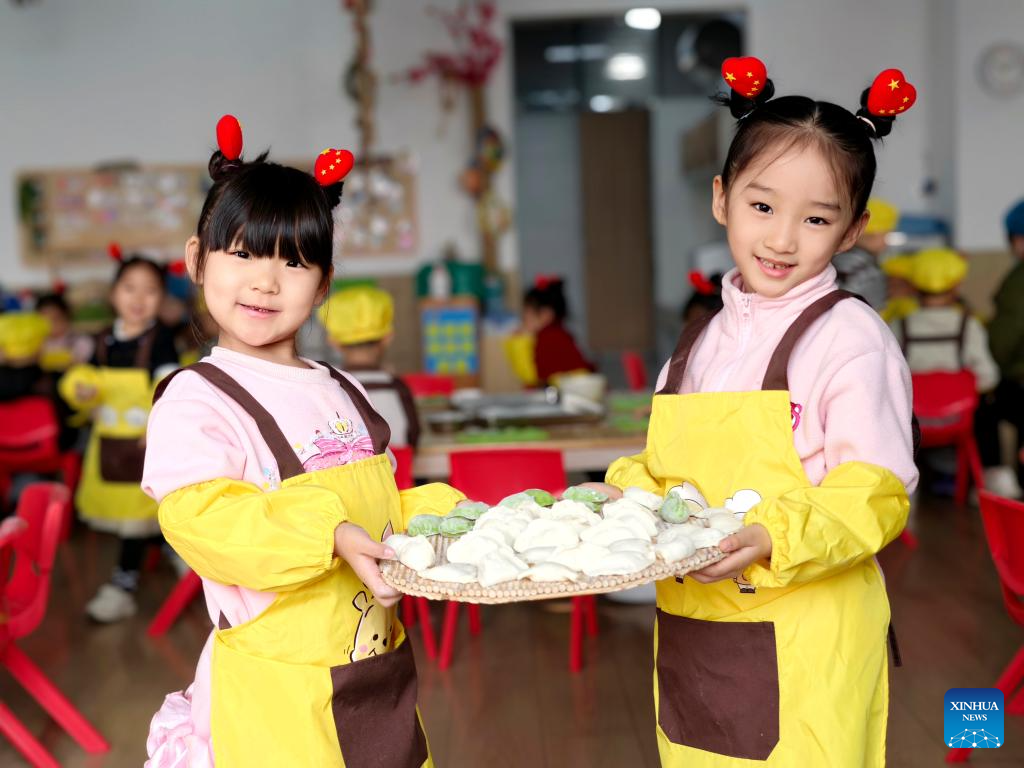
Children present the dumplings they made at a kindergarten in Jiyuan City, east China's Shandong Province, Dec. 19, 2025. Winter Solstice, the shortest day of the year, which will fall on Dec. 21 this year, denotes the beginning of deep winter and a break from farming in traditional agricultural society in Chinese culture. Northern China has maintained the tradition of eating dumplings on this day, while people in southern China eat tangyuan (glutinous rice balls). (Photo by Duan Erping/Xinhua)
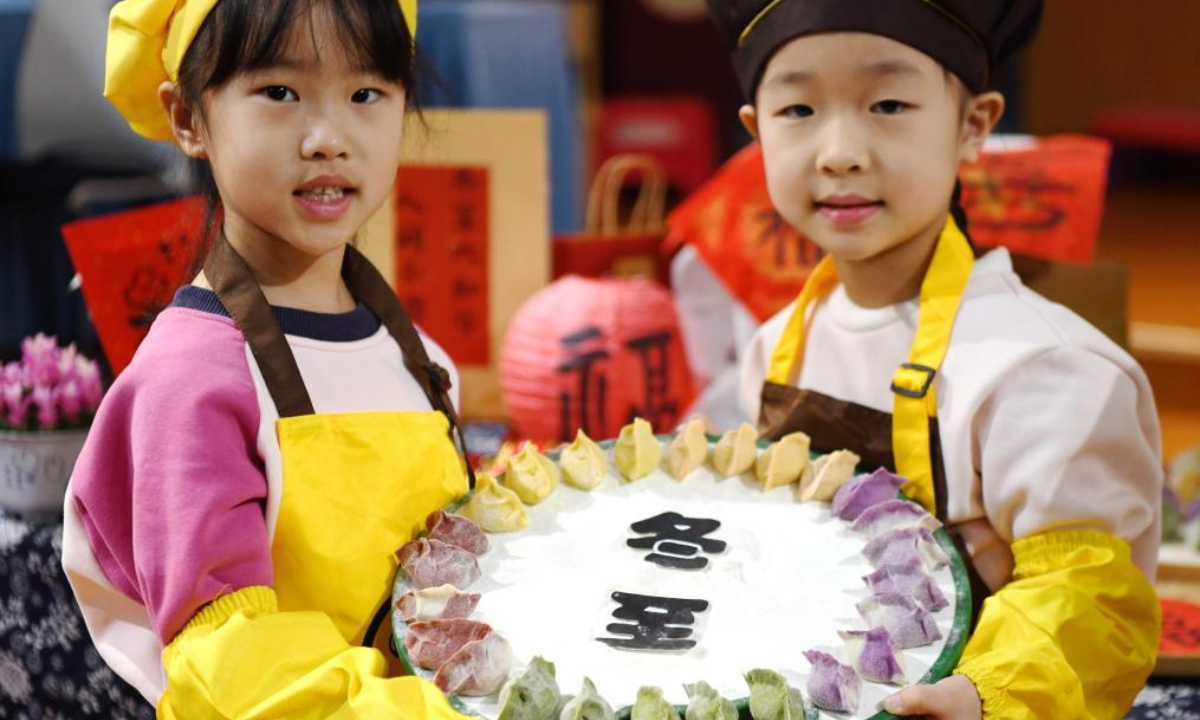
Children present the dumplings they made at a kindergarten in Jiyuan City, east China's Shandong Province, Dec. 19, 2025. Winter Solstice, the shortest day of the year, which will fall on Dec. 21 this year, denotes the beginning of deep winter and a break from farming in traditional agricultural society in Chinese culture. Northern China has maintained the tradition of eating dumplings on this day, while people in southern China eat tangyuan (glutinous rice balls). (Photo by Duan Erping/Xinhua)
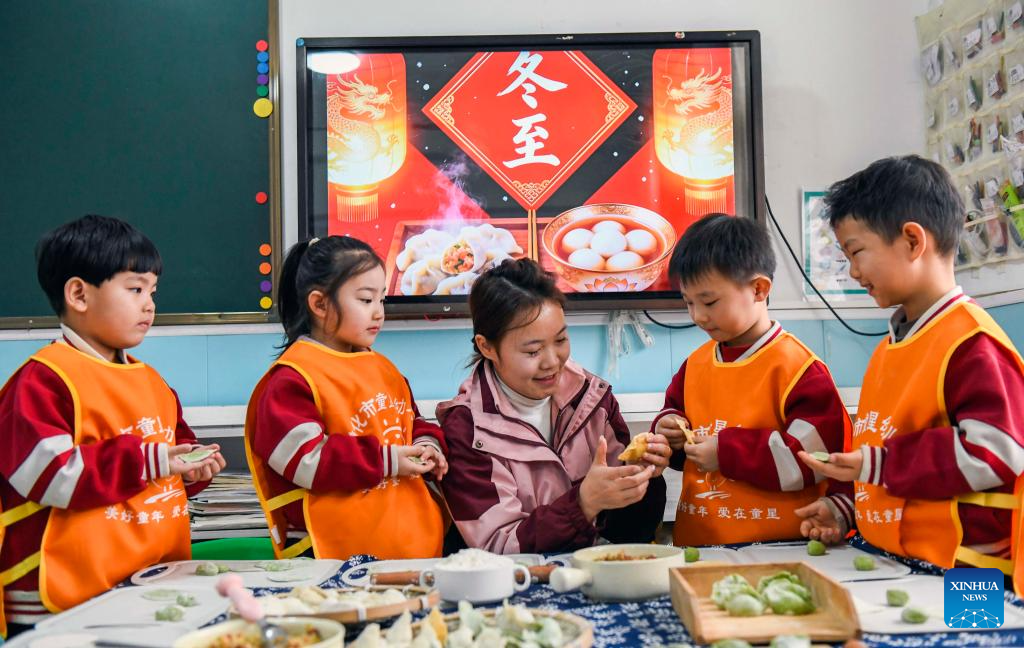
A teacher teaches children to make dumplings at a kindergarten in Zunhua City, north China's Hebei Province, Dec. 19, 2025. Winter Solstice, the shortest day of the year, which will fall on Dec. 21 this year, denotes the beginning of deep winter and a break from farming in traditional agricultural society in Chinese culture. Northern China has maintained the tradition of eating dumplings on this day, while people in southern China eat tangyuan (glutinous rice balls). (Photo by Liu Mancang/Xinhua)
