ARTS / ART
From sports to technology, China’s winter destinations offer experiences beyond sightseeing
Traveling in the cold season
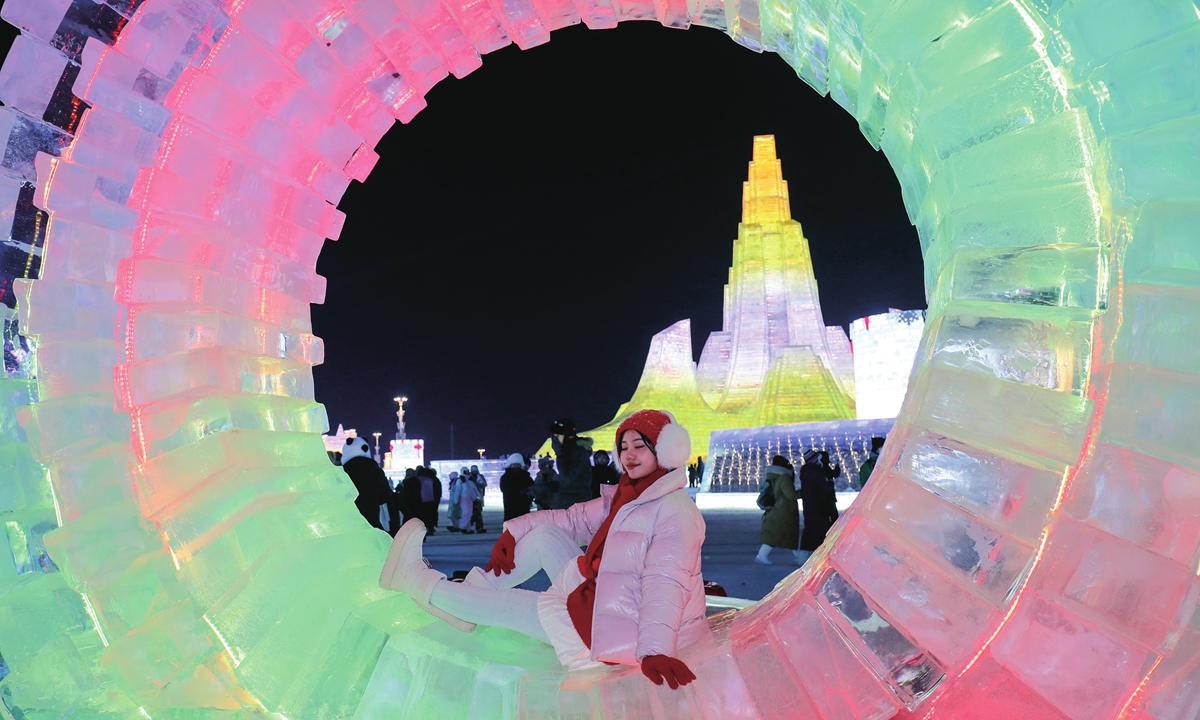
A tourist poses for a picture in the 27th Harbin Ice-Snow World in Harbin, Northeast China's Heilongjiang Province, on December 20, 2025. Photos on this page: VCG
As temperatures continue to drop across northern China, even plunging well below zero in some regions, ice and snow tourism is heating up. From high-tech attractions and immersive activities to grassroots sports and cultural experiences, destinations are reinventing winter travel, turning frozen landscapes into engines of participation and innovation.This winter season, cities and regions rich in ice-and-snow resources are no longer relying solely on scenic views. Instead, they are rolling out diversified, immersive experiences designed to keep visitors engaged from morning to night, and to extend the value chain of winter tourism.
From themed performances and interactive exhibitions to winter festivals and night-time ice shows, destinations are building multi-layered consumption scenes that extend well beyond the slopes.
At the heart of this shift is the "ice and snow plus" strategy, which seeks to unlock new spending potential and reshape ice and snow tourism into a year-round, comprehensive cultural tourism ecosystem, Bu Xiting, an associate research fellow at the School of Cultural Industries Management at the Communication University of China, told the Global Times.
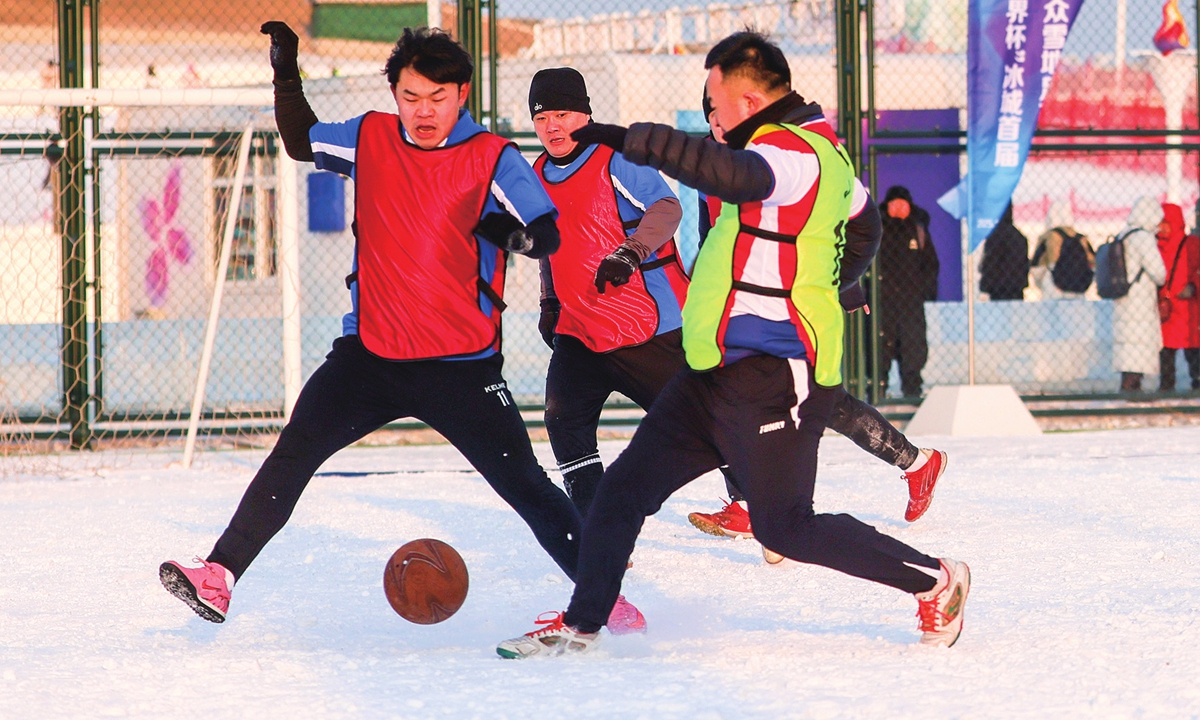
Players at Bingchao in Harbin
Winter wonderlandHarbin, capital of Northeast China's Heilongjiang Province, has emerged as one of the clearest expressions of this shift. Here, visitors are greeted by scenes that blend fantasy with futuristic flair. Robotic dogs and humanoid robots, dressed in festive outfits, weave through crowds with quick, playful steps, drawing phones into the air for photos and videos.
Nearby, an artificial intelligence (AI) interaction zone is packed. Tourists line up at AI photo stations and laser engraving machines, where they can create personalized digital cultural products in minutes, souvenirs unique to their trip and powered by AI.
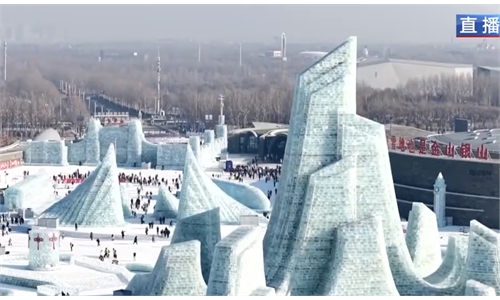
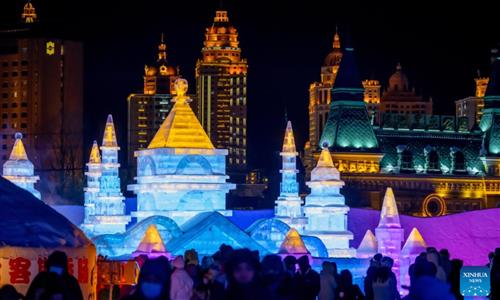
All of this unfolds inside the world's largest ice-and-snow theme park, the 27th edition of Harbin Ice-Snow World. The park opened this winter with record-breaking scale, covering 1.2 million square meters and using 400,000 cubic meters of ice and snow under the theme "Ice and Snow, Fairy Tale World."
The venue features three main landscape axes, towering ice sculptures, large parade routes, outdoor performance stages and a newly built 5,000-square-meter air-supported indoor facility that allows events to continue despite harsh weather. Smart lighting systems and AI-powered installations enhance nighttime displays and visitor interaction. Together, these elements reflect how the city is moving beyond spectacle alone, using technology to deepen engagement and lengthen visitors' stays.
A full slate of events is scheduled throughout the season, including the opening ceremony of the Harbin International Ice and Snow Festival, international ice sculpture competitions, snow football and ice hockey matches, and a New Year's Eve concert staged entirely in an ice-and-snow environment.
The upgrades come as Harbin gains renewed international recognition. Last week, the city was named a "World Outstanding City for Ice and Snow" by the World Tourism Organization (UN Tourism).
Beyond large-scale spectacles, Heilongjiang is also focusing on participation.
This winter, the province is hosting China's first national ice-and-snow sports super league, known as Bingchao, which integrates winter sports, tourism and mass activities.
The league features about 100 events, ranging from skiing and skating to snowball fights. It includes traditional winter sports such as ice hockey, curling, skating and skiing, as well as leisure and fitness activities built around ice-and-snow settings, including ice dragon boat racing, snow soccer and winter fishing. It covers almost every sport and game that can be played on ice or snow.
"Using winter sports as a driving force, the super league will spur development across the ice-and-snow industry chain," Wang Xianyu, director of the Heilongjiang Provincial Sports Bureau, told the Global Times. That includes winter culture, equipment manufacturing and tourism, he said.
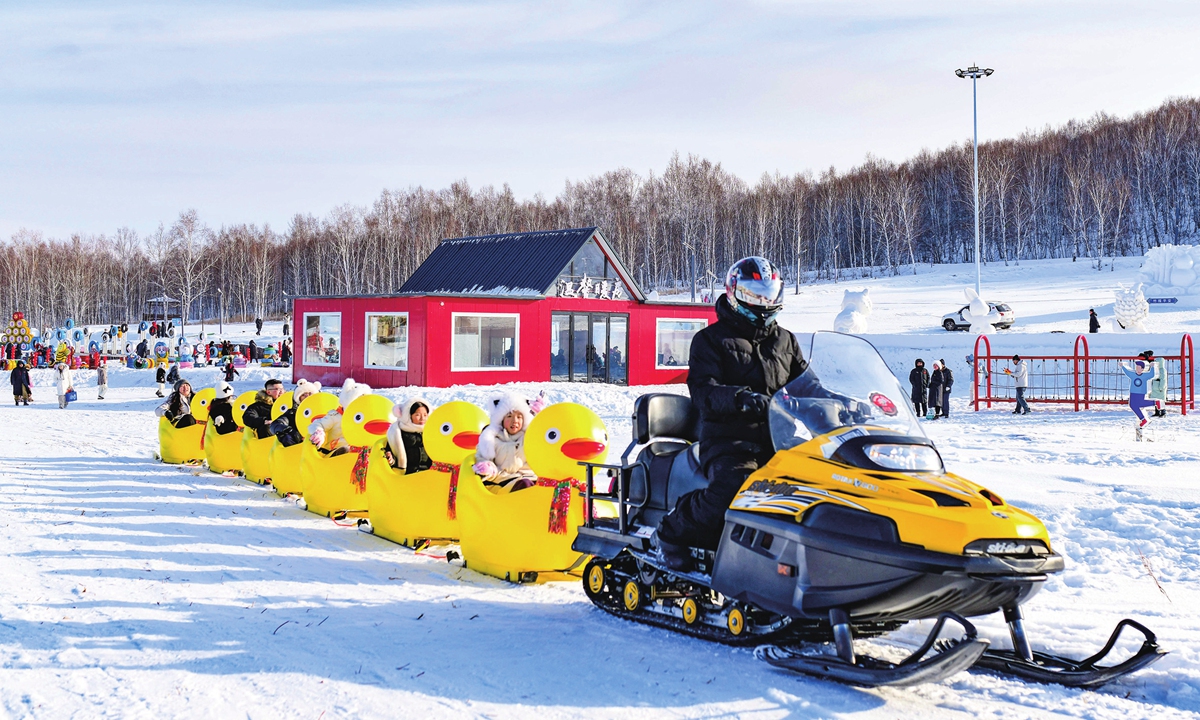
Tourists enjoy fun ice and snow sports at the Fenghuang Mountain Scenic Area in Yakeshi.
Ethnic flavorIn North China's Inner Mongolia Autonomous Region, winter tourism is being shaped by strong ethnic identity and a spirit of adventure, offering a different take on the country's evolving "ice and snow plus" model.
Ski resorts in the region integrate local culture into their offerings, with tourists donning traditional Mongolian clothing before skiing down snow-covered slopes.
Wang Xiao, 26, traveled from Beijing to the region to ski from December 18 to December 20. At Jinlongshan ski resort in Hulunbuir, she donned traditional ethnic clothing while gliding down the slopes. A skiing enthusiast, Wang said taking a photo in local attire was especially meaningful. "It's like collecting stamps," she said. "It shows the local culture and is very novel."
The region is also tapping into motorsports to diversify its winter attractions. Several frozen landscapes have been transformed into professional ice-and-snow automotive racecourses.
At Fenghuang Mountain Scenic Area in Yakeshi, Inner Mongolia, a 1.1 million-square-meter ice-and-snow automotive entertainment zone includes ice circuits, snowfield off-road tracks and endurance routes designed for varying skill levels.
On December 20, an off-road ice and snow crossing race opened in Xilin Gol League. Nearly 3,000 off-road enthusiasts from across the country participated in the race, along with more than 100 teams and over 600 drivers.
Participants navigated grasslands, snowfields, frozen rivers and sandy terrain in extreme cold, pushing both vehicles and endurance to their limits while experiencing a different dimension of winter tourism defined by speed and challenge. A series of projects launched in Inner Mongolia that draw on ethnic characteristics exemplify the deep integration of regional culture with ice and snow activities.
Moving beyond stand-alone sports events or sightseeing, these initiatives emphasize cultural empowerment and offer a full-spectrum experience.
This reflects a defining feature of ice and snow tourism in 2025: a marked shift from reliance on natural scenery toward a more deeply integrated "ice and snow plus" development model, noted Bu.
RELATED ARTICLES