Alleged drone attack on Russian presidential residence reflects highly unstable nature of current peace talks: expert
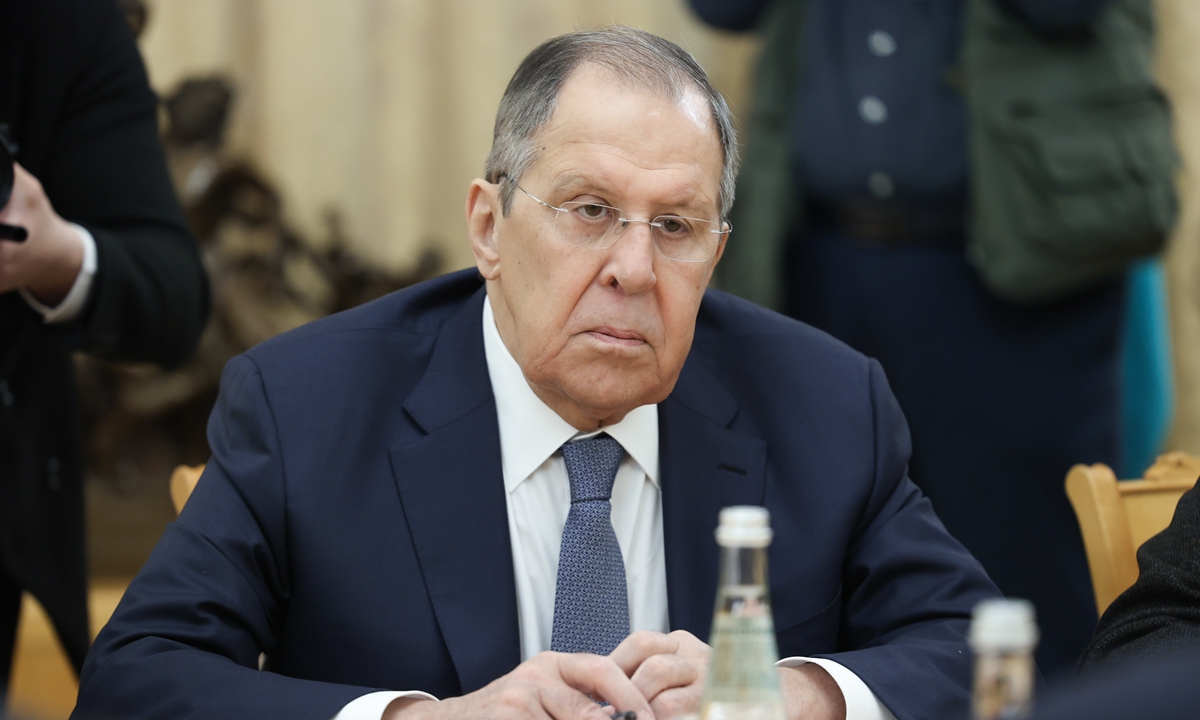
File photo of Russian Foreign Minister Sergei Lavrov taken on December 24, 2025 in Moscow, Russia. Photo: VCG
Russian Foreign Minister Sergei Lavrov said on Monday that Kiev launched an overnight drone attack targeting the presidential residence in Russia's northwestern region of Novgorod. When asked if he was worried the alleged attack could affect his efforts to broker peace, US President Donald Trump said: "I don't like it. It's not good." "I learned about it from President Putin today. I was very angry about it," Trump said, according to Reuters.
When asked if there was any evidence of such an attack, Trump said: "We'll find out." He described his call with Putin earlier on Monday as a "very good talk," Reuters said.
"On the night of December 28-29, the Kiev regime launched a terrorist attack using 91 long-range strike drones on the state residence of the President of the Russian Federation," Lavrov said.
Russian authorities did not disclose President Putin's location at the time of the alleged attack.
In response to a question regarding the reported attack, Chinese Foreign Ministry spokesperson Lin Jian said on Tuesday that dialogue and negotiation is the only viable way out of the Ukraine crisis.
Lin called on relevant parties to follow the principles of no expansion of the battlefield, no escalation of fighting and no provocation by any party, work for deescalation of the situation, and accumulate conditions for the political settlement of the crisis.
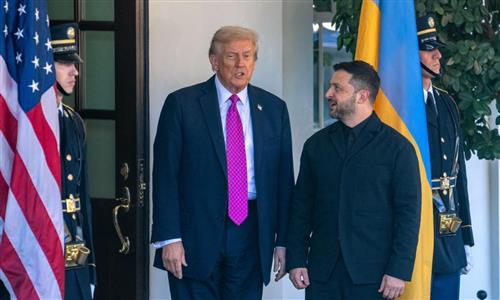
Kremlin foreign policy aide Yury Ushakov said the strike took place on Sunday, "practically immediately after" talks held in Florida between US President Trump and Ukrainian President Volodymyr Zelensky on negotiations to end the Russia-Ukraine conflict, Al Jazeera reported.
Lavrov added that all incoming drones were shot down by air defense systems of the Russian Armed Forces, and no reports of casualties or damage caused by drone debris were received, the Xinhua News Agency reported.
Lavrov warned that such reckless actions would not go unanswered, confirming that the Russian Armed Forces had already identified the targets for retaliatory strikes and set the timing for their execution, per Xinhua. He added that Moscow had no intention of withdrawing from the negotiation process with the US, per Xinhua.
Moscow also suggested it would reassess its negotiating position in light of the alleged attack, with Ministry of Foreign Affairs spokesperson Maria Zakharova warning that Moscow's response "would not be diplomatic," per Al Jazeera.
Zelensky on Monday denied the accusation of the attack, calling it "another lie from the Russian Federation," Xinhua reported.
"They're simply preparing the ground to carry out strikes, probably on the capital and probably on government buildings," he said.
Previously there hasn't been reports of attacks on the leaders' residences in the Russia-Ukraine conflict.
Cui Heng, a scholar from the Shanghai-based China National Institute for SCO International Exchange and Judicial Cooperation, told the Global Times on Tuesday that in today's international political ethics, even deeply hostile states generally avoid targeting each other's leaders, as such acts would likely provoke strong international backlash, and could trigger severe retaliation, making them strategically counterproductive.
Zhang Hong, a Chinese research fellow at the Institute of Russian, Eastern European and Central Asian Studies under the Chinese Academy of Social Sciences, said that Novgorod has long been one of the directions from which Ukrainian drones have operated, so it remains unclear whether the residence was deliberately targeted in this instance.
If Russia's account is true, the incident may have been intended by Ukraine to exert pressure on Moscow by posing a threat to Putin's security, thereby forcing Russia to make concessions in peace talks, Zhang told the Global Times.
The expert noted an escalating trend, as in the past, both sides usually observed a brief lull or reduced intensity of strikes during the Russian New Year, but this time large-scale offensives continued throughout the festival.
Zhang said it highlights how the "fight while talking" approach makes the negotiations highly unstable, with either party capable of backtracking or reversing course at any time, the expert added.
The developments come as the Russia-Ukraine conflict approaches its fourth year. Zelensky said last week that a 20-point peace plan was "90 percent agreed" upon and that US-Ukraine security guarantees were "100 percent agreed" upon, according to media reports.
However, major sticking points remain in relation to the future of territory in the east of Ukraine that Russia has occupied, the reports said.
Meanwhile, fighting continued across multiple fronts in Ukraine, with Russia's army saying its forces captured the village of Dibrova in eastern Ukraine's Donetsk region.
RELATED ARTICLES