ARTS / CULTURE & LEISURE
Renowned Chinese director Zhang Yimou: Young people are the future of Chinese cinema
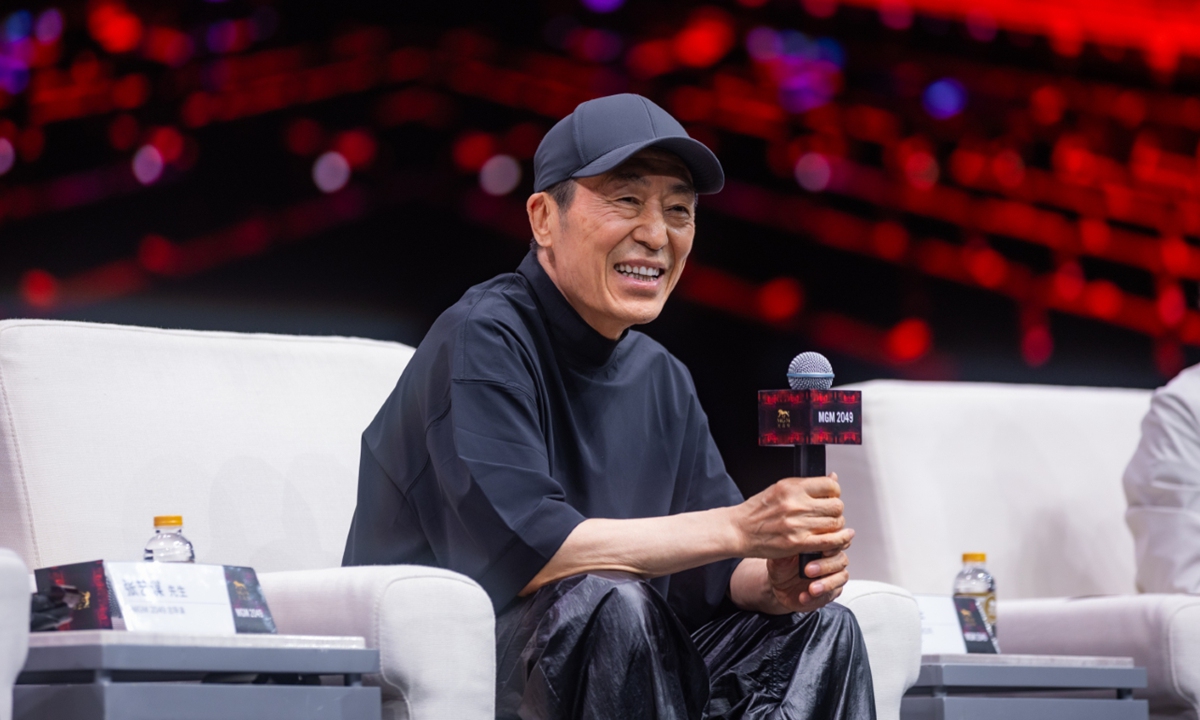
Chinese director Zhang Yimou attends a press conference for the live show MGM 2049 in Macao on April 8, 2024. Photo: Courtesy of MGM 2049
The year 2025 marked the 120th anniversary of the birth of Chinese cinema. Standing at this historical juncture and looking back on its journey—from silent films to sound, from black-and-white to color, and from traditional to digital—every stage embodies the dedication and wisdom of generations of filmmakers and bears the deep imprint of the spirit of its time.
My own path in filmmaking began in step with the progress of the times. In 1978, I was fortunate to enter the Department of Cinematography at the Beijing Film Academy, officially embarking on this profession. From my early days as a cinematographer to later becoming a director, and from exploratory art-house films to various commercial theatrical genres, my creative journey has always been closely intertwined with China's social transformation.
Reflecting on my life and work and summarizing the experiences behind the success of some of my films, I have come to deeply realize that truly vital artistic creation must be rooted in reality and must breathe together with, and share a destiny with, the broad masses of the people.
In creative practice, engaging with reality is an important mission for filmmakers. First and foremost, when choosing subject matter, one must draw inspiration from social realities. Take Article 20 for example: I tried to introduce comedic humor into a serious legal theme, using entertainment to educate—allowing audiences to grasp the importance of fairness and justice through laughter, and enabling legal provisions to radiate human warmth.
This attempt further convinced me that filmmakers must be adept at capturing the details of the times, balancing distinctive artistic expression with perspectives rooted in ordinary people's lives, portraying individual destinies within a grand historical context, and telling the stories of everyday life—only then can audiences truly connect.
Against the backdrop of the accelerating industrialization of Chinese film, I have always believed in the importance of exploring an organic integration between commercial theatrical films and art films. This is especially crucial for young directors fresh out of school, who should consciously experiment with combining the two in order to hone their overall creative capabilities.
For any country, discussions of the film industry inevitably revolve around the prosperity and development of theatrical cinema. With this understanding, I have explored and experimented in my own work—Hero being an early example. In recent years, through films such as Cliff Walkers, Snipers, and Full River Red, I have ventured into genres including suspense, war, and comedy, infusing humanistic concern within genre frameworks, conveying positive energy, and exploring new modes of cinematic storytelling. These practices have given me many insights and further strengthened my comprehensive creative abilities.
Looking back, generations of filmmakers have forged enduring brilliance. From Zheng Zhengqiu and Zhang Shichuan, to Xia Yan and Cai Chusheng, to the fifth generation and subsequent generations, and onward to ever-younger creators, the spiritual lineage of Chinese cinema has been continuously passed down.
Facing a new historical position, as a firsthand participant I feel a profound sense of responsibility: filmmakers must both uphold their personal artistic ideals and shoulder the cultural mission of social inheritance.
I entered university at the age of 28 and did not graduate until 32. Because I started late, I am especially aware of the value of youth and time. This personal experience has led me, over decades of creative work, to place great emphasis on nurturing young talent. At every level, our teams can be said to be among those with the highest proportion of young people. Whether in film, various forms of stage art, large-scale outdoor performances, or major national productions, I have consistently chosen to work with and recruit many young people, mentoring them while creating together. I also supervised doctoral students majoring in "large-scale performance events" at Hunan University for several years. Today, the backbone of China's large-scale performance sector and many young creators come from our "dual Olympics" teams. The opening ceremonies of the Beijing 2008 Summer Olympics and the 2022 Winter Olympics were directed by Zhang Yimou. At the opening and closing ceremonies of the 15th National Games, many of the young professionals involved had previously worked with me.
In addition to supporting young director programs such as the "Young Shoots Project" initiated by the China Film Director's Guild, I have also served as a producer for debut works by new directors to support their creative endeavors.
I have always believed that the future of Chinese cinema does not depend on us so-called "big-name" or veteran directors, but on countless young directors, young actors, and young professionals across writing, directing, cinematography, art design, sound, costume, makeup, and set design. Only when they make more and better films will our film industry truly flourish. When the youth are strong, the nation is strong—and only young people are the future of Chinese film.
The article was first published in Chinese on People's Daily on January 3.
RELATED ARTICLES