Some Venezuelans recall first day after capital being raided by US with Global Times
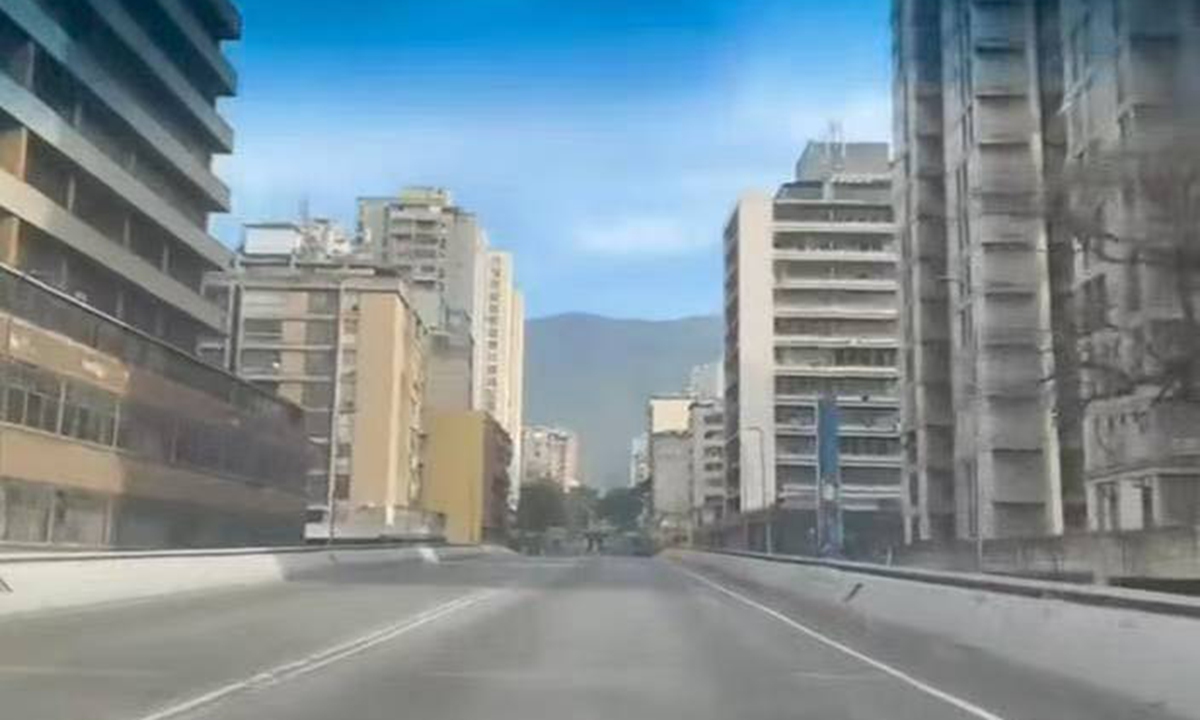
On the first day after the US' attack on Venezuela, most of the local people stayed at home, preparing for a possible second attack. Photo provided by the interviewees
Editor's Note:
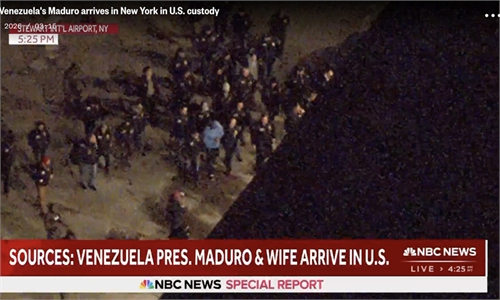
In a shocking move, the US captured Venezuelan President Nicolas Maduro and his wife, flying them out of the South American country during an assault on Caracas and surrounding areas.
Several nations have strongly condemned the US for its attack on Venezuela. As the world watches how the situation in Venezuela unfolds and what local residents are experiencing, Global Times reporters spoke with several Venezuelans to bring readers this scene from the local perspective.
This story is also part of the Global Times' "Witness to History" series.
On the morning of January 3, there was an unusual quietness in Caracas: no crowds bustling on weekend mornings, no usual street vendors hawking their wares, most streets were empty, with shutters tightly closed on restaurants lining the sides. Occasionally, motorcycles carrying police or militia members sped by.
"This is quite abnormal," resident José told the Global Times. "Saturday mornings in Caracas are usually very lively."
This was the first day after the US launched a military assault on Caracas, the capital of Venezuela.
In the early hours of January 3, the US conducted a surprise attack on Caracas and captured the country's President Nicolas Maduro. The sound of explosions and low-flying fighter jets jolted the entire city awake from its slumber. After a night of turmoil, this South American city did not descend into chaos, but it had not returned to normal either.
The entire city was enveloped in an unfamiliar mood for Venezuelans — fear, tension, and a profound sense of uncertainty about the future.
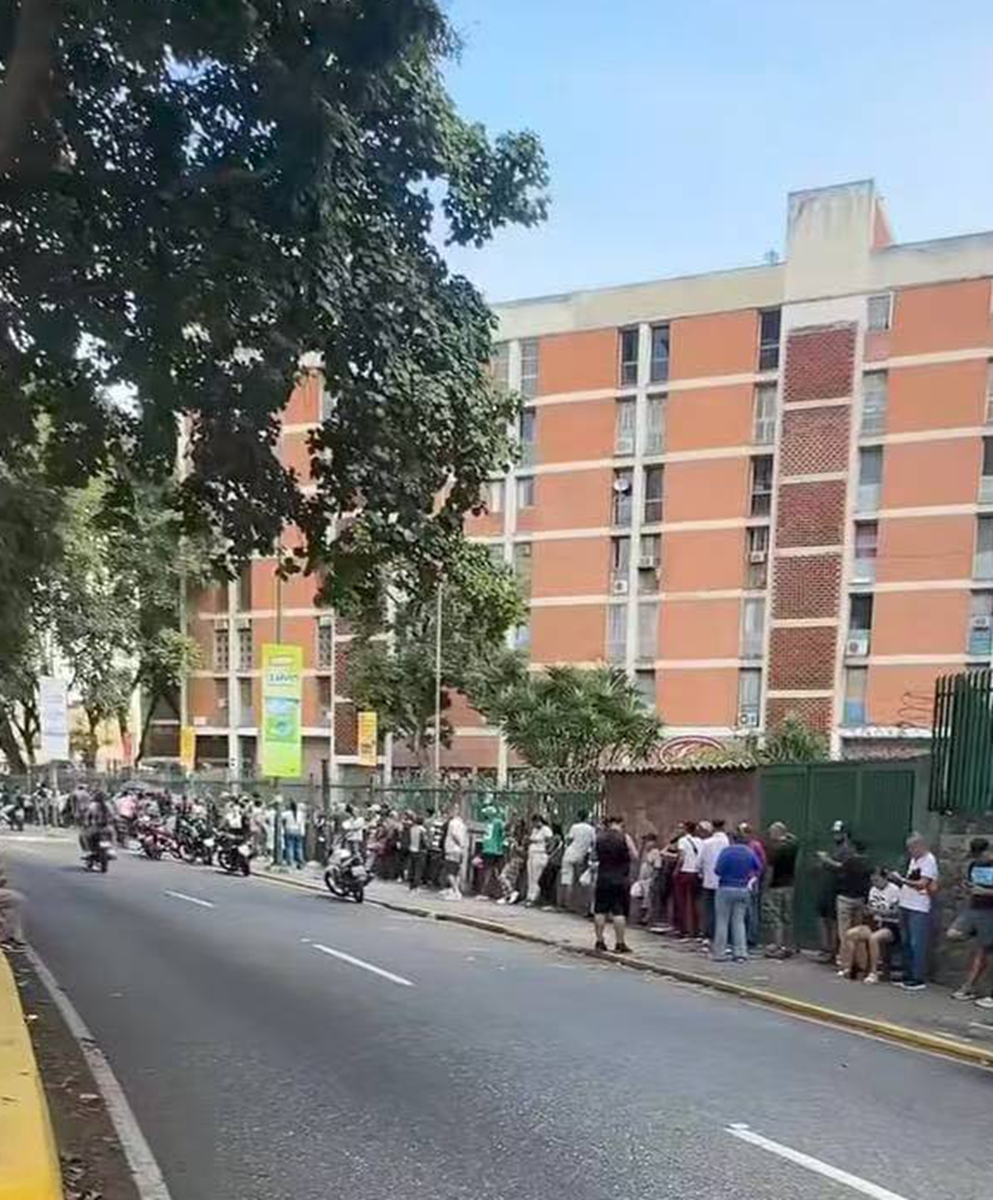
Outside some supermarkets in Caracas, citizens queue up in long lines. Photo provided by the interviewees
Deserted streets, long queues
"There are almost no people on the streets, but the supermarkets are crowded." José described Caracas on the first day after the US raid on Venezuela in one sentence. "Most people are hiding at home, afraid of a possible second attack. Some are constantly on their phones, anxiously sharing messages."
In stark contrast to the deserted streets are the supermarkets and stores. José, who had to go out for work, noticed increasingly long lines outside some large supermarkets. People looked tense, and their shopping priorities were almost identical: flour, canned goods, water, oil — anything that could be stored. "It's basically panic buying."
Another resident from the capital city, German, shared similar observation. He told the Global Times that many Venezuelans are now thinking the same thing: "What if food supplies run out tomorrow?"
He also queued at a gas station today, saying, "There is still fuel available today, but who knows if there will be gasoline tomorrow amid this panic."
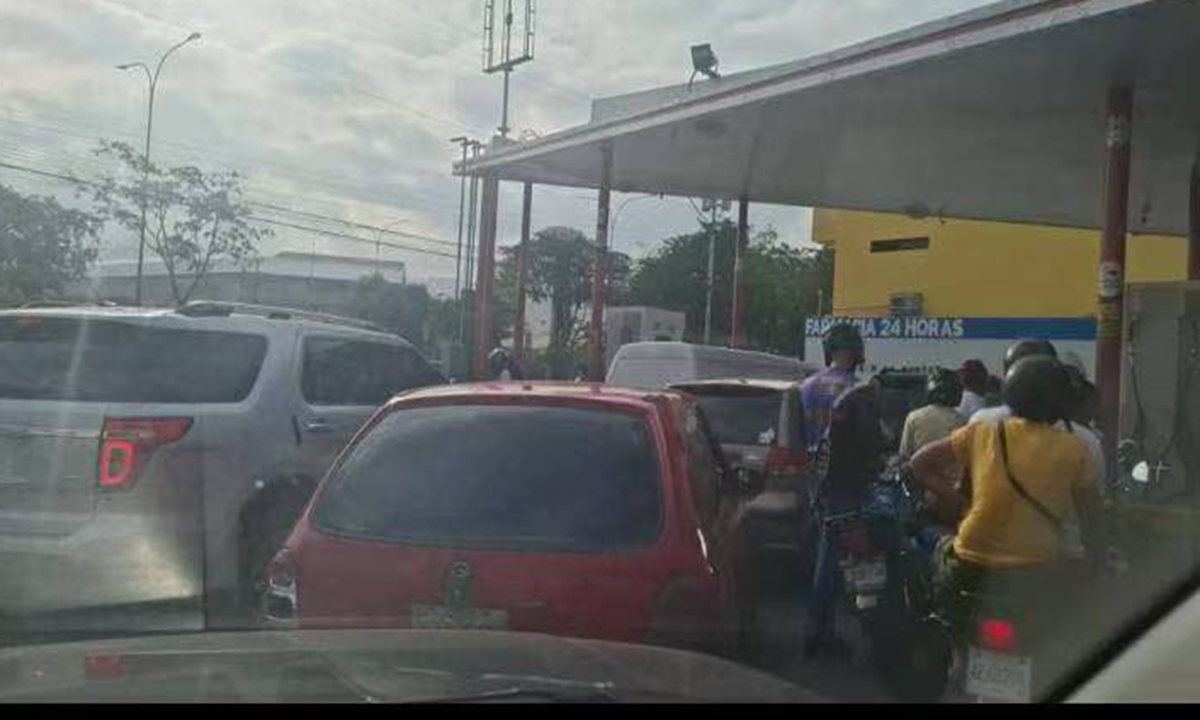
Most gas stations in Caracas are crowded with people. Photo provided by the interviewees
The Global Times reporters learned that on January 3, most pharmacies, grocery stores, and other establishments in Caracas remained open, and social order was relatively stable. However, most stores chose to "conduct business with doors closed," allowing only a limited number of people inside at a time to prevent chaos. Some stores saw a noticeable increase in prices.
"You need to understand, this is the first time many Venezuelans have experienced something like this," German explained. In his perception, war has always been a scenario confined to movie screens. "But today, what was once in the movies has become reality."
This sense of unreality is particularly pronounced in some areas.
German said he has just been near Fuerte Tiuna, Venezuela's largest military complex located in Caracas. In the surrounding residential areas, there have been disruptions to internet, communication, and water services. "Some slum areas are also experiencing the same issues — services are either completely cut off or intermittent, and very unstable."
In another part of Caracas, a resident named Julia (pseudonym) confirmed to the Global Times that her area has experienced a complete power outage. Other Caracas residents said that local television signals were also cut off on January 3 afternoon.
Military police, armored vehicles, and motorcycle patrol teams on street
According to multiple local residents, on the first day after Venezuela was attacked, many soldiers and police appeared on the streets, especially motorcycle patrol teams. Near some military facilities, armored vehicles could also be seen.
"Starting from last night, we heard a large number of motorcycles coming and going. Today during the day, there are also many on the streets," José told the Global Times. He said these are local civilian armed groups and self-defense organizations that have long supported the Maduro government.
According to German, in some poorer communities near Caracas, militia organizations have already become active. Around the presidential palace, government-organized self-defense groups have also started patrols, carrying weapons and riding motorcycles through neighborhoods. Police are stationed around some commercial outlets to prevent the situation from spiraling out of control.
However, contrary to his previous expectations, he has not observed large-scale military movements or mobilization. "I haven't seen air defense systems fully activated, nor have I seen the army taking to the streets on a large scale," he said. "At least not yet."
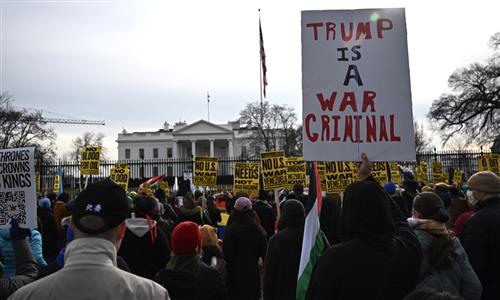
There have also been a small number of political gatherings in some places. According to media reports, on January 3 local time, Venezuelan people gathered in the capital Caracas to express condemnation of the US attack on Venezuela and support for President Maduro. They waved national flags, shouted slogans, and demanded that the US government immediately release Maduro and ensure his personal safety.
Although some messages circulating on social media claim "Venezuelans holding rallies against Maduro," multiple Venezuelans told the Global Times that they have not seen such gatherings, nor have they heard of large-scale anti-Maduro events or celebrations of the so-called "liberation of Venezuela."
"That's not true," one Venezuelan resident denied to the Global Times. German said that based on his on-site observations on January 3, in the western part of Caracas where pro-government forces are more concentrated, some rallies supporting Maduro could be seen; while in the middle-class areas in the eastern part of the city, "people's attention is almost entirely focused on stockpiling food and supplies, and there are very few people on the streets."
According to reports of Agencia Venezolana de Noticias (AVN), the national news agency of Venezuela, outside the capital, some regions have also seen mobilization activities supporting the Maduro government and condemning the US attack.
According to Mérida state governor Nelson Álvarez, people in the state have gathered on the streets since the early morning of January 3, reaffirming support for Maduro and strongly condemning this aggression today that attempts to suppress the dignity and independence of a sovereign people.
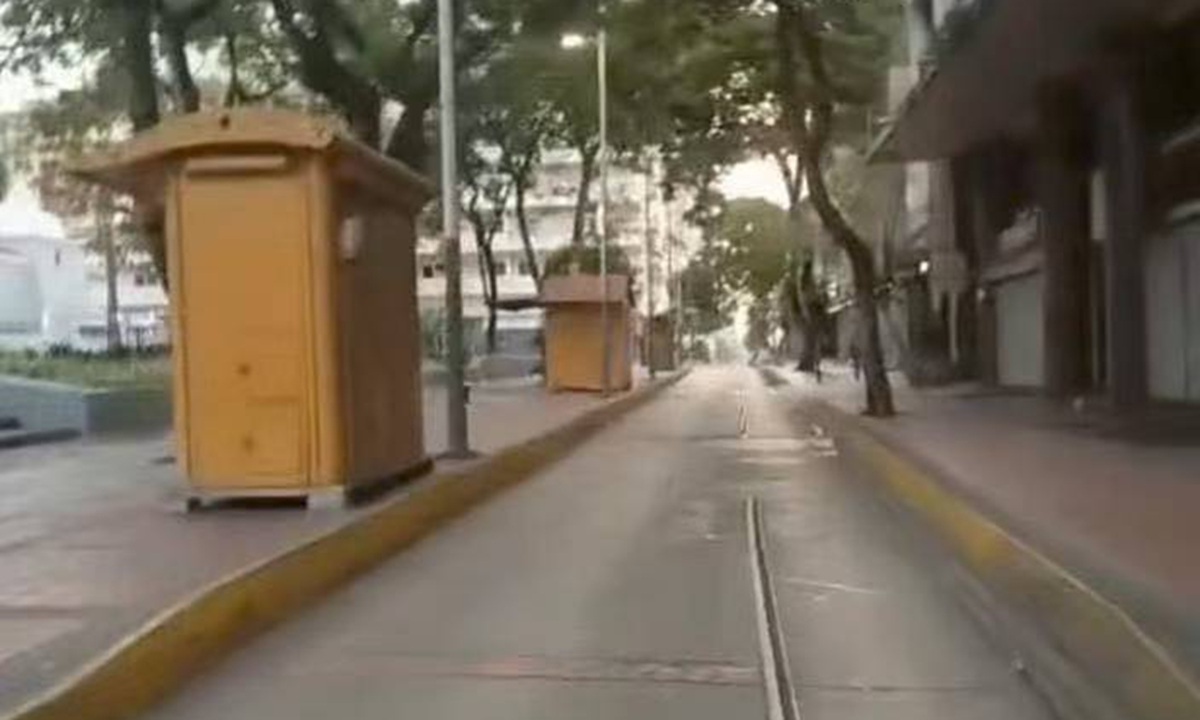
On the morning of January 3 in Venezuela, there are no crowds as usual on weekends, nor are there the common street vendors. Photo provided by the interviewees
Tension, fear, uncertainty, and insecurity
For many Venezuelans, the attack on January 3 not only brought changes to their daily lives but also psychological shock. "Last night, my family and I were truly desperate and terrified. The planes were flying low, and the sound of explosions was constant. Yes, last night, we all thought that war had already begun," José told the Global Times. That night will be etched in his memory forever.
After the attack, his family chose to gather and seek refuge at his sister's house — believed to be relatively safer. "At least if something happens, we can be together as a family," he said.
German, on the other hand, had prepared earlier. In November 2025, he had already stockpiled considerable food supplies. "I always had a feeling that one morning, we would wake up to this kind of situation," he lamented. "It was almost as if it was a 'script' written in advance."
"Everything had already been set in motion," German explained, noting that the US had been preparing for action against Venezuela. "As we all know, this is a country that has long used intervention and war to solve problems. So, for Venezuela — a country rich in oil and resources — what is happening is not surprising. This has been the consistent approach of the US over the past few decades."
From German's perspective, the US action against Venezuela was not unexpected. "This is a country that has long solved problems through intervention and war," he said. "It is not surprising that something like this happens to an oil-rich, resourceful country."
When asked about his feelings at this moment, German repeatedly mentioned one word: "uncertainty." "What will happen next? We really don't know," he said. "So far, it seems like no one has truly stepped forward to say, 'I am in charge now.' I even feel like we are in a sort of 'anarchy.'"
According to public media reports, Venezuela's Supreme Court of Justice ordered on Saturday that Vice President Delcy Rodriguez would assume all the powers of the presidency in an acting capacity to ensure continuity of governance and the full defense of the nation. Article 233 of Venezuela's constitution states that a new election must be called in 30 days if a sitting president is deemed "permanently absent" by the National Assembly. The vice president is supposed to take office while such a vote is organized, according to Wall Street Journal. However, the Supreme Court did not declare President Maduro "permanently absent."
Several members of the Venezuelan Chinese Chamber of Commerce and expatriates told the Global Times on Saturday that the Chinese community in Venezuela is currently around 200,000 people. The community has maintained close contact with the Chinese Embassy in Venezuela, and no reports of Chinese citizens encountering danger have been received.
Everyone is closely monitoring the ongoing developments of the situation, they said.
RELATED ARTICLES