Photo: UN Web TV
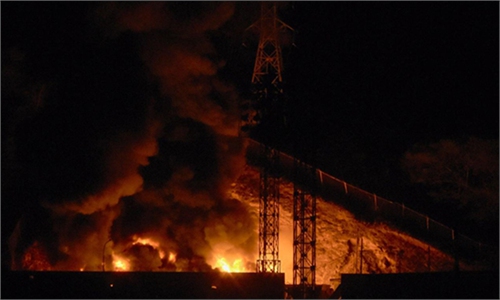
The United Nations Security Council (UNSC) met on Monday after the US forcibly seized Venezuelan President Nicolas Maduro and his wife in a surprise attack.
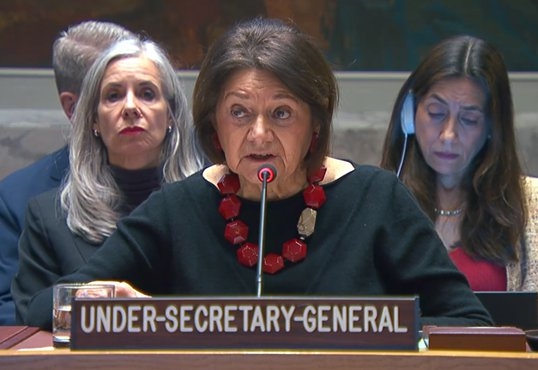
"We meet at a grave time following the 3 January US military action in the Bolivarian Republic of Venezuela," Rosemary DiCarlo said, briefing on behalf of the Secretary-General, according to a release published on official website of the UN. She recalled that Venezuela has described the incident as a military aggression and a violation of the UN Charter.
Expressing concern over "the possible intensification of instability" and its regional impact, she warned of the precedent it could set. Noting decades of political, social and economic turmoil that have driven millions to flee, she stressed that "the situation is critical, but it is still possible to prevent a wider and more destructive conflagration."
She urged inclusive dialogue and respect for sovereignty, political independence and territorial integrity, emphasizing that "the power of the law must prevail."
UN Secretary-General Antonio Guterres on Monday voiced deep concern over the lack of respect for international law in the U.S. military action against Venezuela on Saturday, the Xinhua News Agency reported.
"I remain deeply concerned that rules of international law have not been respected with regard to the Jan. 3 military action," said Guterres in a statement to the Security Council, read on his behalf by Under-Secretary-General for Political Affairs Rosemary DiCarlo.
The UN Charter enshrines the prohibition of the threat or use of force against the territorial integrity or political independence of any state, the UN chief added.
"The maintenance of international peace and security depends on the continued commitment of all (UN) member states to adhere to all the provisions of the charter," said Guterres.
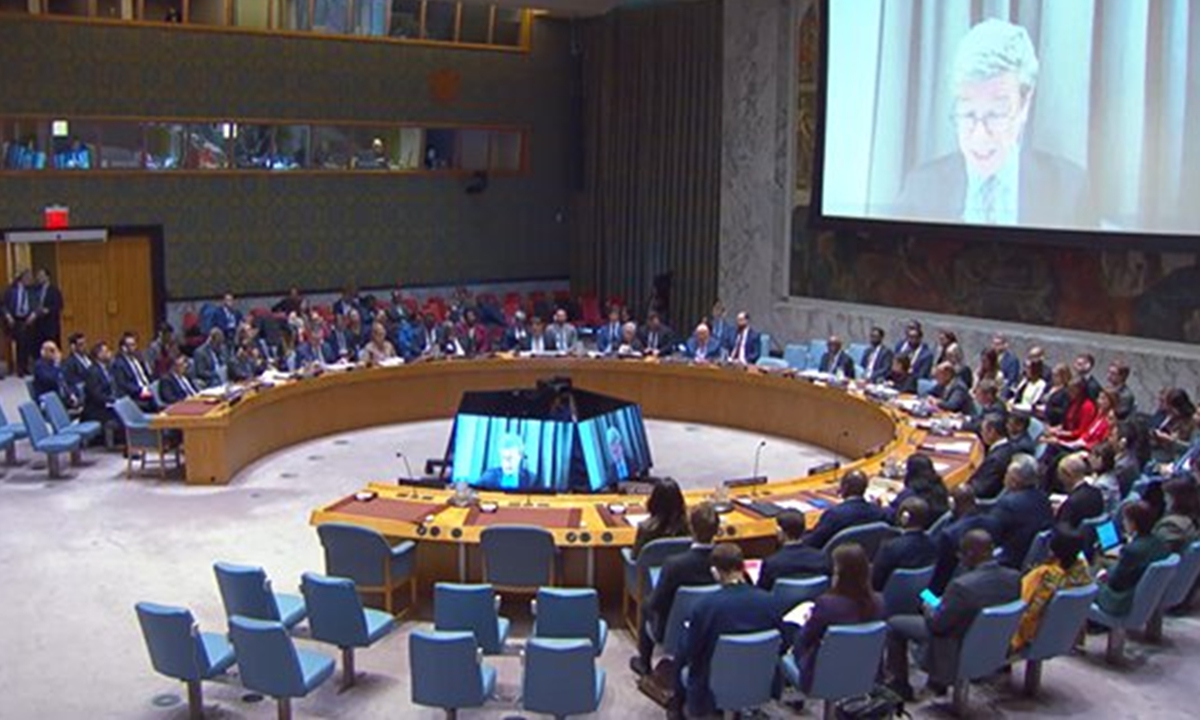
Photo: UN Web TV
Jeffrey Sachs, President of the UN Sustainable Development Solutions Network and Director of the Center for Sustainable Development at Columbia University, stressed that the issue at stake today is not Venezuela's character.
"The issue is whether any Member State, by force, coercion or economic strangulation has the right to determine Venezuela's political future or to exercise control over its affairs," he said.
The Council must decide whether to uphold or abandon Article 2, Section 4 of the UN Charter which prohibits the threat or use of force against the territorial integrity or political independence of any State.