ARTS / CULTURE & LEISURE
Tang Dynasty tomb in Xi’an yields Sasanian coins, rich artifacts reflecting Silk Road trade
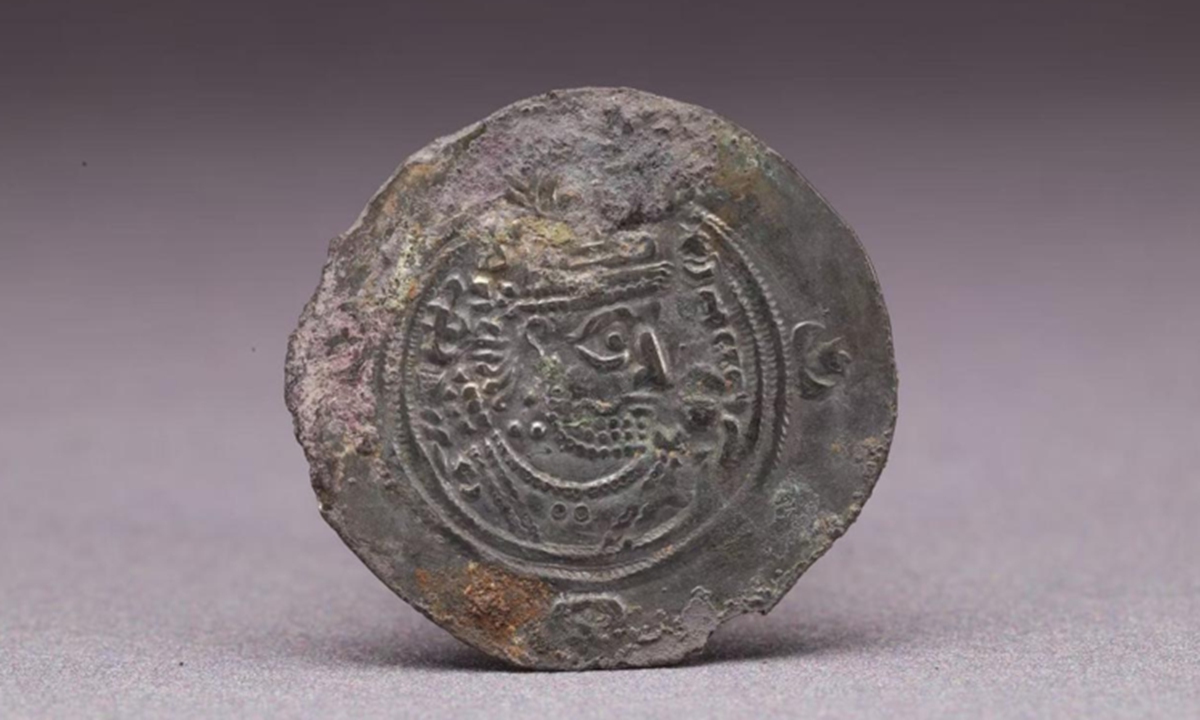
Coin unearthed from the Tang Sanniang tomb Photo: Courtesy of the Shaanxi Provincial Institute of Archaeology
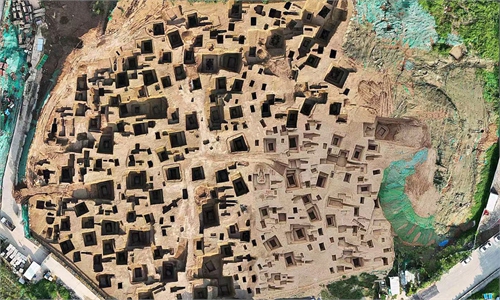
Archaeologists in Northwest China's Shaanxi Province have unearthed 19 Sasanian silver coins in a Tang Dynasty (618-907) tomb, the largest number recovered from a single tomb in Xi'an to date and evidence of the active trade and cultural exchanges between China and other regions at the time, according to the Shaanxi Provincial Institute of Archaeology.In Xi'an, capital of the province, archaeologists excavated a Tang Dynasty tomb in Jiali village of the Chang'an district ahead of a local renovation project. Among the ancient tombs in the project area, one labeled M228 belonged to Ma Sanniang, wife of Dong Shunxian, a military officer in the Tang Dynasty. The tomb is part of the Tang-era Dong family cemetery in the Chang'an district. The Dong family was related to Consort Dong, a favored concubine of Emperor Xuanzong.
According to the epitaph, Ma Sanniang was from Fufeng in Shaanxi Province. She died in 698 at the age of 29.
The tomb has a clearly established date and a well-preserved structure. Tomb M228 is a single-chamber tomb with a long sloping passage and multiple courtyards, shaped like a knife handle. This type of tomb, with multiple courtyards and a long sloping single chamber, was most common from the late reign of Emperor Gaozong to the reign of Emperor Zhongzong. The tomb passage is slightly offset to the east, roughly aligned with the eastern wall of the burial chamber.
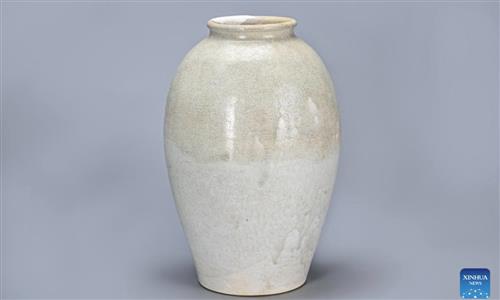
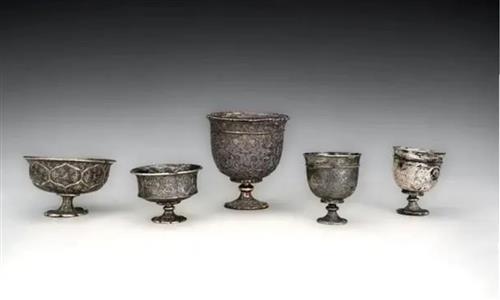
A total of 19 items or sets of burial objects were discovered, including pottery, bronze, iron, gold and silver wares, and stone objects. Notably, several of the gold and silver pieces demonstrated exceptional craftsmanship.
These gold and silver artifacts have significant research value, providing new material evidence for studying cultural and trade interactions between China and other civilizations during the peak time of the Tang Dynasty, said Shi Sheng, a staff member with the Shaanxi Academy of Archaeology.
According to Shi, most of the gold and silver items were hair ornaments for women or containers. The silver jar and stemmed cup are decorated primarily with grape vine patterns, a style influenced by the Western Regions, reflecting the vibrant cultural exchanges between that region and China's central plain areas at the time.
In addition, 19 Sasanian silver coins from Persia were unearthed in the tomb, the largest number found in a single tomb in the Xi'an area to date. Two of them bear unique stamped symbols. Nearly 1,000 Kaiyuan Tongbao coins were also discovered along the tomb owner's waist and right leg, arranged in strings.
The tomb yielded a diverse array of burial objects with distinctive features and strong foreign cultural influences, enriching the record of early Tang Dynasty tombs in the Xi'an area, said Shi.
The inscriptions on the tomb provide details on the family and life of the tomb owner, helping to complete the genealogy of the Dong family and shed light on their background. The gold and silver artifacts, as well as Sasanian silver coins, hold significant research value and provide evidence of the active cultural exchanges and trade between China and other regions during the period, added Shi.
RELATED ARTICLES