US DHS releases new video of Minneapolis fatal shooting, sparking more clashed opinions among US netizens

Photo: Screenshot of video newly released by US DHS
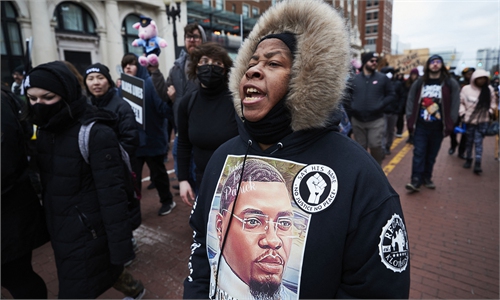
Amid protests across the US, the US Department of Homeland Security on early Sunday morning released a new video of ICE agent's fatal shooting on a Minneapolis street on social media platform X, claiming "new evidence" shows the so-called anti-ICE agitator was "stalking and impeding" the law enforcement operation. However, the new video has sparked more clashed opinions with some US netizens leaving comments saying such video would not help.
The US Department of Homeland Security (DHS) released on X more footage leading up to the fatal shooting of Renee Good by an Immigration and Customs Enforcement (ICE) agent on Wednesday.
The Department of Homeland Security has posted footage from a new angle of the confrontation that preceded ICE Agent Jonathan Ross fatally shooting Renee Good, KARE 11 News reported.
The footage is just over three and a half minutes long and cuts off before Ross shoots Good.
The video begins showing several ICE agents and a car honking is audible throughout the footage.
About 40 seconds in, a Honda Pilot comes into view - Good's vehicle - blocking part of the road. Some movement from the driver is visible, so she may be the one honking, according to KARE 11 News.
Good's vehicle reappears around the 2-minute mark, then disappears from view. It appears 30 seconds later, and viewers can see cars driving around Good's vehicle.
A little after three minutes, ICE agents approach the car and Ross walk around her car filming on his cellphone. Voices from the agents saying "Get out of the car" can be heard in the video, per the report.
The US Department of Homeland Security released the “new evidence,” appearing to justify ICE agent's fatal shooting, but it seems to have resulted in divided reactions.
Some netizens expressed their understanding and support for the law enforcement operation, saying Renee Nicole Good, the victim of the shooting incident, shouldn’t “be interfering with ICE” and should “comply with law enforcement and not drive vehicles at the law enforcement officers.”
Meanwhile others raised doubts about the “new evidence,” pointing out “the most important thing” of the video was “cut out,” and the video is not “helping ICE or the country.”
One netizen left comment under the homeland security department video post that “This really doesn’t help your cause because it suggests you’re looking for excuses for your agent shooting her. Legally speaking, the only question is whether the officer reasonably believed when he fired each shot that he was at imminent risk of death or serious physical injury.” The comment gathered early 1,000 likes as of press time.
According to a previous video evidence filmed by Immigration and Customs Enforcement agent Jonathan Ross, who shot and killed Rinee Good, as he approached Renee Good’s vehicle on a Minneapolis street on Wednesday, the video evidence appears to undermine elements of the government’s narrative of what happened, CNN reported.
CNN’s analysis found that while the Department of Homeland Security claims that Good was “blocking” ICE agents, multiple cars – including one driven by Ross – were able to drive around Good’s vehicle before the shooting.
According to CNN, US administration officials have defended Ross and said he acted out of self-defense, arguing that the video he recorded makes it clear he had no choice but to shoot. In the wake of the shooting, Secretary of Homeland Security Kristi Noem described the incident as “an act of domestic terrorism.”
However, the CNN report also wrote that a former senior law enforcement official with knowledge of DHS found Ross’s actions deeply concerning.
“I would have been livid if one of my folks were doing that,” the former official, who requested to speak anonymously, told CNN. He said if the ICE agent was so concerned about his safety then why does he just pay attention on his cell phone? Clearly the ICE agents didn’t feel threatened.
Shen Yi, a professor at Fudan University, told the Global Time the matter has been handled in a way that is moving toward rupture and deepening contradictions, rather than toward any substantive easing of tensions.
With precedents already in place, public distrust of ICE, resistance and backlash against the agency, and the US administration’s stance of offering unconditional backing to ICE mean that this approach is actually moving toward deepening the contradictions between ICE and the people it enforces the law against. As a result, from a probabilistic perspective, the likelihood of similar deadly confrontations could be rising, not falling, Shen told the Global Times on Sunday.
The backlash reflects a convergence of grievances over US immigration policy, political polarization, and the administration’s forceful expansion of ICE’s enforcement powers, Shen said.
RELATED ARTICLES