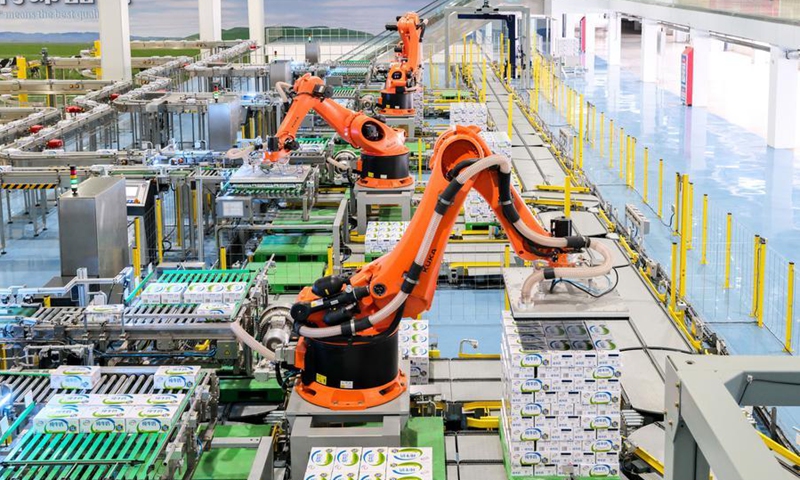
Robotic arms carry out packaging operation at the Global Intelligent Manufacturing Industrial Park of Yili Modern Intelligent Health Valley in Tumd Left Banner in Hohhot, north China's Inner Mongolia Autonomous Region, April 17, 2025. (Photo: Xinhua)
China's Ministry of Industry and Information Technology (MIIT) released an action plan on Tuesday, aiming to increase the nationwide penetration rate of industrial internet platforms to over 55 percent by 2028, alongside solid progress in their high-quality development.
This announcement is China's latest move to advance the digital and intelligent transformation of the manufacturing sector, under a plan that runs from 2026 to 2028.
The MIIT noted that China will continue to expand a multi-tier industrial internet platform system combining professional, industry-specific and collaborative platforms, with the number of platforms with a certain level of influence nationwide set to exceed 450 by 2028.
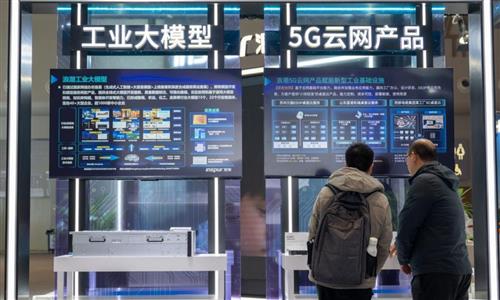
As a core component of the industrial internet, industrial internet platforms serve as key carriers for aggregating massive data, accumulating models and developing applications, as well as important hubs for the ubiquitous connectivity, flexible supply and efficient allocation of industrial resources, the MIIT noted in a statement released on Tuesday.
Promoting the high-quality development of industrial internet platforms is of great significance for advancing the integrated development of industrialization and digitalization through the large-scale application of the industrial internet, and for accelerating the digital and intelligent transformation of the manufacturing sector, said the ministry.
The MIIT's notice said that by 2028, China will have basically built a next-generation industrial internet platform ecosystem featuring ubiquitous connectivity, deep integration of digital and intelligent technologies, close collaboration, and openness.
By the end of the action plan period, platforms' capabilities to connect industrial resources will be significantly strengthened, with leading platforms seeing marked improvements in data value creation, model development and artificial intelligence (AI)-enabled applications, read the plan. The number of connected industrial devices is set to exceed 120 million, laying the foundation for the next-generation platform ecosystem.
AI, a strategic technology spearheading a new wave of technological revolution and industrial transformation, is increasingly converging with other technologies to form hybrid innovation clusters, said the ministry.
This convergence is reshaping manufacturing processes, industrial models and organizational structures, providing strong impetus for the cultivation of new quality productive forces and opening up fresh opportunities for the upgrading of industrial internet platforms.
The MIT also recently released an action plan to integrate the industrial internet with AI, setting out a series of key measures centered on AI development.
Under the plan's overarching goals, at least 50,000 enterprises are to carry out upgrades and transformations of new-type industrial networks by 2028.
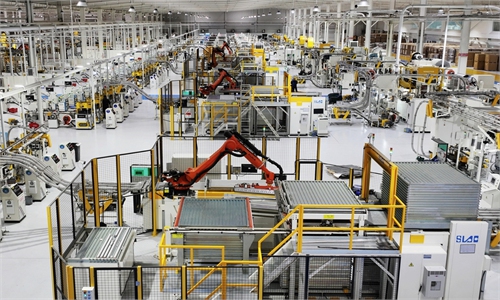
After years of development, the nation's industrial internet has progressed from strategic planning and early-stage exploration through rapid expansion into a stage of high-quality development and large-scale application, with the added value of its core industries exceeding 1.5 trillion yuan ($215 billion) and driving an overall industry scale of nearly 3.5 trillion yuan, data from the MIIT showed.
According to industry data, preliminary estimates suggest that China's core AI sector exceeded 1.2 trillion yuan in scale in 2025, the Xinhua News Agency reported.
Global Times
RELATED ARTICLES