ARTS / CULTURE & LEISURE
Chinese U23 football team makes pragmatic progress with defensive discipline

Illustration: Chen Xia/GT
The Chinese national under-23 football team achieved something unprecedented over the weekend as they qualified for the U23 Asian Cup semifinals for the first time after defeating Uzbekistan 4-2 by a penalty shootout in the quarterfinals. The last time a Chinese national team, either senior or junior, qualified into the semifinals of a continental tournament was in 2004.Across four matches in the competition so far, three in the group stage and the quarterfinal, the Chinese team has scored just one goal in regular play. On the surface, that statistic might appear unsatisfying for traditional football, but to interpret it as evidence of weakness is to miss the deeper significance of what the team has achieved.
In modern football, particularly in knockout and tournament settings, control of tempo, structured defense, and minimizing risk can be as decisive as attacking brilliance. The Chinese U23s were considered the underdogs on paper, especially against teams like Uzbekistan, who have qualified for the final three times in last four editions.
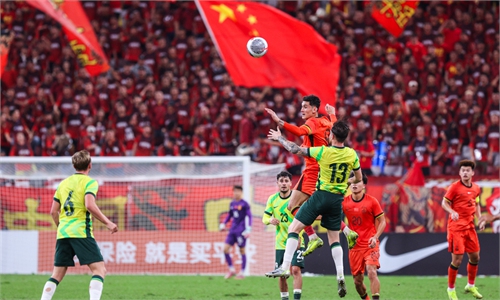
Yet in Saudi Arabia, the Chinese under-23 team, helmed by Spanish coach Antonio Puche, consistently executed a game plan rooted in positional discipline and risk management. The focus was not on dominating possession or orchestrating elaborate attacking sequences but on limiting opportunities against technically superior opponents, absorbing pressure intelligently, and making the most of the moments that mattered. In the quarterfinal against Uzbekistan, a side that registered around 71 percent possession and 28 shots, China's defensive squad kept their shape and forced the match into a penalty shootout.
This was not passive or timid football; it was strategic restraint. In cup tournaments around the world, from World Cup upsets to domestic cup exploits, lesser-favored teams often survive by staying compact, disciplined, and opportunistic. China's U23s embraced this reality with clarity.
The backbone of China's progress has been its defensive solidity. Across the tournament, China kept a clean sheet in regular play and conceded no goals before the penalties against Uzbekistan. This is a remarkable turnaround when contextualized against China's U23 history: In the previous five U23 Asian Cup appearances, the team had never progressed from the group stage and managed only two wins over 15 matches.
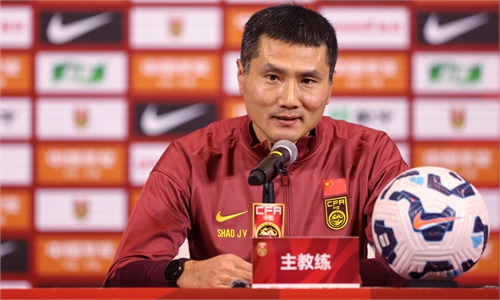
Head coach Puche prioritized defensive organization, often deploying a structure that ensured cover in key areas and limited space for opponents to exploit their advantages. The counterattack tactical emphasis is clear: Don't concede before opportunities come to you. In the group stage, that approach helped China secure results like a 0-0 draw with Iraq and a 1-0 narrow win over Australia, squeezing every point available.
Key to this defensive resilience was goalkeeper Li Hao, whose performance against Uzbekistan in particular drew praise. Li made a series of crucial saves, both in open play and during the penalty shootout, giving China the foundation to hold out against heavy pressure. Without his contributions, China's historic run might have ended before the semifinals.
Critics might argue that this China team did not play beautiful football, and they may be right. However, the essence of tournament football is not about beauty but progress. In that sense, China's U23 performance represents a significant psychological and developmental milestone for Chinese football.
Advancing to the semifinals offers these young players not only a win but also high-pressure knockout experience and confidence in their collective identity. Whether in tight defense, sudden transitions, or penalty shootouts, each moment in this tournament deepens the group's resilience and understanding of what elite competition demands.
For China's broader football ecosystem, which often grapples with inconsistencies and unmet expectations, this defensive strategy provides a template for teams without superstar-level attacking talent to be also able to compete with Asia's leading teams. This is particularly relevant as domestic clubs and national programs attempt to bridge the gap with Asian powerhouses like Japan and South Korea.
In contrast to past years when Chinese youth teams exited continental tournaments early, the current crop of U23 players has now earned the right to be taken seriously. And from a national perspective, their run, capped by calmness in a penalty shootout, injects belief into a system seeking consistent progress.
The debate over how football should be played is legitimate, and fans naturally want excitement and fluidity beyond goals. However, football, especially in cup tournaments, is also result-oriented, and success often requires adaptation, especially for teams building toward future peaks.
Modern football culture often focuses on marquee victories and attacking flair, but the Chinese under-23 team's pragmatic philosophy reminds us that efficiency and tactical intelligence can unlock historic results too. There will be critics who bemoan the lack of goals. However, in tournament football, conceding less and advancing further can be a formation of success in itself, a truth China's U23s have just proven on Asia's stage.
The author is a reporter with the Global Times. life@globaltimes.com.cn
RELATED ARTICLES