Netanyahu expresses opposition to Rubio on Qatar, Turkey’s inclusion to US ‘board of peace’: report
By Published: Jan 20, 2026 10:22 AM

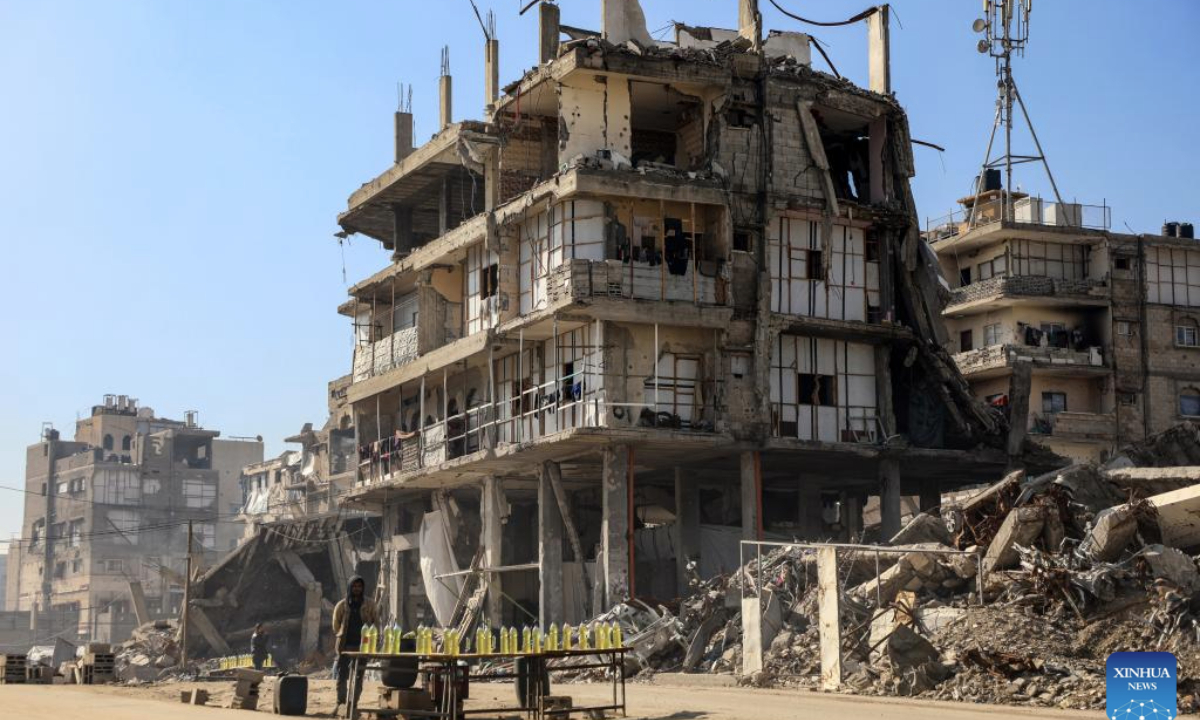
Photo taken on Jan. 15, 2026 shows vendors near damaged buildings in Gaza City. (Photo:Xinhua)
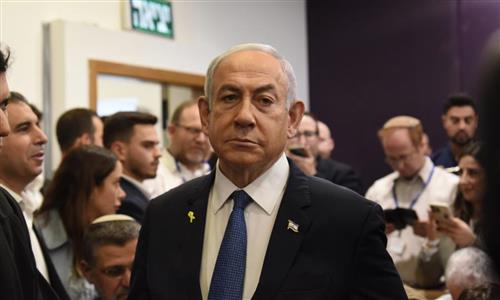
Israeli Prime Minister Benjamin Netanyahu on Monday spoked with US Secretary of State Marco Rubio, expressing opposition to Qatar and Turkey's inclusion to the Gaza "board of peace," media reported on Tuesday.
The reinforced opposition came "only hours" after Israeli Prime Minister office issued an announcement that Netanyahu had instructed Foreign Minister Gideon Sa'ar to express Israel's opposition, the Times of Israel reported. Previously on Saturday, Israeli Prime Minister office also criticized over Trump administration's announcement on the composition of a Gaza executive board, claiming it was not coordinated with Israel and ran counter to government policy, media reported.
The White House and other sources announced a flurry of appointments and invitations to the organization over the last week, including Turkish president Recep Tayyip Erdogan, the Egyptian president Abdel Fatah al-Sisi, former UK prime minister Tony Blair and the president of Argentina, Javier Milei, the Guardian said.
According to a draft charter for the proposed group seen by Bloomberg, US President Donald Trump would serve as its inaugural chairman and would decide on who is invited to be members. Decisions would be taken by a majority, with each member state present getting one vote, but all would be subject to the chairman's approval, per the report.
Following US announcement, a small group of senior Israeli cabinet ministers on Sunday decided against reopening the Rafah Crossing between Gaza and Egypt, bucking US demands that the gate resume operating as envisioned by President Donald Trump's 20-point plan for ending the Gaza war, the Ynet news site reports.
The US-launched "board of peace" has also drawn skepticism and controversies beyond Israel.
According to the Politico.eu, French President Emmanuel Macron has rejected US' offer to join the "board of peace," as the board's charter "goes beyond the framework of Gaza and raises serious questions, in particular with respect to the principles and structure of the United Nations.
Daniel Forti, head of UN affairs at the International Crisis Group, has described the "board of peace" as "a US shortcut in an attempt to wield its veto power on world affairs."
Another controversy faced by "board of peace" developing over the $1 billion fee member countries are expected to pay if they want to remain as permanent members beyond three years. Prime Minister Mark Carney said Canada will join but won't pay for the permanent seat, Politico.eu reported.
Residents of the Gaza Strip voiced concern and skepticism, warning the initiative could impose external oversight without ensuring civilian protection or a lasting ceasefire, Xinhua reported.
Citing a copy of the invitation circulating online, the Times of Israel reported that the signing ceremony of "board of peace" is scheduled for Thursday on the sidelines of the World Economic Forum in Davos, Switzerland.
Liu Zhongmin, a professor at the Middle East Studies Institute of Shanghai International Studies University, told the Global Times that Turkey and Qatar are the primary representatives in Middle Eastern supporting Islamist forces. On the Palestinian issue, they oppose Israel's Gaza war and have long-standing tensions with Israel.
Regarding the 'board of peace,' Liu described it as a mechanism initiated by the US that bypasses the United Nations, carrying a strong personal imprint of the US president as well as an openly commercial, pay-to-play character.
"It lacks international authority and legitimacy," Liu said. "It is not centered on the Palestinian issue itself in essence, thus making it difficult to ensure fairness and long-lasting effectiveness."
RELATED ARTICLES