Trump floats 200% champagne tariff after Macron snubs peace board over concerns it may replace UN; experts highlight reluctance and growing Europe-US divide
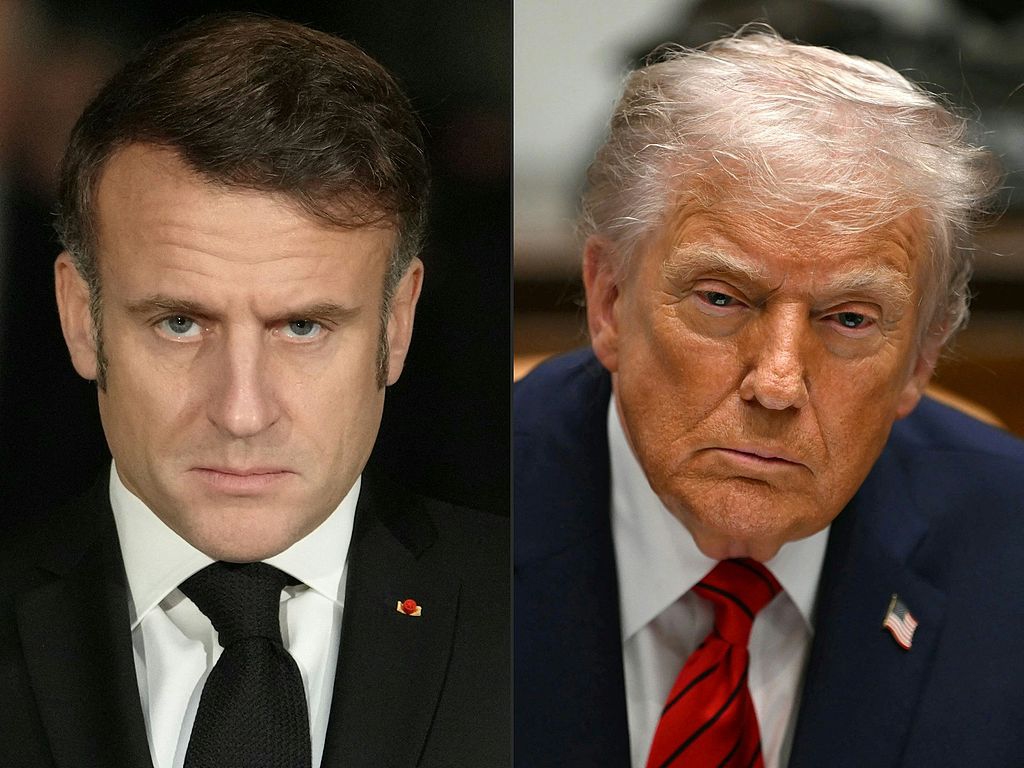
Left: French President Emmanuel Macron Right: US President Donald Trump Photos: VCG
US President Donald Trump took shots at French leader Emmanuel Macron for rejecting his invitation to join a proposed Board of Peace, and suggested he could impose a 200 percent tariff on champagne, media reported.
Trump told reporters Monday local time, after being informed Macron would decline his invitation, that "I'll put a 200 percent tariff on his wines and champagnes and he'll join," according to Bloomberg.
Macron has rejected US President Donald Trump's offer to join the "Board of Peace" tasked with overseeing the next steps in Gaza, his office said on Monday, reported Politico.
ABC News reported that some European leaders are mulling not joining the board and risking Trump's ire during an unstable period of escalated global conflicts as the US president continues to stoke tensions over the Danish territory of Greenland, and while Western allies need continued US support in the Russia-Ukraine conflict.
The French decision was taken over concerns that the "Board of Peace," chaired by Trump, would have extensive powers beyond transitional governance of the Gaza Strip, and undermine the UN framework.
The statement noted that the board's charter "goes beyond the framework of Gaza and raises serious questions, in particular with respect to the principles and structure of the UN, which cannot be called into question."
Trump announced establishment of the board on Friday as a key part of his 20-point plan to end the war between Israel and Hamas. He said in a post on Truth Social last week that it will be "the Greatest and Most Prestigious Board ever assembled at any time, any place," though details about it remain vague, ABC News reported.
The French Foreign Minister Jean-Noël Barrot specifically noted on Monday the remit of the board's charter "in Gaza and elsewhere" and the "very extensive powers" granted to the chairman as point of concerns. According to Barrot, Trump, as the board's chairman, would be able to approve the participation of members, choose his own successor and veto decisions taken by a majority of members.
"This is very, very far from the Charter of the UN," he said during a speech to French academics in Paris.
Several countries have said they received invitations to join the board, including Russia, though the countries' respective leaders largely appear reluctant to make public statements of explicit endorsement, according to ABC News.
Moroccan king reportedly accepted the invitation, yet its foreign ministry described the invitation as recognition of King Mohammed VI's standing as a key international actor on peace issues and the trust he enjoys with the US administration and the broader international community, reported Anadolu Agency on Tuesday.
Trump's "Board of Peace" is facing a separate controversy developing over the $1 billion fee member countries are expected to pay if they want to remain as permanent members beyond three years.
Canada will join but won't pay for the permanent seat, Canadian Prime Minister Mark Carney said.
The "Board of Peace" appears to have been designed to serve personal interests, particularly as it allows the US president to chair for life while limiting other members to three-year terms, highlighting its highly individualized nature, Lü Xiang, a research fellow at the Chinese Academy of Social Sciences, told the Global Times.
While the ultimate objectives of this institution remain unclear, Lü said that it is reasonable to surmise that commercial interests are likely to be a significant consideration.
According to ABC News, Trump is expected to hold a formal signing ceremony to constitute the board as early as Thursday while he attends the World Economic Forum in Davos, Switzerland, according to a copy of the invitation circulating online, as allies openly question if they will even join the board.
As Trump is reportedly about to lead the largest US delegation ever to attend this year's WEF, Li Haidong, a professor at China Foreign Affairs University, told the Global Times that Europe wants Davos to be about dialogue and bridge-building, but the US may see it as a stage to further impose pressure and demand that others follow the US lead. The collision between these two forces is growing ever more acute, he said.
RELATED ARTICLES