ARTS / CULTURE & LEISURE
China’s film hits turn cities into travel hotspots ahead of Spring Festival
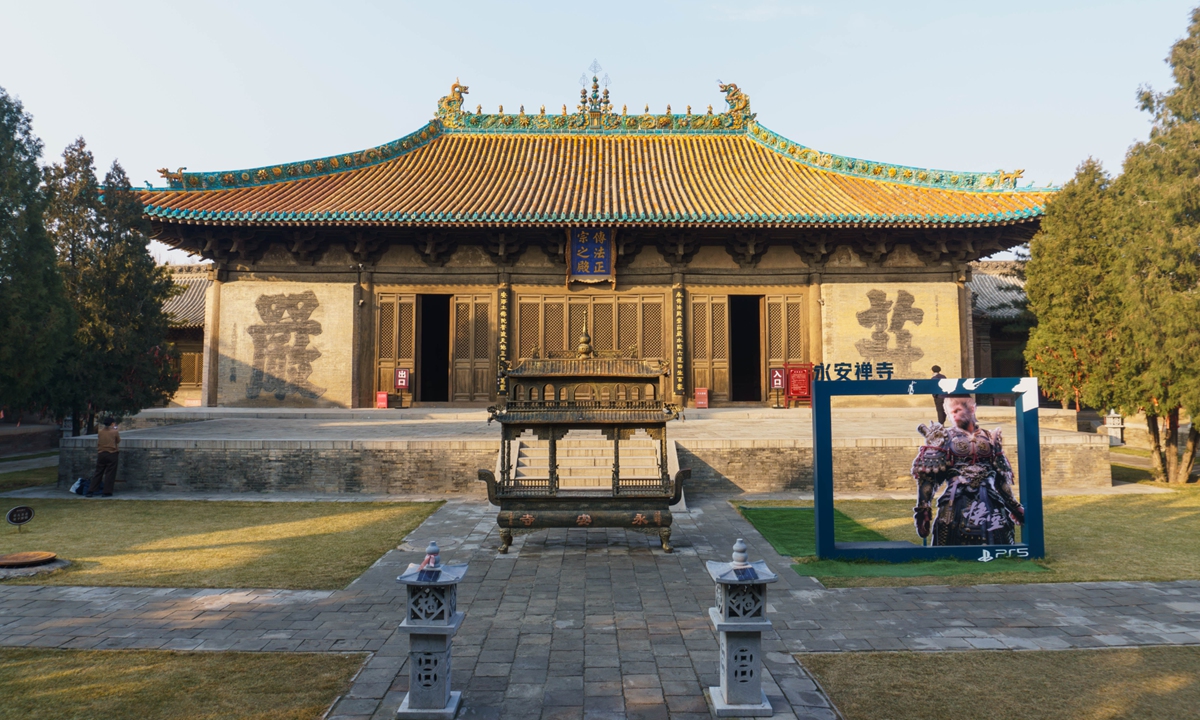
Yong'an Temple Photo: VCG
As blockbuster movies and animated hits continue to dominate screens in China, they are also reshaping travel patterns and driving tourism growth, with local authorities across the country actively preparing cultural and tourism services to meet the surge in demand during the Spring Festival holidays.From Sichuan to Shanxi and beyond, a growing number of cities have been leveraging popular film IPs to attract visitors, marking a shift from a single "ticket economy" to a broader, consumption-driven cultural tourism ecosystem.
The trend has remained strong into early 2026. The animated film Nobody has fueled a surge in interest in ancient architecture in North China's Shanxi Province. Multiple filming locations, including Yong'an Temple and Shanhua Temple in Datong, have become viral destinations.
Local authorities have launched themed travel routes and immersive activities, allowing visitors to explore historical architecture.
Once a little-known site struggling to cover basic operating costs, Yong'an Temple welcomed 275,000 visitors in 2025, generating 3.85 million yuan ($553,000) in ticket revenue - increases of 25 percent and 51 percent, respectively. Daily visitor numbers during peak periods climbed to 5,000, a dramatic leap from fewer than 100 per day in previous off-seasons. Even during the winter season, visitor numbers have remained steady at several hundred per day, according to CCTV News.
The film-driven tourism boom has extended beyond Yong'an Temple. In Datong's ancient city area, the Shanhua Temple has also seen a surge in visitors.
Wang Xiao, 30, based in Beijing, told the Global Times that she traveled to Datong in December 2025 to visit sites including Shanhua Temple and the Yungang Grottoes.
She first considered the trip when the video game Black Myth: Wukong gained popularity, and watching Nobody later reinforced her decision to come.
"The ancient buildings here have a long history, and walking through them really makes you feel the weight of time," Wang said. "The architecture is well preserved, and the scenery makes the trip well worth it."
In Yibin, Southwest China's Sichuan Province, the success of the animated film Ne Zha 2 has transformed Cuiping Mountain into a must-visit destination. Branded promotions such as "Travel With the Movie: Check In at Ne Zha's Hometown Yibin" blend film culture with traditional Chinese aesthetics and local cuisine, CCTV News reported.
The spillover effect has extended well beyond scenic sites. Ne Zha-themed hotels, hot pot restaurants and cultural products have flourished, driving growth in accommodation and retail spending, according to the report.
"With the continued popularity of Ne Zha 2 and improving cultural, commercial and tourism facilities, we expect hotel occupancy during the 2026 Spring Festival to rise another 15 percent compared with previous years," said Zhang Zhixiang, deputy director of the Cuiping District Bureau of Commerce.
Similar momentum can be seen elsewhere. In Anyang, Central China's Henan Province, the long-tail effect of Creation of the Gods II continues to draw crowds to the Yinxu Museum, where visitors search for artifacts featured in the film. In Qingdao, East China's Shandong Province, the real-life sets of the naval action movie Operation Hadal have become popular attractions.
Shi Wenxue, a veteran cultural critic based in Beijing, told the Global Times that the relationship between film and a city is "enduring." When movies are well-integrated with urban spaces, they can effectively boost local tourism.
This synergy between film and tourism not only enriches visitor experiences but also boosts local economies and cultural heritage preservation, according to Shi.
As a result, the combination of film and tourism not only enriched the visitors' experience but also stimulated local economies and cultural preservation, showcasing a positive and promising development trend.
RELATED ARTICLES