BRASIL 247 / MORE
Brazil expands cooperation with China on nuclear energy and small reactors
Dialogue with CNNC addresses uranium chain, SMRs and restructuring of Brazil’s nuclear sector
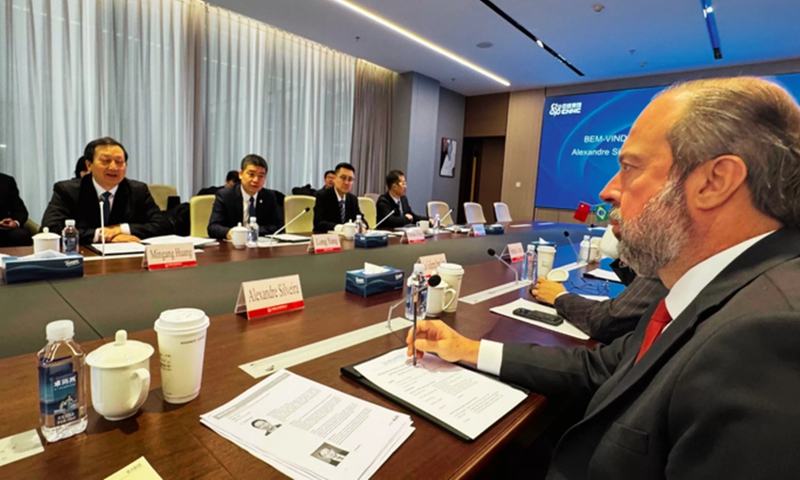
Alexandre Silveira (Photo: Ministry of Mines and Energy)
By Brasil 247 - Brazil's Minister of Mines and Energy, Alexandre Silveira, held a meeting on Thursday in Shanghai with executives from the China National Nuclear Corporation (CNNC) to deepen bilateral dialogue on the development of the nuclear sector and the application of advanced technologies, including small modular reactors. According to Brazil's Ministry of Mines and Energy, the talks highlight Brazil's interest in solutions that can diversify its energy matrix, strengthen energy supply security and support the transition to low-carbon sources.
During the meeting with CNNC chief economist Huang Mingang and other representatives of the Chinese state-owned company, Silveira said Brazil has the structural conditions to advance consistently in the nuclear field. "Brazil holds the entire nuclear chain, from mineral research and fuel production to power generation and equipment manufacturing, which gives the country a solid foundation and great potential for sector development," the minister said, according to information released by the Ministry of Mines and Energy.
Discussions focused primarily on small modular reactors, a technology viewed as strategic for combining stable and predictable power generation with diversified productive uses. Silveira said these reactors could meet specific industrial demands, including process heating, water desalination and support for energy-intensive industrial chains, expanding the role of nuclear power beyond conventional electricity generation.
The minister also emphasized that incorporating new technological solutions requires modernization of Brazil's nuclear sector and a broader understanding of its industrial applications. He said SMRs represent an opportunity to align technological innovation, economic development and environmental sustainability in long-term energy planning.
Silveira further stated that the privatization of Eletrobras under the previous administration contributed to fragmentation within the nuclear sector by weakening coordination between companies and public policies. According to the minister, decisions taken at the time led to investments and contracts without clear guidance on the sector's future or on completion of the Angra 3 nuclear power plant, resulting in higher costs and uncertainty.
He said the current government is pursuing a restructuring process focused on restoring governance, ensuring economic rationality and aligning investments with a long-term strategic vision. Within this framework, Silveira noted ongoing efforts to develop technical, institutional and financial solutions to enable completion of Angra 3, which he described as essential to national energy security.
The minister also highlighted that strengthening the nuclear sector depends on attracting investment, particularly in mineral research and development of the uranium production chain. Although only about 30% of Brazil's subsoil has been mapped, the country already holds the world's seventh-largest uranium reserves, underscoring, according to Silveira, significant potential for expansion. Expanding geological mapping and prospecting is seen as a decisive step toward identifying new reserves and consolidating Brazil's role in the international nuclear landscape.
(Reported by Brasil 247 on Jan 22, 2026)
